The Big Island — Fire, Snow, and the Edge of America
Not What You Expect
The Big Island breaks the mental model that most people bring to Hawai’i. There are no high-rise hotels lining the beach. There is no Waikiki. Instead, there is a landmass the size of Connecticut that contains eleven of the world’s thirteen climate zones — from tropical rainforest to alpine desert to subarctic tundra — and an active volcano that has been building new land for the last forty years. This is not a beach holiday. This is a geological event you happen to be visiting.
The island is young — the youngest in the Hawaiian chain, still growing, still being shaped by the hotspot beneath the Pacific plate. You feel this everywhere. The lava fields on the western coast are so new that nothing grows on them — miles of black, ropy rock stretching to the ocean, a landscape that looks like another planet and technically is: NASA tested Mars rovers here because it was the closest thing on Earth to the Martian surface.
Hawai’i Volcanoes National Park
This is the reason you come to the Big Island, and it requires more time than most visitors give it. The park contains Kīlauea, one of the most active volcanoes on earth, and Mauna Loa, the largest shield volcano on the planet. The landscape shifts from lush rainforest at the park entrance to a moonscape of craters, steam vents, and lava tubes within a few miles.
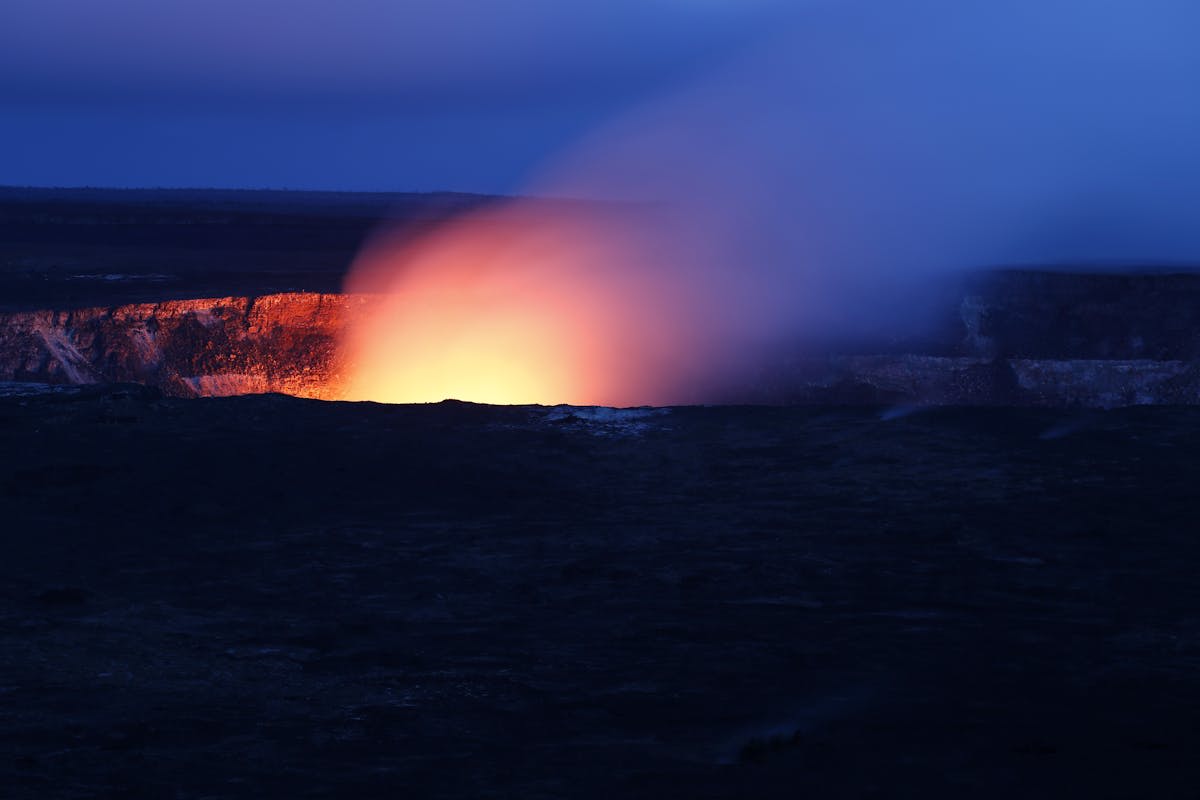
Crater Rim Drive loops the summit of Kīlauea, passing the Jaggar Museum viewpoint where you look directly into the Halema’uma’u crater. When the volcano is active — and it often is — the crater glows orange at night, a lake of molten rock visible from the rim. I stood at this viewpoint for an hour after dark, watching the lava pulse and breathe, and felt something I can only describe as deep time — the awareness that you are witnessing the same process that built every island, every continent, every square meter of land on this planet.
The Chain of Craters Road descends from the summit to the coast through a landscape of sequential lava flows — each dated, each a different texture and color, a geological timeline laid out across the road like chapters. At the bottom, the road simply ends where the 2003 lava flow buried it. You park, walk across the flow field, and reach the ocean where the youngest cliffs in the world drop into the Pacific. The black sand beaches here are not just black sand — they are pulverized lava, warm underfoot, magnetic if you bring a magnet, and utterly unlike any beach you have experienced.
Mauna Kea
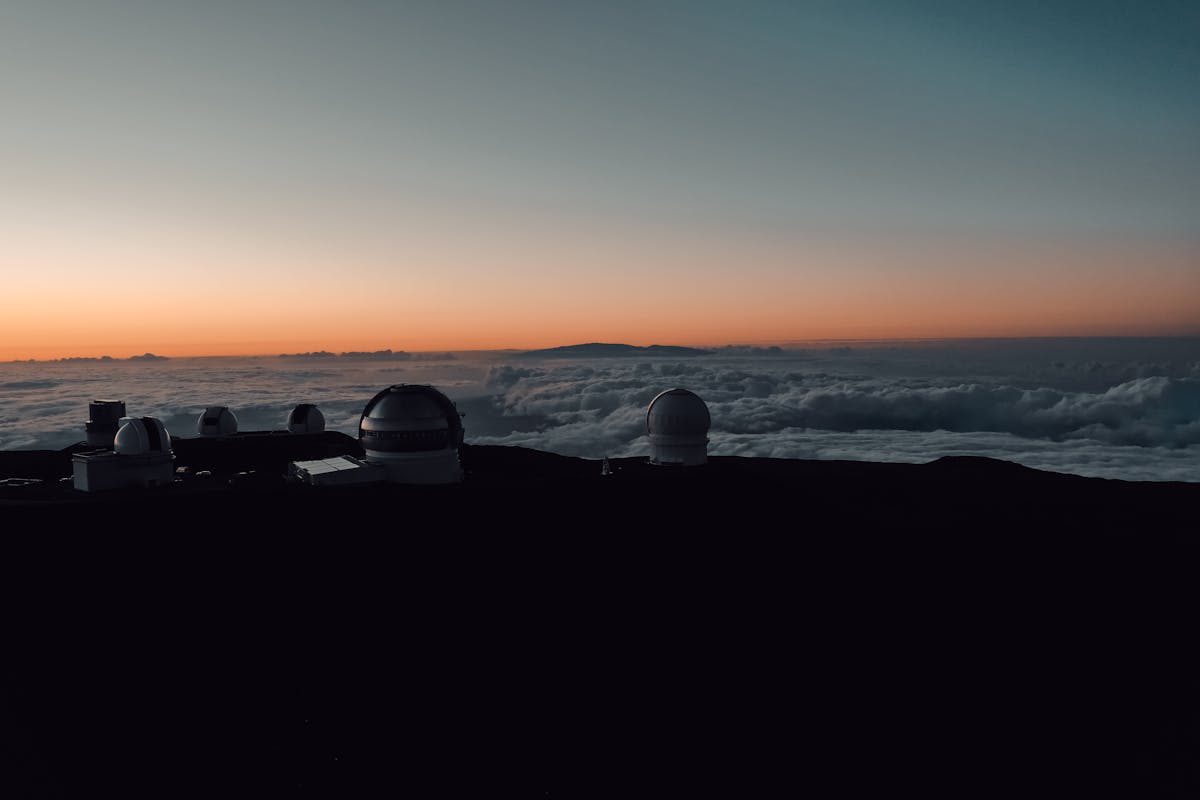
The drive from sea level to the summit of Mauna Kea — 4,207 meters, the highest point in Hawai’i and, measured from its base on the ocean floor, the tallest mountain on Earth — takes about two hours. You leave the tropical coast, pass through cattle ranch country, enter a cloud forest, emerge above the clouds, cross a landscape of cinder cones and scrub, and arrive at a summit that is cold, thin-aired, and studded with astronomical observatories. The sky here is among the clearest on the planet, which is why every major space agency has a telescope up here.
The sunset from the summit is a controlled experience — you park at the visitor station at 2,800 meters, acclimatize, then drive (4WD required, and they mean it) to the top. The sun sets below the cloud layer. The shadow of Mauna Kea stretches across the clouds — a perfect triangular silhouette that rolls eastward as the light dies. Then the stars appear. I have seen dark skies in the Sahara, in the Australian outback, in the middle of the Pacific. Mauna Kea is the best of all of them. The Milky Way is not a faint band but a physical presence, a river of light that arches from horizon to horizon with a density that makes you reconsider every night sky you have ever seen.
The Hamakua Coast
The eastern side of the island — the wet side — is a different world from the dry lava fields of the west. The Hamakua Coast runs north from Hilo through old sugar plantation country, past waterfalls that drop from cliffs draped in tropical greenery, to the Waipi’o Valley overlook. The valley itself is a mile-wide amphitheatre, carved by a river, walled by thousand-foot cliffs, accessible by a road so steep that only 4WD vehicles should attempt it. At the bottom: taro fields, wild horses, a black sand beach, and the sense that you have arrived somewhere that exists outside of time.
Leaving
I spent eight days on the Big Island and felt like I needed twenty. The scale of the place — not just its physical size but the scale of the forces that made it — is humbling in a way that the word “scenic” does not capture. This is a place where the Earth is still being made. Where snow sits above tropical forests. Where the same island contains deserts and rainforests. The Big Island is not Hawai’i as the brochures sell it. It is Hawai’i as the planet intended it. And it is, I think, one of the most extraordinary places in the United States.
Viaja con intención
Guías curadas, destinos tranquilos e historias que vale la pena leer — enviadas cuando tenemos algo que merece ser compartido.
Sin spam. Cancela cuando quieras.