The Hands That Pick It — A Week in Colombia's Coffee Country
The First Cup
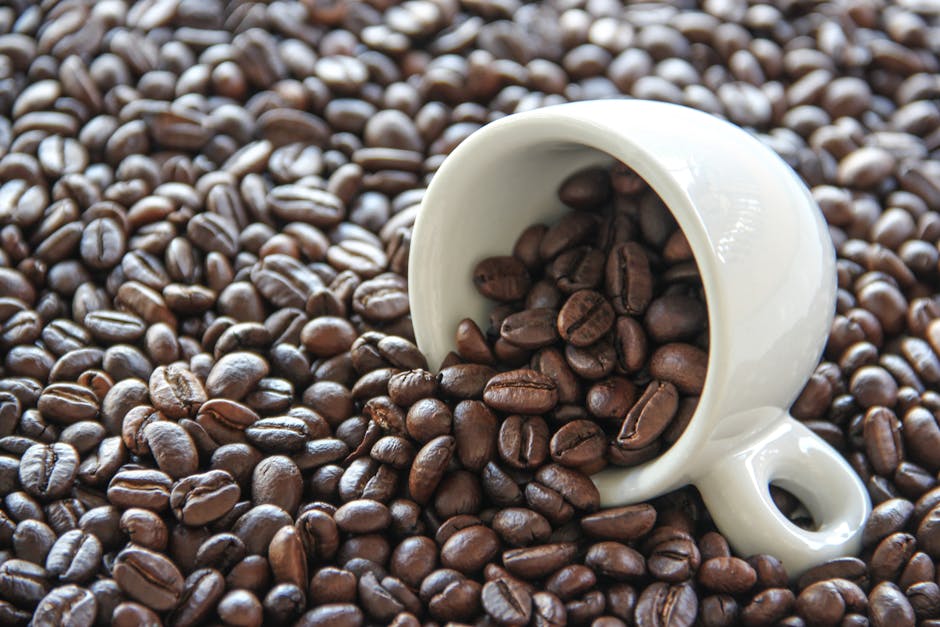
I have been drinking coffee every day since I was sixteen, which means roughly eighteen years and somewhere around thirteen thousand cups, and it took a Tuesday morning on a hillside outside Filandia, Colombia, to understand that I had never really tasted it. Don Hernando poured from a cloth filter into a ceramic cup — no sugar, no milk, nothing to hide behind — and asked me to drink slowly. I tasted chocolate first, then something citric, then a sweetness that had nothing to do with sugar and everything to do with altitude, soil, and the specific angle at which this hillside catches the morning sun. He watched me with the expression of a man who has seen this moment a thousand times — the foreigner realizing that what they have been drinking at home is a faded reproduction of the original.
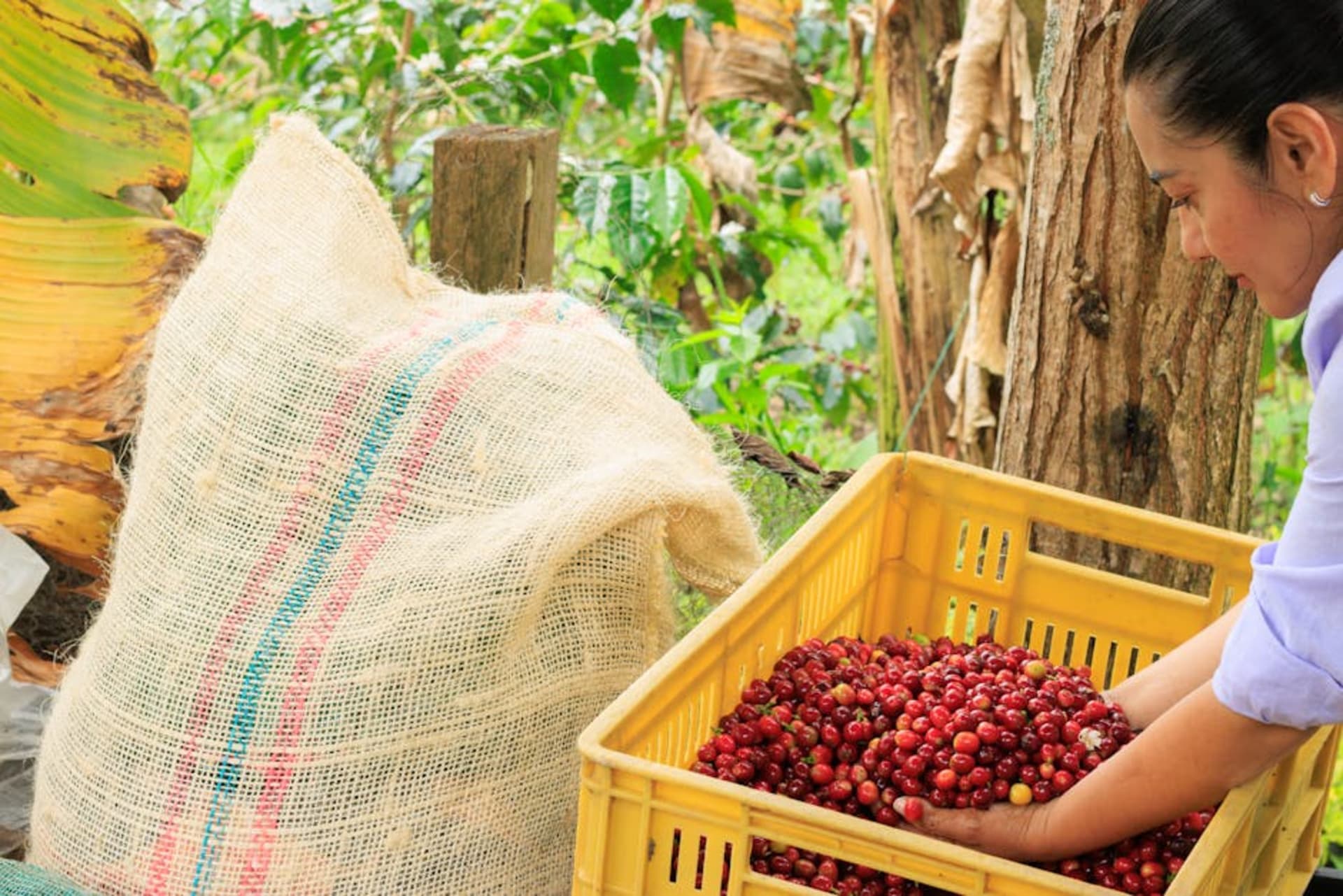
The finca sits at 1,800 meters in the Central Cordillera, a two-hour drive from Pereira through mountain roads that wind past banana groves and small towns painted in colors so vivid they look like they are competing with the landscape. Don Hernando’s family has grown coffee here for four generations. His grandfather planted the first trees. His father expanded the farm. Hernando modernized the processing — fermentation tanks, raised drying beds, a small roasting operation — but the picking is still done the way his grandfather did it: by hand, selectively, only the ripe red cherries, one by one, into a basket strapped across the chest. There is no machine for this. The terrain is too steep, the plants too irregular, the judgment of ripeness too subtle for anything but human fingers and human eyes.
The Process
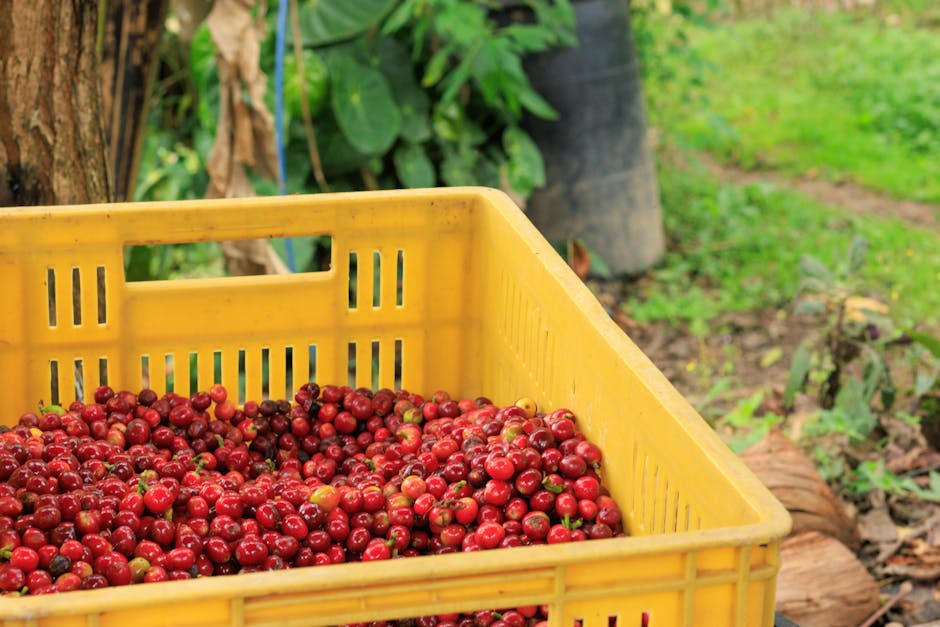
The journey from plant to cup takes longer than you think and involves more decisions than you imagine. After picking, the cherries are depulped — the fruit stripped from the seed — and fermented in tanks for eighteen to thirty-six hours, depending on the weather, the humidity, and Hernando’s assessment of when the mucilage has broken down enough. “You learn to feel it,” he told me, rubbing a fermented bean between his fingers. “My father taught me, and his father taught him. It is not something a book can give you.” The beans are then washed and spread on raised beds to dry in the sun, turned every few hours for ten to fourteen days. The drying is where things go wrong for lazy producers — uneven drying, too much humidity, mold. Hernando checks the beds the way a baker checks dough: with instinct refined by repetition.
The economics are sobering. A skilled recolector — a picker — can harvest sixty to eighty kilos of cherries in a day, working from dawn until the afternoon heat makes the hillside unbearable. From those eighty kilos of cherries, you get roughly fifteen kilos of dried green coffee. From fifteen kilos of green coffee, the farm might earn sixty to eighty thousand Colombian pesos — roughly fifteen to twenty US dollars. The specialty coffee movement has improved margins for farms like Hernando’s, which sell directly to roasters in the US, Europe, and Japan at prices that reflect the quality. But the vast majority of Colombian coffee still enters the commodity market, where the price is set by traders in New York who have never seen a coffee plant, and the farmer receives a fraction of what the consumer pays. Hernando does not talk about this with bitterness. He talks about it with the precision of a man who has done the math and decided to beat it through quality rather than volume.
The Valley
I drove from Filandia to Salento on a road that should not work — hairpin turns, no guardrails, one-lane bridges over ravines — in a Willys jeep that should not still function but does, held together by mechanical ingenuity and the optimism of a country that refuses to throw things away when they can be repaired. Salento sits at the entrance to the Valle de Cocora, and hiking the valley is the one non-negotiable thing you do in the Coffee Region.
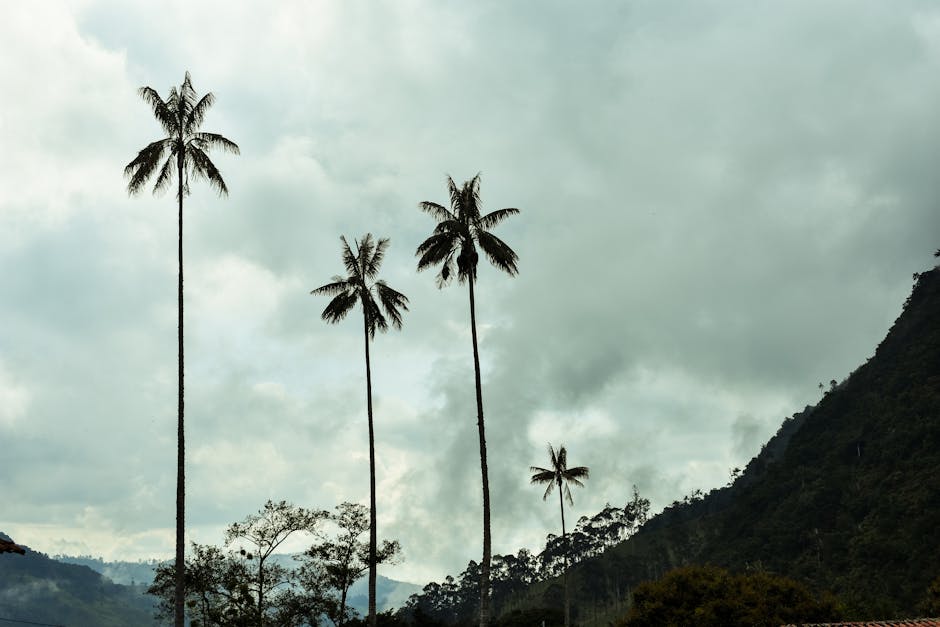
The wax palms appear gradually, growing taller as you move deeper into the valley, until they dominate the landscape like pillars of a cathedral with no roof. They are the tallest palms on Earth — up to two hundred feet — and they are Colombia’s national tree, protected by law, beautiful in a way that is both gentle and imposing. The mist was heavy the morning I hiked, and the palms appeared and disappeared like ghosts as the cloud moved through the valley. At certain moments, standing in the green pasture with the palms rising into the white above and the silence so complete I could hear my own heartbeat, I felt the particular awe that comes from standing in a landscape that existed long before you and will exist long after, and that does not require your presence to be magnificent.
The hike loops through cloud forest — bromeliads hanging from every branch, orchids blooming in crevices, hummingbirds whose names I learned from a laminated card at a trailside hummingbird sanctuary run by a woman named Doña Gloria who has been feeding them for twenty years. She recognizes individual birds. She has named them. She charges a few thousand pesos for a cup of hot chocolate and a seat among the feeders, and it is one of the best investments in the entire country.
The Pueblo
Salento at dusk is a painting. The colored facades of the Calle Real glow in the fading light — turquoise, coral, banana yellow — and the mirador at the end of the street offers a view of the Quindio valley that changes every minute as the shadows lengthen and the mountains shift from green to blue to black. I sat at a café called Cafe Jesus Martin — named for the owner, a second-generation coffee farmer turned roaster — and drank a pour-over of his single-origin micro-lot while he explained the difference between Castillo and Caturra varietals with the enthusiasm of a man who has found his life’s work and cannot imagine a better one.
The tejo bar that evening was loud and chaotic and perfect. Tejo is Colombia’s national sport — you throw a metal disc at clay-embedded packets of gunpowder, which explode on impact. The scoring is secondary to the explosions, the beer, and the conversation that flows between throws. A group of local men adopted me into their game, corrected my technique with the generous authority of lifelong players, and refused to let me pay for a single beer. By the end of the night, my Spanish had improved by thirty percent — the way it always does after the fourth beer — and I had been invited to a finca the next morning to see the sunrise from the coffee fields.
What Coffee Taught Me
I left the Eje Cafetero after a week with a bag of Hernando’s beans, a notebook full of processing terminology, and an understanding that had rearranged my relationship with a daily ritual I had been performing thoughtlessly for eighteen years. The distance between a coffee plant on a Colombian hillside and the cup on my desk in Mexico City is not measured in miles or in supply chains. It is measured in decisions — when to pick, how long to ferment, how evenly to dry, how dark to roast — made by people whose expertise is invisible by the time the coffee reaches your hands.
The commodity system erases those decisions. It treats coffee as a bulk product, interchangeable, priced by volume. The specialty movement — the movement Hernando is part of, the one that pays more because it recognizes more — is an attempt to restore the connection between the person who grows the coffee and the person who drinks it. It is not charity. It is recognition. And after a week on the fincas, watching the recolectores work the steep hillsides in the morning mist, tasting the difference that a hundred meters of altitude makes in a single cup, I understood that the price I pay for good coffee is not expensive. It is overdue.
Viaja con intención
Guías curadas, destinos tranquilos e historias que vale la pena leer — enviadas cuando tenemos algo que merece ser compartido.
Sin spam. Cancela cuando quieras.