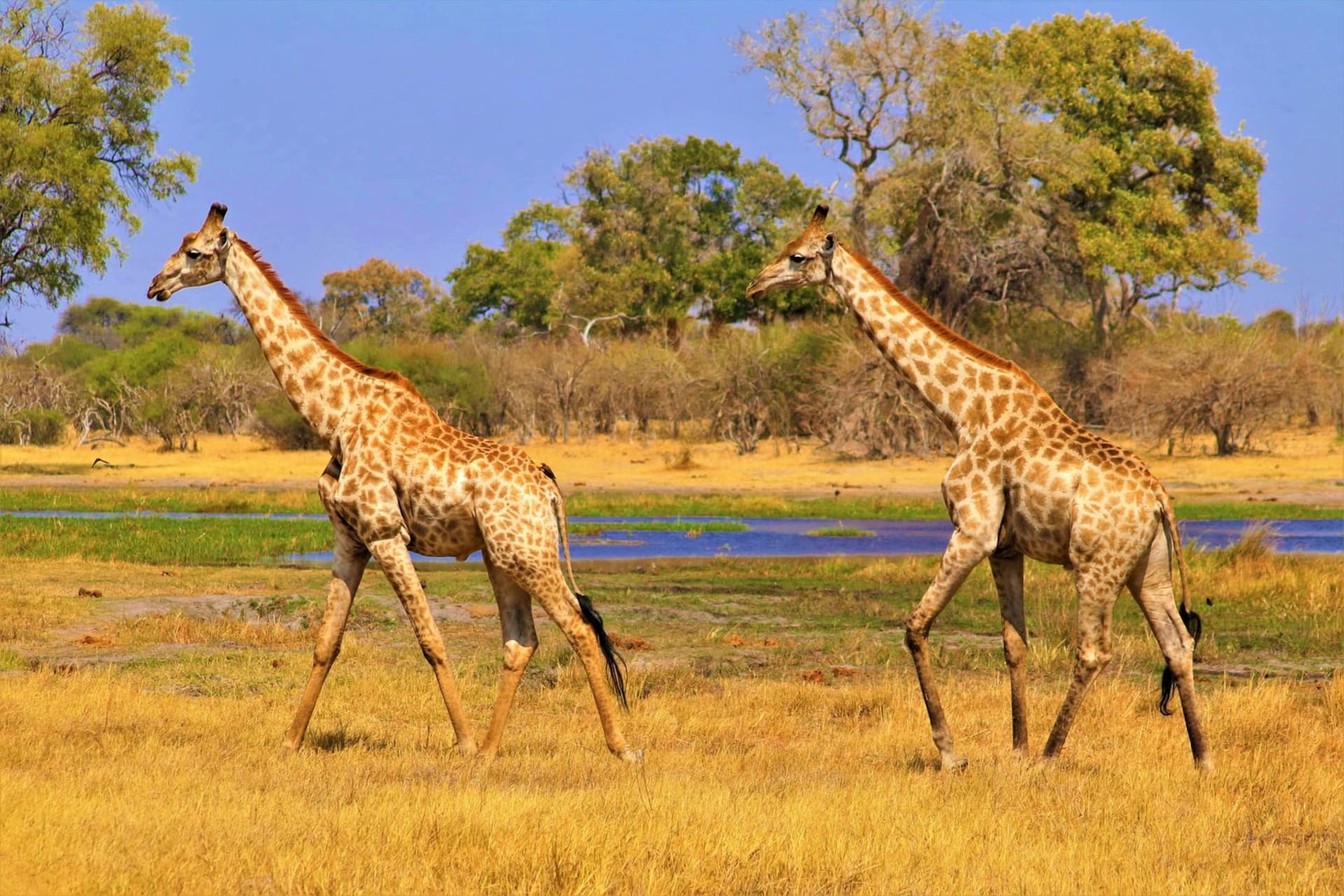
Zimbabwe's largest park, with one of Africa's largest elephant populations and dramatic dry-season waterholes.
I had been told the numbers — forty thousand elephants — and, like all large numbers, the figure had meant nothing to me. Then we drove through the Main Camp gate at dawn, the tarmac dissolving into red sand within a hundred metres, and I understood that Hwange does not deal in abstractions.
The Waterholes at Midday
The dry season strips everything back. By August the mopane woodland is the colour of old bone, the grass hammered flat, and every living thing converges on the artificial waterholes the park has maintained for decades. We parked at Dom Pan just before noon — the hour serious safari guides deride as too bright, too harsh — and sat in silence for two hours watching a procession that made time feel irrelevant. Elephant after elephant, then a cluster of zebra drinking in nervous sideways glances, then a pair of sable antelope who seemed to have wandered in from a different, more elegant century. The light was ferocious and flat and I took almost no photographs. Some scenes resist the frame.
The ground around Dom Pan smells of mineral dust and something organic and faintly sweet — dung, mud, the breath of large animals — and it settles in the back of the throat like red clay.
What the Night Sounds Like
Lia had insisted we book a night at Camelthorn Lodge, outside the Main Camp area, and I had agreed with the mild scepticism of someone who has slept in too many expensive tents. What I had not anticipated was waking at two in the morning to the sound of something enormous moving through the scrub ten metres from the canvas wall. A single elephant, separated from whatever herd it belonged to, eating its way through the night. The ripping of branches, the low stomach rumble that elephants use to talk to each other across distances — it went on for twenty minutes. I did not move. I was not afraid, exactly. I was simply very aware of being small.
The unexpected thing: I had come for the spectacle of the waterholes and stayed for the solitude. Hwange is vast enough that you can drive its sand roads for an hour and see nothing but tracks in the dust and a martial eagle on a dead tree, and that absence feels like a gift.
Getting Oriented
The park runs roughly south from the railway town of Hwange on the main Bulawayo–Victoria Falls road. Most lodges arrange transfers from Hwange station or from Victoria Falls, two and a half hours north. The internal roads are navigable in a standard 4x4 but the deep sand between Main Camp and Sinamatella demands patience and tyre pressure management.
When to go: The dry season, June through October, is when waterholes concentrate the wildlife and sightings are at their most dramatic. July and August offer the densest elephant gatherings; October is hotter but even more rewarding for those willing to sit long hours in the midday sun.