Mountains Nobody Expects
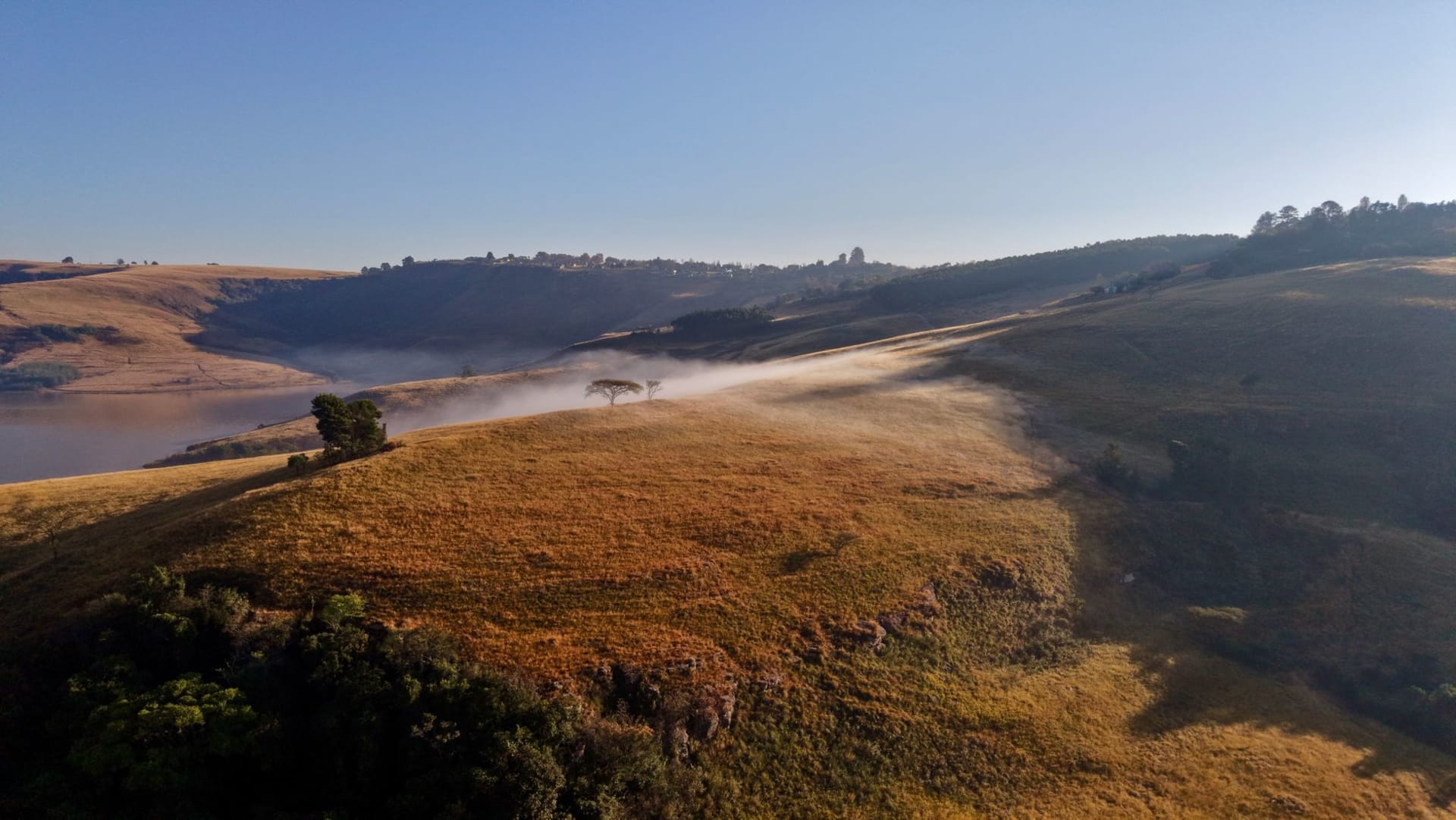
The Eastern Highlands stretch along Zimbabwe’s border with Mozambique like a secret the rest of the country keeps poorly. Coming up from Mutare, the road climbs through switchbacks and suddenly the temperature drops five degrees and everything turns green in a way that feels almost aggressively un-African — at least in the clichéd sense. Nyanga is the center of it, a highland district of pine plantations, trout streams, and the kind of low cloud that makes you want to stay inside drinking tea with a view of something soggy and beautiful.
Mount Nyangani is Zimbabwe’s highest peak at 2,592 meters, and I climbed it on a clear morning in July when the air tasted like metal and the views from the summit extended into Mozambique in one direction and back across the highveld plateau in the other. The mountain has a peculiar reputation for people disappearing — there’s a long oral tradition of hikers vanishing without trace — and alone near the top with the cloud closing in from the east, I found the mood less ridiculous than I expected.
Trout, Tea, and an Apology to the Fishermen
I don’t fish. But I found myself watching the fly fishermen on the Nyangombe River for longer than someone who doesn’t fish has any right to, because the river itself is worth watching — cold and clear over smooth rocks, lined with msasa trees, with the late afternoon filtering through in columns. The eastern highlands trout fishing has a devoted, slightly eccentric following; the anglers I met at the lodge had a quality of purposeful calm I deeply respect.
The tea estates around Honde Valley are another register entirely. I drove down the escarpment from Nyanga into the Honde — the road descends nearly 1,000 meters in a short distance — and the valley floor is a different climate again: humid, subtropical, banana and tea as far as the ground lets you see. I stopped at the Katiyo Tea Estate and walked the rows, the leaves wet from overnight rain, and drank a cup that tasted unmistakably of the soil I was standing on.
Chimanimani’s Edge
The southern end of the highlands belongs to Chimanimani, a quartzite massif whose peaks serve as the border with Mozambique and whose interior is reachable only on foot. I’d made it a separate trip, but from the Nyanga area you can feel the highlands pulling south. The road through the Bvumba Mountains near Mutare passes botanical gardens that look like something from a Graham Greene novel — genteel and slightly faded, with extraordinary birds in the trees.
Birding in the Eastern Highlands is serious. The Chirinda Forest in the far south holds the country’s oldest trees and birds found almost nowhere else in Zimbabwe. I am still a beginner but the forest demanded my attention with sound alone: things calling from the canopy I had no names for yet.
Where to Base
Nyanga village has several comfortable lodges with fireplaces and thick blankets, which is exactly what the climate demands in winter. The drive from Harare takes roughly four hours on a good road.
When to go: May through August is cool and dry — perfect for hiking Nyangani and fly fishing. The highlands are at their greenest during and after the rains (November–March), but cloud cover can obscure views for days. Avoid Easter weekend when domestic tourism makes accommodation scarce.