There is no grid in Stone Town. No logic you can impose on it from above, no street pattern that makes sense once you step inside. The old quarter of Zanzibar City is a maze — deliberately so, built by the Omani sultans in the nineteenth century to disorient invaders and trap the unfamiliar. I was thoroughly, happily trapped within thirty minutes of arrival.
The city smells of cloves and salt and something faintly resinous I couldn’t identify until a spice vendor pressed a dark pod into my palm and said “black cardamom.” Then the entire air rearranged itself into something recognizable.
The Doors
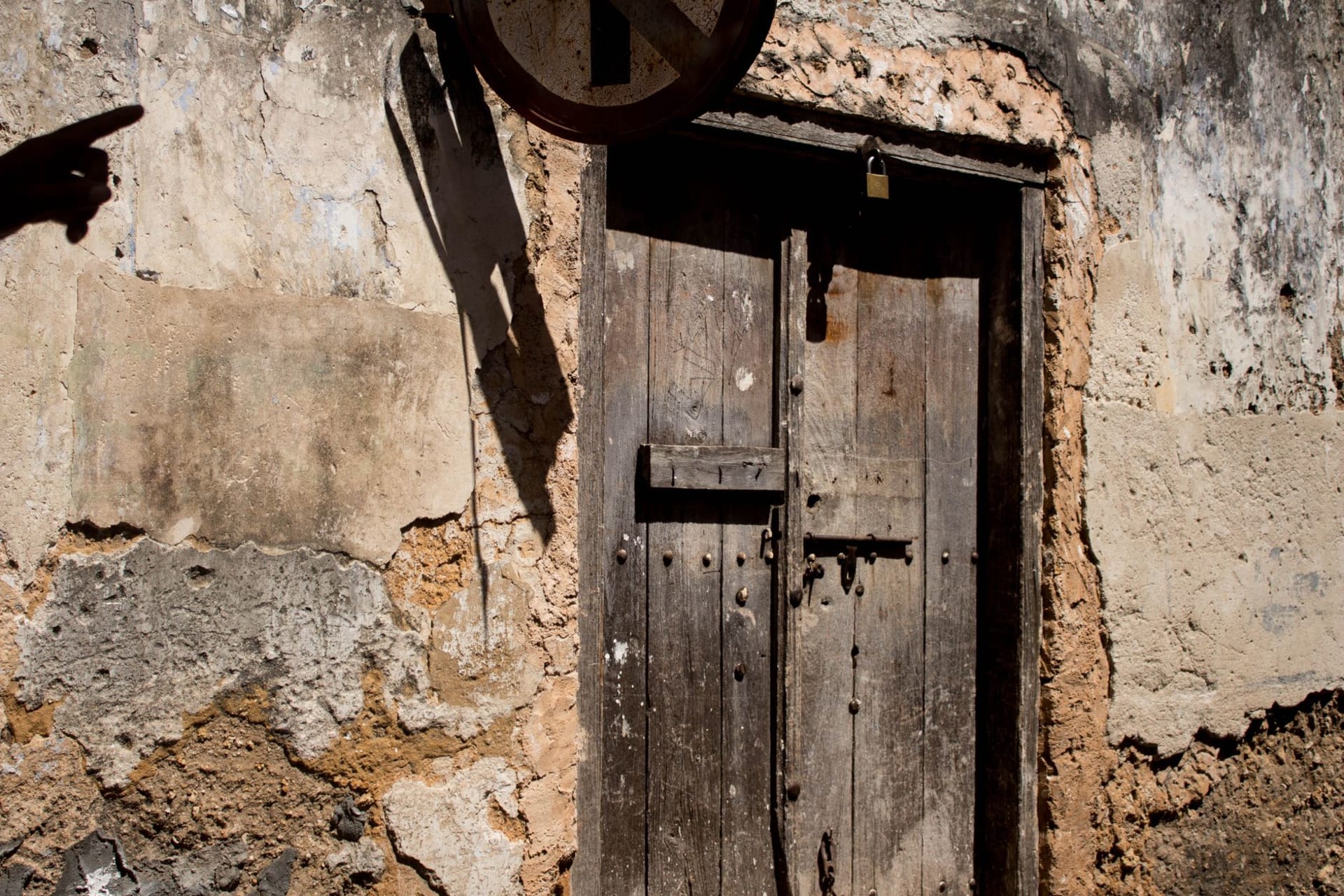
Stone Town’s famous carved wooden doors are not decoration. They are a social ledger. The deeper the carved relief, the wealthier the household behind it. The brass studs — dozens on the finest examples — were borrowed from Indian architectural tradition and signified something between grandeur and warning. Many doors are older than any nation I’ve ever been to.
I spent an entire morning doing nothing but doors. Lia thought I’d lost my mind, wandering with my neck craned at the Arabic calligraphy curling above lintels, the lotus flowers and fish worked into the frames by Gujarati craftsmen who sailed here and never left. The doors of Zanzibar could be a book. They should be.
Forodhani Gardens at Dusk
Every evening, the waterfront Forodhani Gardens transforms into one of the best street food markets I’ve encountered anywhere in the Indian Ocean world. Vendors fire up charcoal grills as the sun drops into the water and the dhows in the harbor become silhouettes. The specialty is Zanzibar mix — a plate of crispy cassava, chickpea fritters, green mango, and tamarind sauce assembled with the focused energy of a street surgeon. Then there’s urojo, the “Zanzibar pizza” that is actually a stuffed crepe fried on a flat iron, filled with whatever combination you negotiate: egg, cheese, minced meat, mayonnaise.
I ate standing, facing the harbor, watching the lights come on across the channel.
The Old Fort and House of Wonders
The Arab Fort — built by Omani Arabs in the early 1700s on the ruins of a Portuguese chapel — now hosts craft markets and outdoor film screenings inside its coral-stone walls. The contradiction is complete and feels entirely right. Beside it, the House of Wonders once held Zanzibar’s first electric lights and first elevator; its carved balconies stare out over the seafront with an imperious calm that the years have not diminished.
Between these two buildings, the entire colonial story of this island is compressed: Portuguese, Omani, British, all layering over the older Swahili civilization that gave the city its bones. The museum inside the House of Wonders is genuinely excellent and almost always uncrowded — you can stand alone in front of a nineteenth-century sultan’s throne and hear nothing but pigeons.
Getting Lost on Purpose
The best thing to do in Stone Town is to pocket the map and walk until you’re unsure where you are. The city is small enough that you can’t stay lost for long, and every wrong turn produces something — a courtyard with a mango tree growing through broken tiles, a hammam still operating on the original Persian layout, a tiny mosque where the call to prayer sounds like it’s coming from inside the wall beside you.
On my last evening I sat in a cafe above the rooftops with a glass of fresh tamarind juice and watched the swifts wheel in from the sea. The city below was doing what it has always done: existing at the intersection of everywhere else, unhurried, specific, and impossible to summarize.
When to go: Stone Town works year-round — the old buildings stay cool even in the heat, and rain is rarely the all-day affair it can be on the east coast. December to February and June to October are the driest months. Avoid visiting during the heaviest rains of April and May unless you want the city mostly to yourself, which is itself a reasonable reason to come.