Africa
Zanzibar
"Nowhere else have I felt so many histories colliding in a single afternoon."
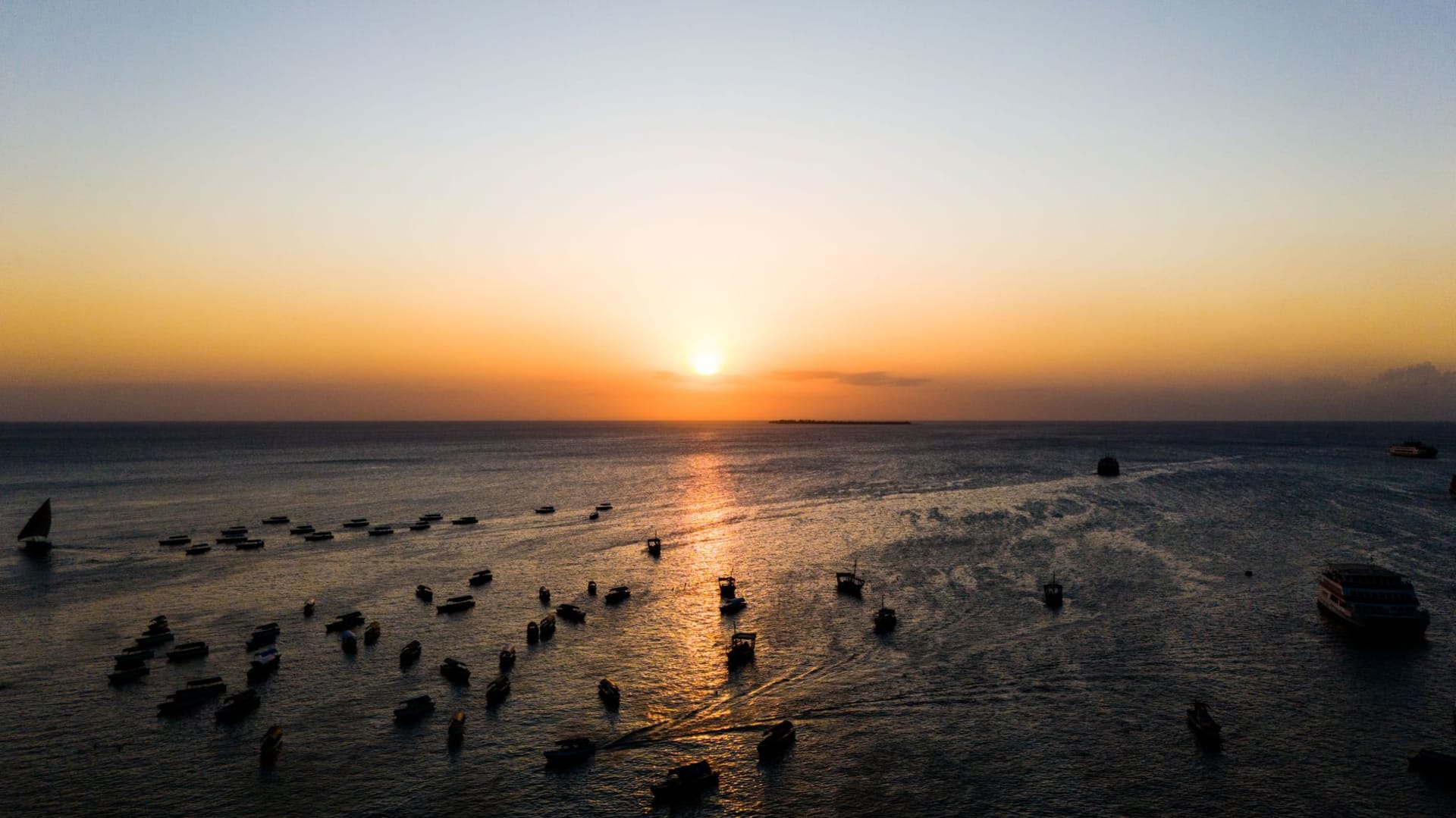
The ferry from Dar es Salaam takes two hours, and by the time you see Stone Town materializing through the salt haze — minarets, dhow masts, the coral-stone walls that seem to absorb heat rather than reflect it — you already sense that this is not a beach destination with a colonial quarter attached. It is something stranger: an island that spent centuries as one of the Indian Ocean’s most important trading posts, then became a British protectorate, then a revolutionary republic, and then, somehow, a honeymoon destination. All of those layers are still there, stacked on top of each other in ways that make every afternoon walk feel like an accidental history lesson.
Stone Town is where I spent most of my time, and where most visitors don’t spend nearly enough. The medina-like warren of narrow streets behind the seafront is not particularly large — you can walk across it in twenty minutes if you’re determined — but it resists navigation in the way that good old cities do. I kept finding myself at the Darajani market before I meant to, standing in front of a stall piled with dried cloves and cardamom pods while a man explained which grade of cinnamon was worth buying. The spice trade collapsed long ago, but the smells haven’t left. At Forodhani Gardens in the evening, the grills come out and vendors cook Zanzibar pizza — a street-food invention that involves thin dough, egg, minced meat, and various combinations of whatever the cook decides to put in it — alongside octopus charred directly on the coals. I ate there three nights in a row, standing at the same table, paying roughly a dollar per item.
The beaches, yes — they are everything people say. Nungwi in the north and Paje on the east coast both deliver the turquoise-over-white that the photographs promise. But the photographs don’t convey the tidal extremes. At low tide on the east coast the ocean retreats hundreds of meters, leaving a flat expanse of seagrass where local women work collecting sea cucumbers in the ankle-deep water. Come back six hours later and that same ground is under two meters of Indian Ocean. The visual shift is so complete that you check whether you’ve moved.
When to go: June through October is the long dry season — reliable sun, lower humidity, and the best sea visibility for diving and snorkeling. December through February is also dry and excellent. Avoid April and May (the long rains) and November (short rains), when downpours can be heavy and extended. Peak season brings higher prices everywhere; if you can travel in June or early October, you’ll find better rates and fewer crowds on the beaches.
What most guides get wrong: They treat Zanzibar as a bolt-on to a Tanzania safari — three nights of beach recovery before the flight home. That framing reduces it to a resort island, which is only one version of what it is. Stone Town alone deserves two to three full days of exploration, not a single guided tour that ends at a spice farm. The cultural weight of the place — Arab, Indian, African, British, Swahili, all of it compressed into one small island — is genuinely unlike anything else on the continent. Come for the beaches if you want, but leave time to get properly lost in the old city first.