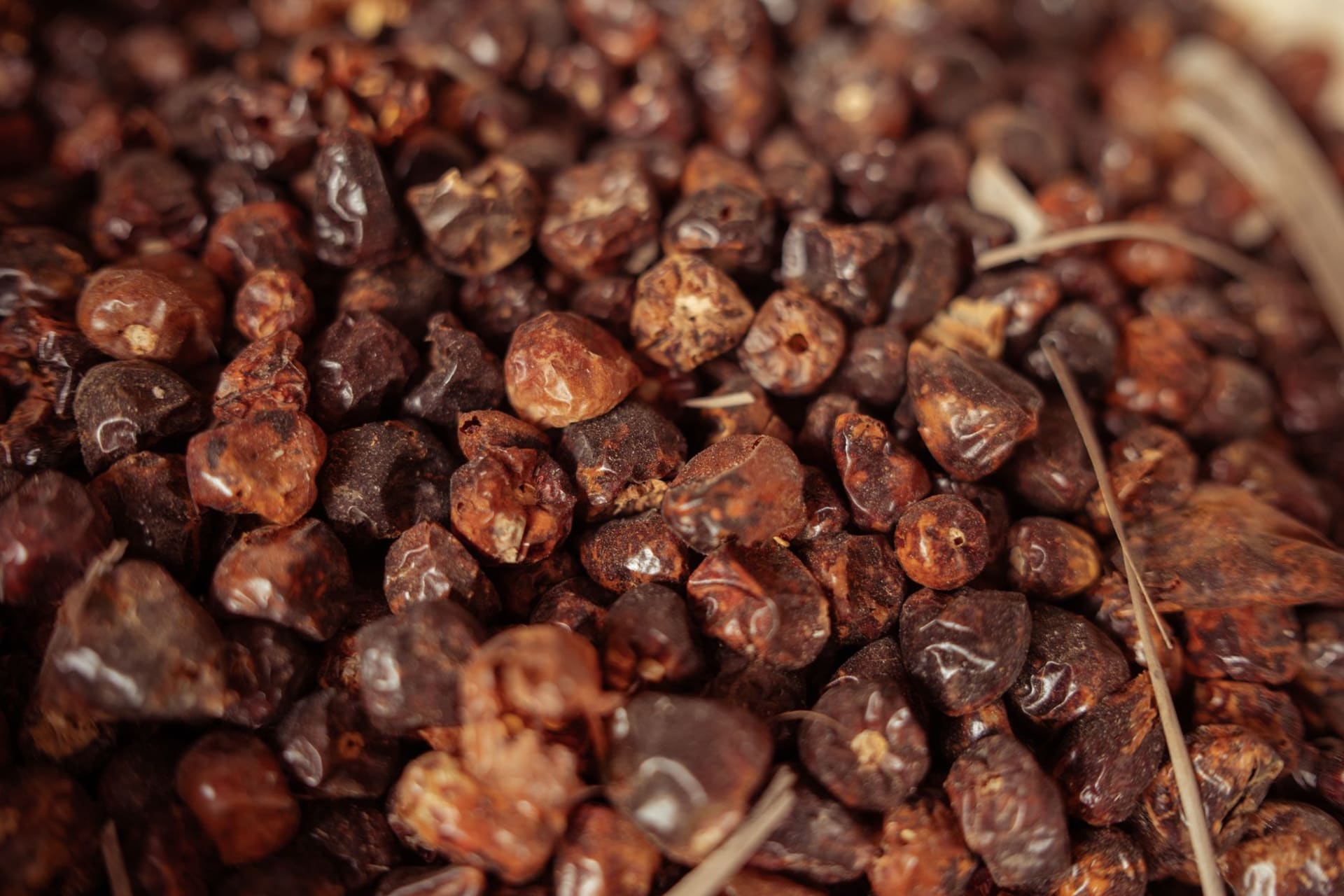
Zanzibar was once the world’s largest clove producer. The sultans of Oman who controlled the island in the nineteenth century introduced clove cultivation on a vast scale, replacing much of the interior forest with plantation groves, and the island’s entire economy and identity shifted around the spice. The word “clove” comes from the French “clou,” meaning nail, because the dried flower bud looks like one — a small fact that becomes available to you in a new way when you’re standing in a grove of clove trees with actual cloves in your hand, the smell so sharp and medicinal and sweet that it functions less like a scent and more like an argument.
The spice farm tours that run from Stone Town take you into this interior landscape, and they are one of those tourist activities that are better than their touristiness suggests.
What Grows Here
The guides who work the farms know their material. Mine was a man named Hamisi who had been doing this work for fifteen years and who delivered his knowledge with a genuine pleasure in the unexpected — he liked catching people when they failed to identify something, then revealing the connection between what you were smelling or tasting and something you’d used your entire life without thinking about.
The list of what grows in an established Zanzibar spice farm is absurd in the best sense: cloves, vanilla, cinnamon, cardamom, black pepper, turmeric, ginger, nutmeg, jackfruit, soursop, breadfruit, ylang-ylang, lemongrass, and a dozen other things whose names I wrote down and then couldn’t read my own handwriting. Hamisi broke open a nutmeg pod and showed me the interior — the hard seed wrapped in a red lacework that is mace, the spice, which I had used without ever knowing what it looked like in its actual state.
The Smell of It
There’s no adequate way to describe what a productive spice farm smells like. Layered is the closest approximation — the base note of damp earth and leaf litter, then the sharper notes of clove and cinnamon varying as you move between sections, then the sweeter top notes of vanilla and ylang-ylang if you pass those plants in bloom. The whole thing shifts with every few steps in a way that makes you conscious of smell as information rather than just atmosphere.
Lia, who has a more sophisticated nose than I do, stood for a long time in the cardamom section with her eyes closed, identifying what she was smelling before she opened them. She got cardamom, green chili, and something she described as “the smell of a very good kitchen in December.” Hamisi seemed pleased.
The Cooking Demonstration
Many farm tours end with a simple cooking demonstration using the spices you’ve just seen growing — a spice tea, rice pilau cooked with whole cloves and cardamom, maybe a coconut fish dish. The pilau here functions as a kind of argument about spice: the difference between using dried ground spice from a jar and using whole, fresh, just-harvested spice in the same dish is not subtle. The rice had a depth and a fragrance that made me understand why the sultans built an entire economic empire around these plants.
Lunch on a spice farm tour is often included and is often excellent — served on banana leaves, communal, eaten with your hands, the flavors all identifiable from the morning because you’ve literally touched the plants they came from.
The Interior Landscape
Beyond the cooking and the identification game, the spice farm landscape itself is worth your attention. The interior of Zanzibar is nothing like the coast — there’s no ocean, no bleached sand, none of the tourist infrastructure. The roads narrow to dirt tracks, the villages are small, the shade of the plantation canopy keeps everything fifteen degrees cooler than the beaches. Red colobus monkeys — found only on Zanzibar — move through the upper branches of the trees, spectacularly indifferent to the tour groups below.
The light filtering down through the canopy onto the red earth is the specific green-gold of shaded tropical growing places, and it is very beautiful in a way that photographs adequately and experiences better.
When to go: Spice farm tours run year-round and are largely weather-independent since the farms are shaded and the tour is on foot. The harvest seasons for different spices create different opportunities: cloves in July to August, vanilla pods in January to March. Visit in the morning for cooler temperatures and better energy from your guide. Most tours depart Stone Town; book through your guesthouse rather than from touts on the waterfront.