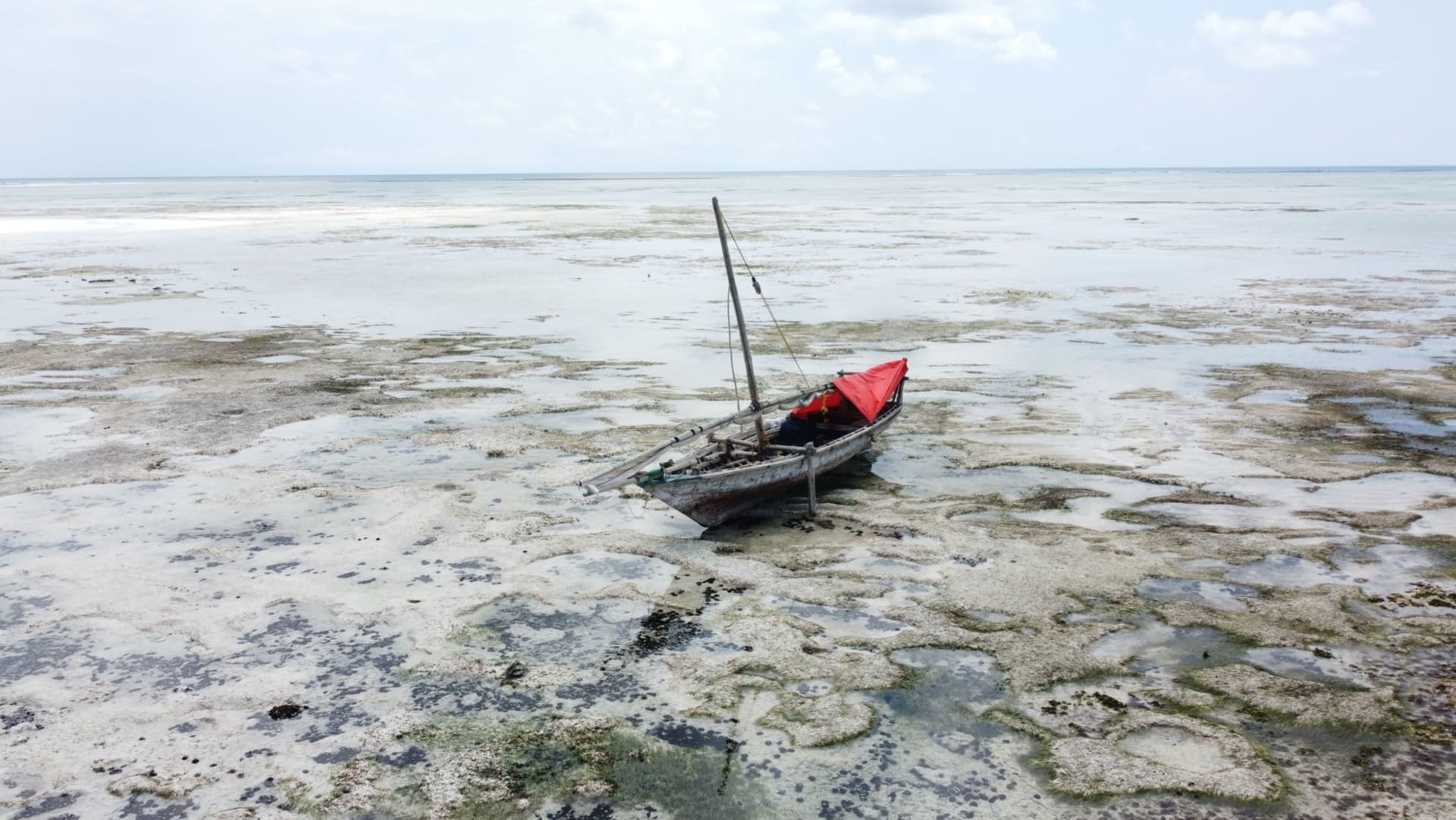
Matemwe
"The reef is thirty meters from the beach. The mantas don't care that you're there."
Matemwe doesn’t announce itself. You drive north from Stone Town along a road that gradually deteriorates, the villages getting smaller, the banana trees closer to the road, until you arrive at a stretch of coast that is emphatically not trying to impress you. A few guesthouses. A beach of white coral sand. Palms so tall their fronds register only as movement at the edge of your vision.
And then you look out at the water and understand why people who’ve been here keep coming back.
The northeast coast sits at the edge of a long reef system that runs parallel to the shore, maybe a two-hundred-meter swim from the beach. Beyond the reef, the Indian Ocean drops into deep water and behaves accordingly. Inside the reef, the lagoon is shallow, warm, and so clear that you can see the individual coral formations from the sand.
The Reef
I snorkeled the Matemwe reef three times and each time saw something different. On the first outing I found a field of staghorn coral in water so shallow I had to be careful not to touch it, fish moving through the branches with the confident nonchalance of things that live there. On the second, deeper, I drifted over a section of brain coral the size of a small car, perfectly spherical, with a Napoleon wrasse circling it like a landlord doing a property inspection.
The visibility here in the dry season is extraordinary — twenty, twenty-five meters on good days. Everything below you is laid out like a diagram of itself. On the third snorkel I went at dawn, just after the boat traffic died down, and the water had a quality of light that I have not encountered before or since: a blue filtered through the morning sun at a low angle that made the entire reef glow from within.
Scuba diving is available through several operators, and the sites off Matemwe include some of the best in Zanzibar — particularly Manta Point, where seasonal aggregations of manta rays pass through between November and March.
Manta Season
I came in December, which is the beginning of it. On a morning dive, we dropped off the reef into open water, descended to about fifteen meters, and waited. The guide pointed — I couldn’t see anything, then I could, two dark shapes resolving out of the blue as they came in from deeper water. Full-grown oceanic mantas, each with a wingspan easily three meters across, banking into the current with adjustments so minor and precise they were barely movements at all.
They were not performing for us. They were going somewhere and we happened to be in the way. They adjusted their course by a meter or two to avoid us, regarded us briefly with lateral eyes, and continued. The whole pass lasted perhaps ninety seconds. I surfaced and was unable to speak coherently for several minutes.
The Village
Matemwe village sits behind the beach strip and operates on its own logic. There’s a morning fish market near the landing where the dhows come in — a genuine transaction happening, not a display — and a cluster of shops around a junction where you can buy mangoes, mobile data, and bags of roasted peanuts from a cart. The children here are curious about visitors in a way that hasn’t been flattened into the performance you get in more trafficked places — they want to know where you’re from, not sell you anything.
Eating and Staying
Matemwe has maybe eight or ten places to stay, from very basic beach bungalows to one genuinely beautiful lodge on the reef edge that costs proper money. In between there’s a range of guesthouses that provide a bed, a mosquito net, and dinner that may or may not involve the fish caught that morning. The coconut octopus I had one evening — slow-cooked in coconut milk with chili, served with rice — was technically the best thing I ate in Zanzibar, and I ate well.
When to go: October to March for manta ray season and calm seas. June to September is drier but the northeast monsoon can make the water choppy. December to February hits the sweet spot of dry weather and peak manta activity. Matemwe rewards people who want quiet — if you need nightlife, look elsewhere.