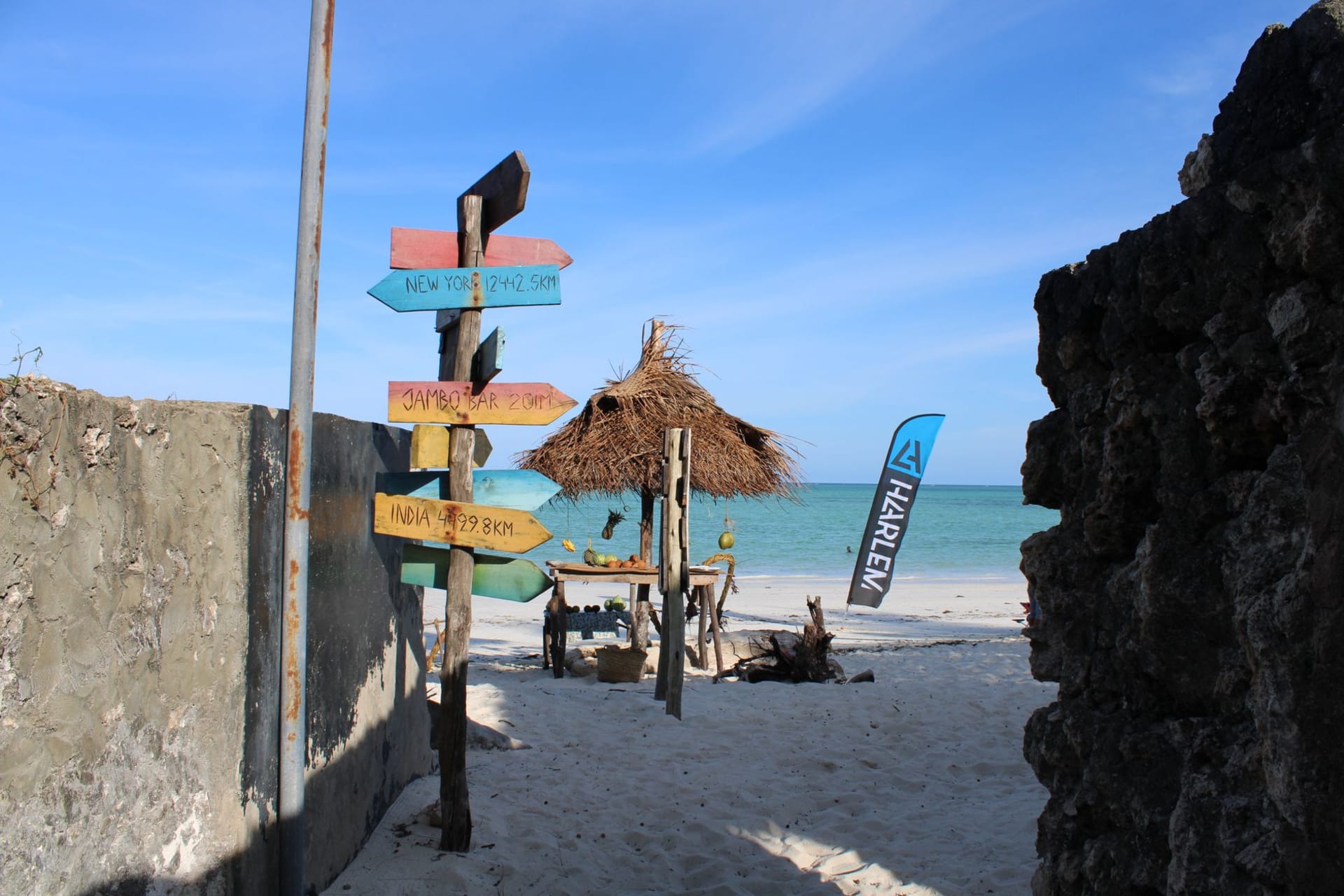
Bwejuu might be the most photogenic beach in Zanzibar and it’s certainly one of the least visited relative to its beauty. The village sits on the southeast coast, south of Paje, and the coconut palms here are so tall and dense and angled so dramatically over the sand that the whole beach looks like someone’s considered composition rather than something that just grew.
I came to Bwejuu after three days in Paje and the contrast was immediate. No kite schools. No bars with outdoor sound systems. A handful of small guesthouses, a few restaurants, and a beach that on most mornings had more birds on it than people.
The Beach at Different Tides
The east coast tidal range is dramatic — the water retreats several hundred meters at low tide, leaving behind a flat of warm shallow water that’s ankle-deep for as far as you care to walk. At Bwejuu this becomes something I kept returning to at different hours because it kept being different.
At dawn, with the sun coming over the horizon directly out to sea, the tidal flat reflects it in a line of fire from your feet to the water. The texture of the sand below is visible through maybe two centimeters of water — you’re walking on the bottom of the ocean, more or less, in a way that keeps delivering small surprises: a hermit crab, a starfish, a section where the sand has been worked into ripples by a current that passed through hours ago.
At midday it’s too bright and too exposed for comfortable walking. But at four in the afternoon, with the sun coming from behind the palms at your back, the same flat becomes gold and the fishing boats moored in the shallows cast long shadows and the whole thing looks so arranged that I took approximately forty photographs and deleted thirty-eight of them because no image adequately registered the actual quality of the light.
The Village
Bwejuu village is behind the beach — a compact settlement built around a mosque and a school and a market that operates in the mornings. The relationship between village and tourist strip is visible in interesting ways: there are places on the beach road that are clearly oriented toward outside visitors, and there are places twenty meters away that clearly are not and don’t want to be, and the two coexist with the equanimity of things that have figured out how to not bother each other.
I walked through the village one morning looking for coffee and found instead a house where a woman was making mandazi — the fried dough pillows that are a Swahili breakfast staple — in a large pan over charcoal in the courtyard. She sold me a bag of them for a price I would not have been able to spend on a bad coffee in Mexico City. Warm, slightly sweet, with a texture that’s neither doughnut nor beignet but adjacent to both. I ate them sitting on a wall while a cat watched from a safe distance.
Between Paje and Jambiani
Bwejuu sits in the middle of the southeast coast’s three main villages, and walking between them along the beach is one of the better low-effort days in Zanzibar. The walk to Paje north takes about two hours at low tide; south to Jambiani is similar. The beach is continuous the whole way, backed by palms, with fishing boats and occasional seaweed farmers the main points of interest.
I did the Paje-Bwejuu-Jambiani walk in one day with a backpack and came back by dalla-dalla — the minibus taxis that run all day along the coast road. The combination works well: you see everything from ground level going south, and get back quickly when your legs register an opinion.
Slower Than You Expected
Bwejuu resists schedules. The things to do here are: swim, read, walk, eat fish, watch the tide, walk some more. None of these require planning. After two days I’d stopped being aware of planning anything and started just responding to what was in front of me — if the tide was in, I swam; if it was out, I walked; if it was hot, I sat in the shade of the palms and watched the horizon for dhows.
It’s the closest I got to what people mean when they say they “disconnected” somewhere, a concept I am usually skeptical of. Here I was not skeptical.
When to go: June to October and December to February are the best months for clear skies and good swimming conditions. Time at least one day around a high tide if swimming is important to you; plan a sunrise or sunset walk at low tide regardless of your swimming preference. Bwejuu rewards those who stay at least three nights.