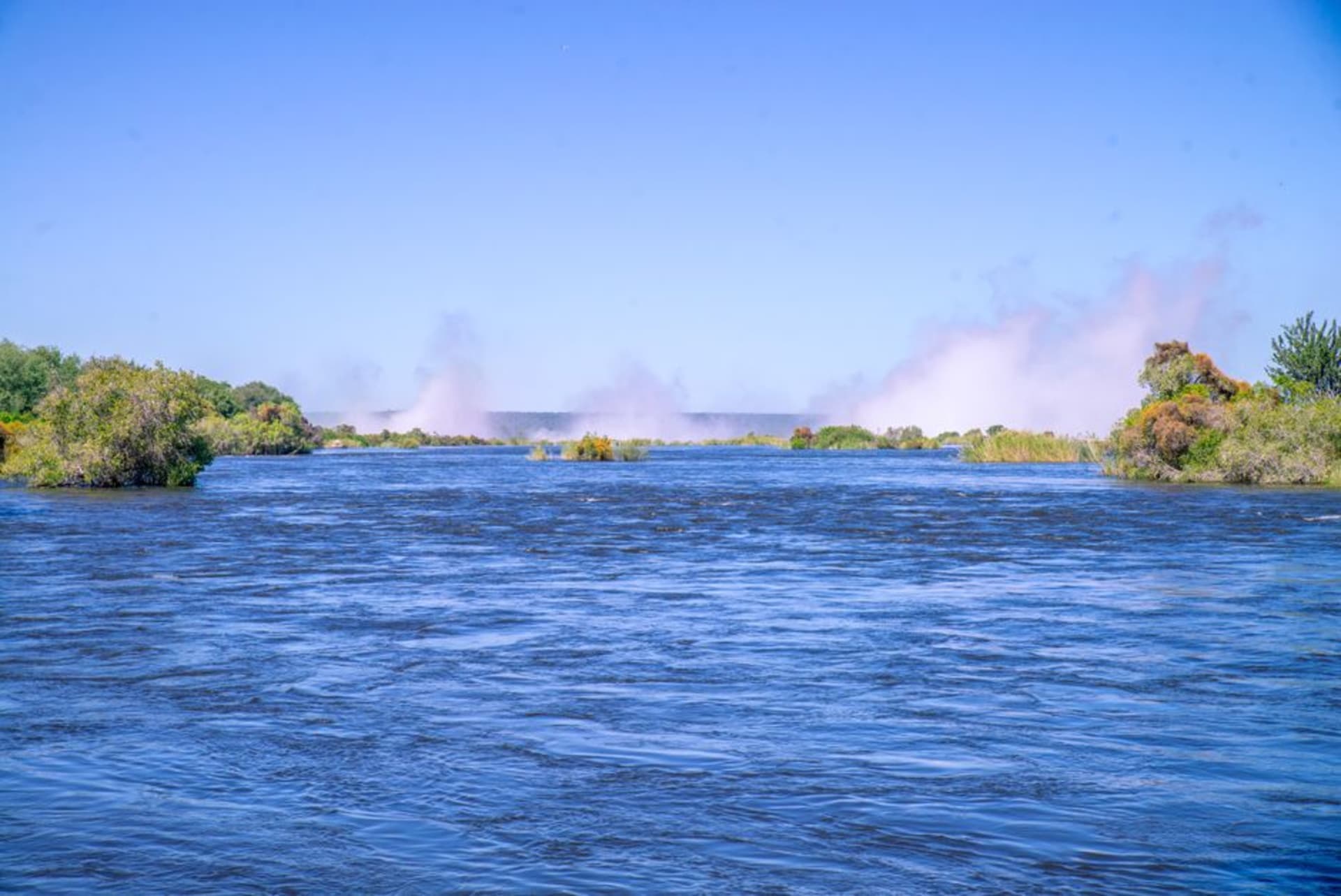
Ngonye Falls
"We had the whole viewpoint to ourselves for over an hour, just Lia, me, and a fish eagle calling somewhere across the spray."
A broad curtain of whitewater on the upper Zambezi near Sioma, where the river fans across a wide rock shelf with almost nobody around to watch.

Getting to Ngonye Falls takes actual effort, which is exactly why almost nobody bothers, and exactly why I’d send anyone who’s already made it out to western Zambia. The road from Livingstone runs for hours through flat mopane scrub and sand-track villages before it even reaches Sioma, and by the time we pulled up to the falls’ viewpoint on the eastern bank, my back ached from the truck’s suspension doing its best against a road that mostly wasn’t one. Then the trees opened up and there it was: the entire width of the upper Zambezi splitting into a dozen braided channels and dropping maybe ten meters over a jagged rock shelf that stretches nearly the full breadth of the river.
David Livingstone himself apparently thought Ngonye rivaled Victoria Falls in beauty, if not in scale, and standing at the edge of that basalt ledge with spray drifting sideways in the wind, I understood the comparison even if I wouldn’t go quite that far myself. What Ngonye has that Victoria Falls has completely lost is silence — no helicopters overhead, no queue of tour buses, no bungee operators shouting into megaphones. Just the roar of water finding a hundred different paths through rock, and a couple of local fishermen working the calmer pools downstream with hand lines, seemingly unbothered by the tourists.
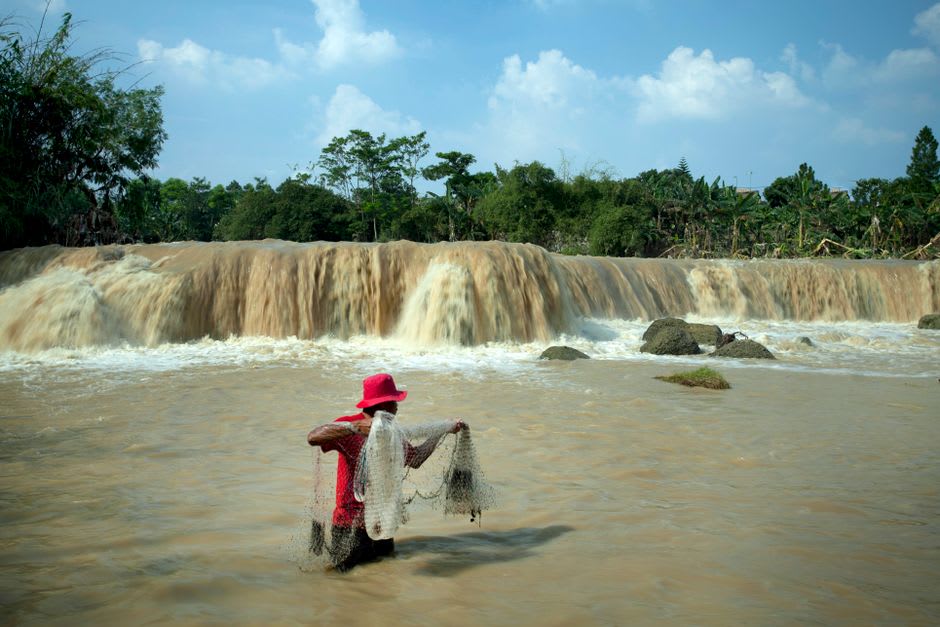
We hired a mokoro-style canoe from a guide in Sioma village who paddled us out to a small island practically in the middle of the falls, threading between channels with a confidence that made me nervous and impressed in roughly equal measure. From there the falls open up in every direction, and you get a sense of just how much water is moving even in dry season — the Zambezi here is already a serious river, months before it reaches the drop at Victoria Falls further downstream. Lia spent most of the crossing gripping the canoe’s edge and telling me, not for the first time, that my idea of a relaxing afternoon needs some recalibration.

Sioma itself is barely a town — a scatter of thatched houses, a small market, and the entrance gate to what’s technically Sioma Ngwezi National Park territory — but the people we met were some of the warmest of the whole Zambia trip, genuinely curious why two people had driven that far out of their way for a waterfall most Zambians I mentioned it to in Lusaka had never heard of. I don’t have a tidy explanation either, beyond the fact that some places reward the effort of getting there precisely because so few people make it.
When to go: Visit during or just after the rainy season, roughly March through May, when water volume is highest and the falls are at their most dramatic; the road is far easier in the dry months from June to October if driving comfort matters more to you than flow.
Keep exploring
More from Zambia
 zambia
North Luangwa
South Luangwa's wilder, harder-to-reach sibling — walking safaris only, no roads, no vehicles, and one of the last truly unmediated wilderness experiences in Africa.
Explore zambia
Shiwa Ng'andu
A crumbling English manor house built in the African wilderness by a deluded idealist, now run by his grandchildren — improbable, melancholy, and completely unforgettable.
Explore zambia
South Luangwa
The park that invented the walking safari, where leopards lounge in fever trees and the bush feels genuinely, unhurriedly wild.
Explore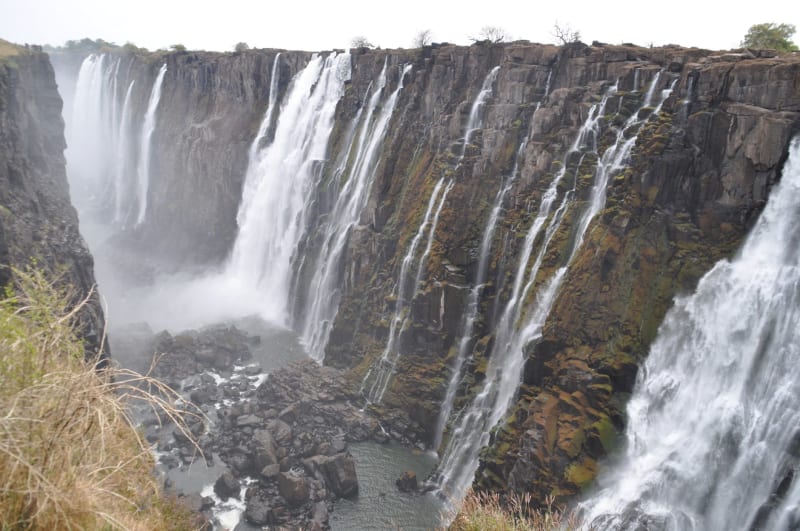 zambia
Upper Zambezi & Barotseland
The slow, wide stretch of the Zambezi above Victoria Falls, where Lozi kings still hold court and dugout canoes cross floodplains that turn to inland sea each year.
Explore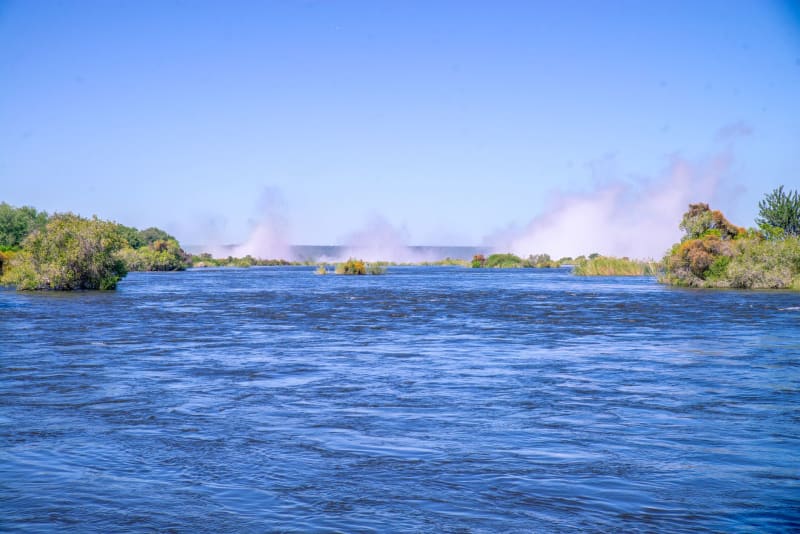 zambia
Bangweulu Wetlands
A vast, half-flooded wilderness in northern Zambia where the shoebill stork exists like a prehistoric rumor made flesh, watching you from the papyrus.
Explore zambia
Chishimba Falls
A three-tiered waterfall dropping through Northern Province forest on the Luongo River, reached by a short walk and shared mostly with local picnickers.
Explore