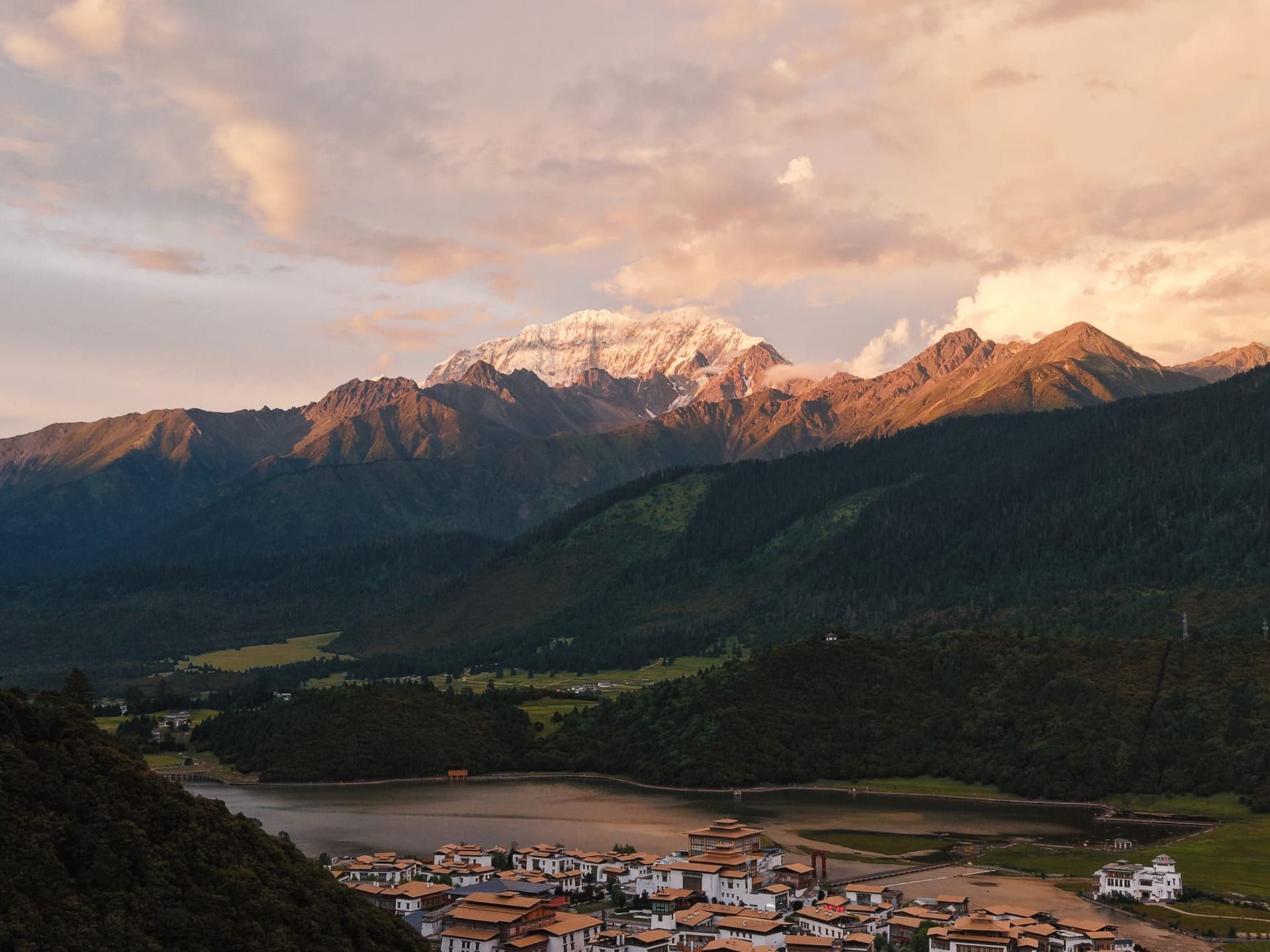
Shangri-La
"At 3,200 meters, everything slows down a little. Not because of the altitude, though that doesn't help. Because the light here earns its keep."
The name and what’s behind it
Zhongdian was a small Tibetan trading town in northern Yunnan until 2001, when local officials successfully petitioned Beijing to rename it Shangri-La — lifting the name directly from James Hilton’s 1937 novel. The gambit worked. Tourism multiplied. The cynical read is obvious, and I had it ready when I arrived by bus from Lijiang. Then I stepped outside at five in the afternoon, and the Hengduan Mountains were cutting the horizon in every direction, and the air smelled of juniper and cold grass, and I quietly retired the cynicism.
The Tibetan culture here is real, even if the marketing around it is strained. Most residents are Khampa Tibetans, and the old quarter — burned in 2014 and largely rebuilt since — still has the density and logic of a traditional Tibetan neighborhood. Prayer wheels line the main street. Butter lamps burn in doorways. The sounds in the morning are dogs, wind, and distant horns from the monastery.
Ganden Sumtseling
The monastery is fifteen minutes from town by taxi and is the largest Tibetan Buddhist monastery in Yunnan — something like 700 monks in residence. I went on a Tuesday, off-season, and walked the outer circuit almost alone. The main hall has a smell I can’t fully categorize: butter, incense, old wood, something animal. The painted murals are genuinely old in places and you can tell which sections were restored recently because the colors haven’t had time to yellow.
The monks eat communal meals at set hours, and if you time it right you can watch them cross the courtyard in their burgundy robes in long lines. No performance. Just logistics.
The grasslands east of town
Napa Lake, about eight kilometers from Shangri-La, is a seasonal wetland that fills with migratory birds in autumn and drains into marshland by spring. When I visited in late September, the lake was still substantial and the surrounding grasslands were the kind of green-gold that exists at high altitude for maybe three weeks a year before the cold takes it.
There’s a herding culture active in this landscape. I watched a Tibetan family moving yaks across the road with the unhurried authority of people who have never been in a particular hurry. The yaks are enormous and smell powerfully. The family’s dogs were larger than the yaks seemed to think was fair.
Butter tea and the question of acquiring a taste
Shangri-La is the place to drink butter tea, and I will be honest: it took me two days to stop flinching. The tea is made with pu-erh, yak butter, and salt, churned into something that sits somewhere between a broth and a beverage. It’s savory and heavy and at this altitude it makes physiological sense — the fat and salt do something real for your body. By day three I was ordering it without thinking.
The night market near the old town square does tsampa — roasted barley flour mixed with butter tea into a stiff dough — which you eat with your hands. It’s the most efficient food I’ve eaten anywhere. A fist of it keeps you walking for hours.
When to go: Late May through early October covers the best weather window. The grasslands peak in September when the summer rains have done their work. Winter is cold and austere but the monastery crowds thin dramatically — worth considering if you’re comfortable with sub-zero nights.