Asia
Yunnan
"I came for a week and stayed until my visa ran out."
The bus from Dali dropped me in Lijiang at dusk, and I spent the first twenty minutes just standing in the old town’s cobblestone lanes watching the water channels run alongside every wall. That sound — fast, cold, relentless — became the backdrop for everything that followed. Lijiang is a UNESCO site that has been heavily touristified, yes, but arrive before the tour groups and those same channels feel genuinely ancient, fed by snow off Jade Dragon Snow Mountain whose glacier you can see glowing white above the rooftops even at nine in the morning.
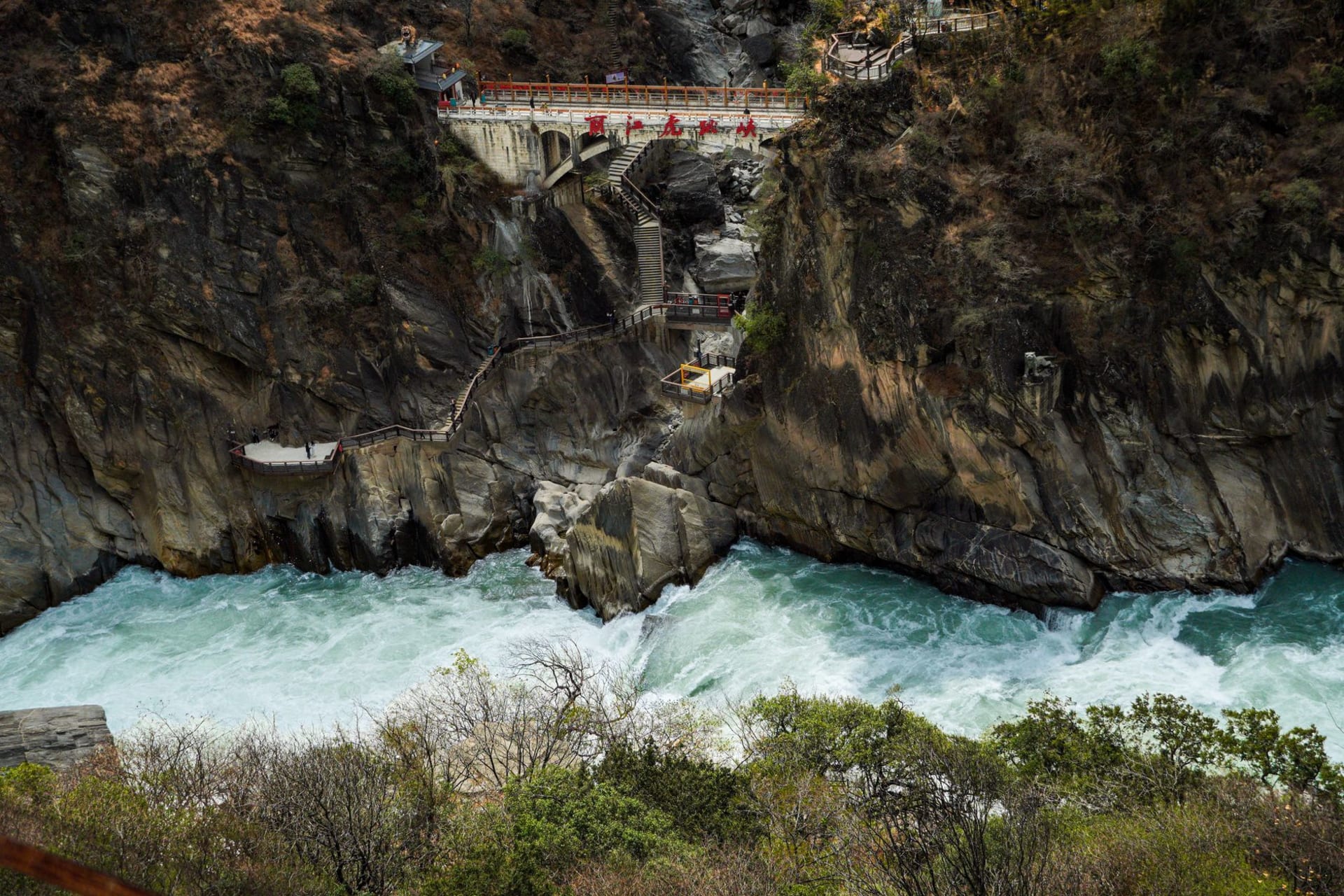
Yunnan is not one place. It is a vertical continent crammed into a Chinese province. In the span of three days you can move from Lijiang’s high-altitude old town at 2,400 metres, down through Tiger Leaping Gorge — two days of hiking where the Jinsha River is so loud between walls of rock you feel it in your chest — and out into the subtropical river valleys where bananas grow wild and the air tastes of wet earth. The Bai people around Dali make a fermented goat cheese called rubing that you fry in a hot wok with chili and garlic; the Naxi in Lijiang dry their pork in the mountain air for months before eating it; the Yi and Tibetan communities closer to the Sichuan border cook over open fires with flavours that have nothing to do with anything I’d eaten in China before. I kept a running list of dishes and hit thirty-seven before I left.
The thing nobody tells you is how much ground you need. People fly into Kunming, do one or two stops, and leave thinking they’ve seen Yunnan. What they’ve seen is the lobby. The rice terraces of Yuanyang in the southeast — the Hani terraces that hold the sky in their flooded fields at sunrise — are an eight-hour bus ride from anywhere you’ll likely be staying. The Tibetan plateau edge around Shangri-La is another world entirely, wind-scoured and cold and full of yak butter tea that you drink not because you love it but because you need the calories at 3,200 metres. Each corner of this province requires a commitment. The reward is that you are almost always the only foreigner on the bus.
When to go: March to May for the terraces and lower gorge hikes — rains haven’t started, temperatures are mild, and the flowering trees along the roads to Dali are extraordinary. October and November work nearly as well. Avoid July and August unless you don’t mind heavy rain on mountain trails.
What most guides get wrong: They treat Yunnan as a highlights reel — Lijiang, Dali, maybe Shangri-La — and move fast between them. The province rewards the opposite approach. Stay in one area for a week, hire local guides who speak the minority languages, eat where the market vendors eat, and let the altitude slow you down. The moments that stayed with me longest were never on any list.