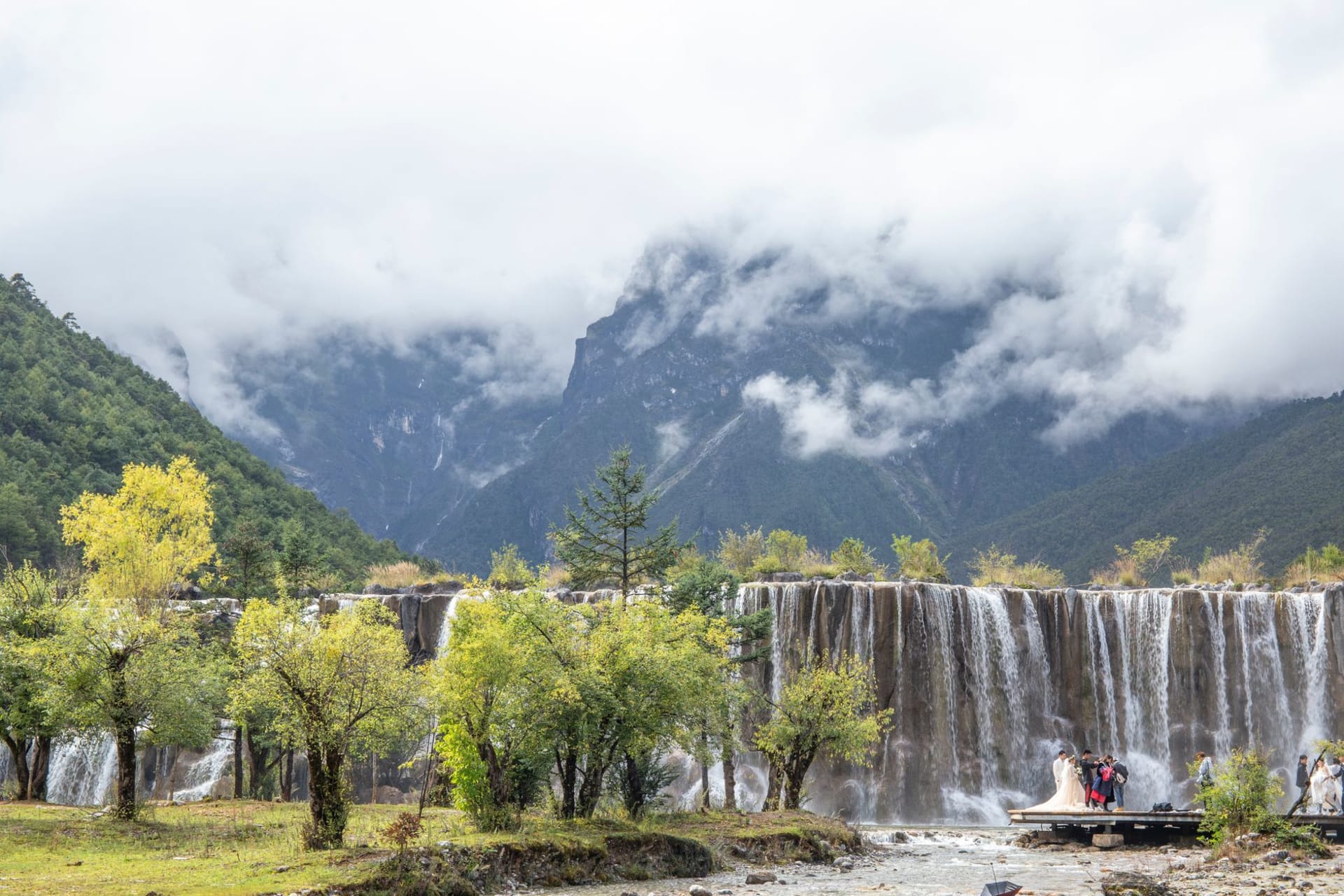
Lijiang
"The old town is a theme park and a living neighborhood at the same time — you have to make your peace with that."
Arriving too late to have it to yourself
Everyone arrives in Lijiang hoping to have arrived twenty years earlier. I did it too. The old town — Dayan, the locals call it — is a UNESCO World Heritage site, which means the foot traffic at midday has the density of a metro platform. Cobblestones worn mirror-smooth by ten million pairs of sneakers, wooden shopfronts selling yak butter tea next to matcha ice cream, tour groups moving in tight formation behind flag-waving guides. It’s a lot.
But then I woke up at six in the morning, and everything changed. The canal channels that thread through the streets were catching the early light at an angle that turned the water amber. A woman was sweeping her doorstep with a bundle of dried grass. The smell was wood smoke and something faintly mineral — the cold coming off Jade Dragon Snow Mountain to the north, which you can see from half the rooftops when the sky cooperates.
The Naxi piece
The Naxi people built this town and still live in parts of it, which makes Lijiang more layered than it first appears. The Dongba script — one of the few pictographic writing systems still in active use — shows up on temple walls and in the small museum off the main square. I spent an afternoon there trying to decode symbols that look simultaneously ancient and intuitive, like a language designed to be half-remembered.
The Naxi Ancient Music concerts run nightly in a timber hall near the square. The ensemble is elderly, deliberately so — the director made a point of preserving the oldest musicians he could find. The erhu lines are slow and slightly mournful, and the hall smells of cedar and incense. I didn’t understand a word of the presentation, but I stayed for the whole thing.
Up to the villages
The road north toward Jade Dragon Snow Mountain passes through a string of villages that feel genuinely unperformed. Baisha — six kilometers from town — has a set of Tang-dynasty frescoes in a small temple that most visitors skip in favor of the cable car. The frescoes are remarkable: Buddhist, Taoist, and Tibetan iconography on the same wall, painted during a period when no one had fully decided which cosmology would win.
Lia convinced me to take the gondola to the glacier viewpoint. At 4,500 meters, the air is thin enough that walking fast becomes inadvisable, and the light on the ice has a blue-white quality I’ve only seen at altitude — not reflective but internally lit, as if the snow is its own source.
Eating around the tourist drag
The best meal I found in Lijiang was in an alley I’d walked past three times before noticing it. A woman was selling lijiang baba — thick wheat and buckwheat flatbreads cooked on a griddle, stuffed with salted vegetables and pork fat. Two yuan each. I ate two standing up and then bought two more to eat walking. The oil was real lard and the bread had a char on it that cut the richness cleanly.
When to go: April through early June is ideal — clear skies, snow still visible on Jade Dragon, and crowds at roughly half the summer volume. September and October are also excellent. Avoid national holidays (especially Golden Week in October) when the old town becomes genuinely impassable.