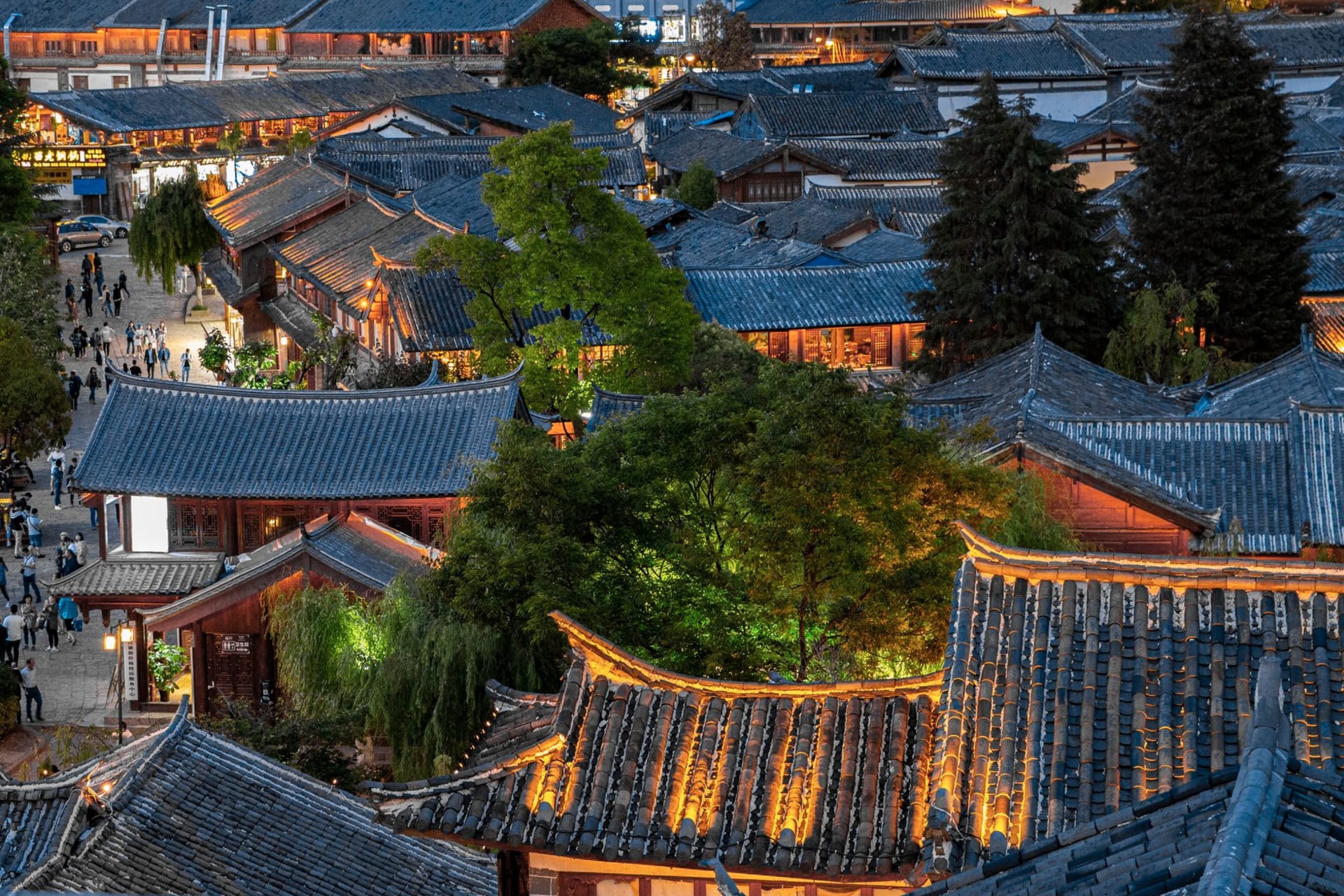
Jianshui
"Jianshui convinced me in about four hours, which is longer than it took the Confucian temple and shorter than it took the tofu."
What makes this town different
Jianshui — about four hours south of Kunming — is a Han Chinese settlement that dates to the Tang dynasty and accumulated layers of architecture through the Song, Yuan, Ming, and Qing without anyone knocking too much of it down. This makes it unusual in a province where many old towns are either Naxi, Bai, or Yi — Jianshui’s culture is Confucian Han, which gives it a different gravity: lecture halls, examination halls, a temple complex that was producing scholars for the imperial court when many European universities were still in their first century.
The old town is genuinely old and genuinely inhabited. There are no ticket gates on the main streets. People live in the courtyard houses, hang laundry between Ming dynasty gate towers, run noodle shops in rooms with carved wooden screens. I walked for three hours before I saw a sign suggesting a tourist itinerary.
Zhu Family Garden
The Zhu Family Garden is a nineteenth-century private residence built over several decades by a Qing-era copper mining family. The compound covers 20,000 square meters and consists of a series of interlocking courtyards, each slightly different in proportion and light — some narrow and shaded, others open with a sky view centered by a single tree. The decorative woodwork is extreme in the best possible way: doors, screens, balustrades, and ceiling panels carved with scenes from Chinese mythology and everyday life, everything dense and specific.
I spent ninety minutes in the garden and missed an entire wing. This is acceptable. The building is so layered that selective attention seems more honest than systematic coverage.
Shuanglong Bridge at dawn
The Shuanglong (Twin Dragon) Bridge, three kilometers west of town, was built in the 1800s and spans two rivers on seventeen arches. The most famous view is from the east bank looking west, with the arches and their reflection making a near-perfect circle in the water when the conditions cooperate. I arrived at 6:30 AM when the mist was still on the paddies and had the bridge almost to myself for about forty minutes before a tour group materialized.
The bridge itself is still in use — farmers cross it with loads and bicycles, and a few families fish from the arches in the afternoon. The stone is old and slightly mossy at water level and sounds hollow underfoot. Standing in the middle of the span with the river moving slowly below feels like standing in the middle of a long argument about the relationship between utility and beauty, which the bridge resolves in favor of both.
The tofu situation
Jianshui tofu is a regional specialty with a specific and slightly alarming preparation: the fresh tofu is allowed to ferment slightly — not long enough to smell threatening, but long enough to develop a crust — and then grilled over charcoal in small iron pans until it puffs up and develops a golden skin. You eat it with a chili and vinegar dipping sauce.
The best tofu in Jianshui is sold from carts in the night market, and the cartwomen who run the business are extremely confident about their product’s superiority to all other tofu. This confidence appears to be warranted. I ate more than I intended, standing in the street, burning my fingers on the iron pan.
The morning noodle scene is excellent as well: guoqiao mixian done in the southern style, with a broth that’s lighter than Kunming’s and a set of condiments — pickled mustard greens, sesame paste, dried chili — that you apply according to preference.
When to go: Jianshui works year-round, but October through April avoids the summer heat and humidity. The Confucian temple holds cultural ceremonies around the Confucius birthday in late September that are worth timing for if you’re in the area. The bridge photography is best in winter when low mist sits on the paddies at dawn.