Dali
"Dali has been discovered so many times it's almost come out the other side into something genuine again."
What kind of town this is
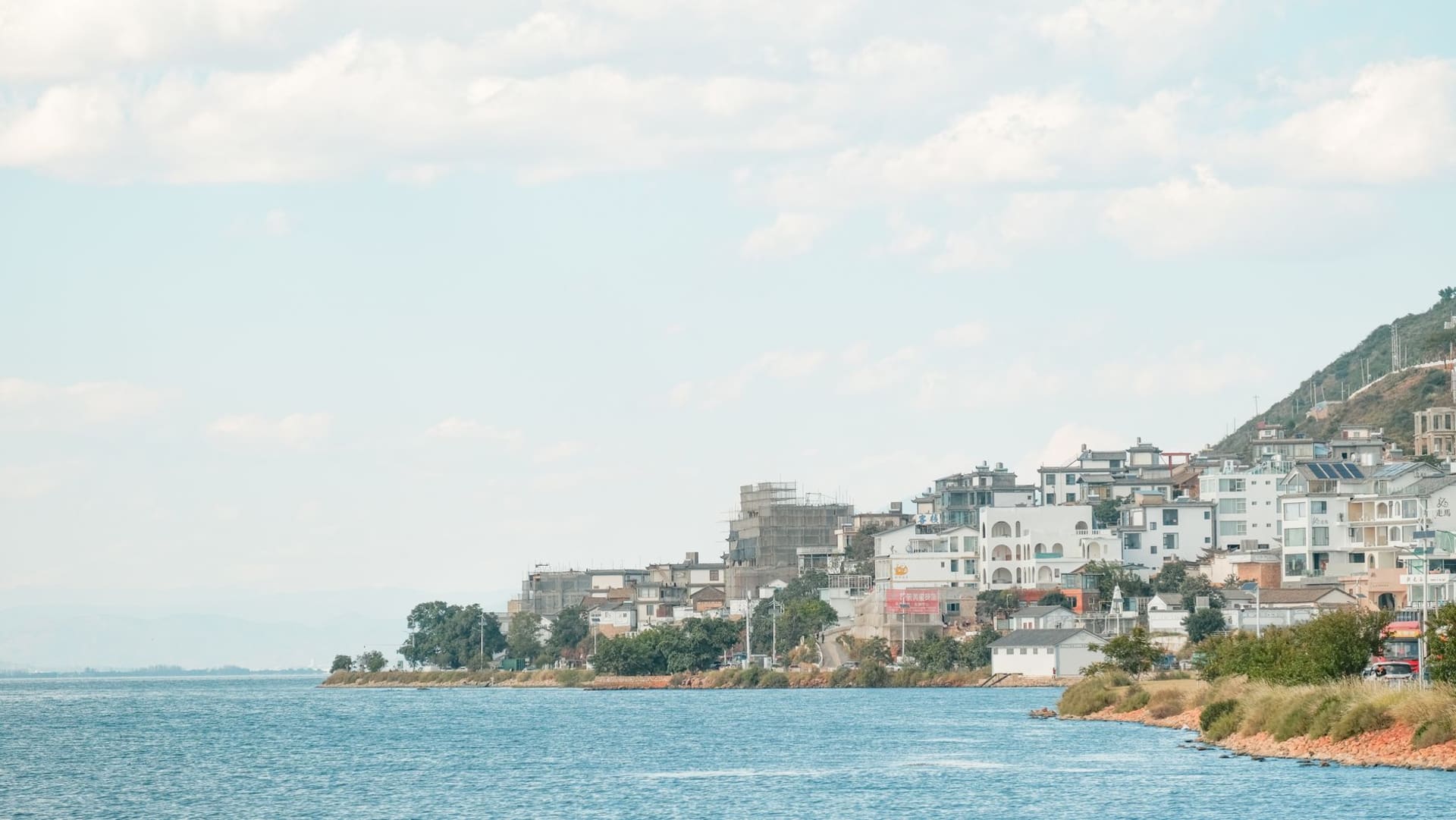
Dali sits at 1,900 meters between the Cangshan mountain range to the west and Erhai Lake to the east, and that geography alone explains most of why people keep coming. The light bounces off the water into the sky and back again, so the whole valley has a brightness in the afternoon that doesn’t track the sun. The old town is compact and walkable, framed by the North and South gates, with a main street — Foreigners Street, unsurprisingly — that has been a pit stop on the overland circuit since the 1980s.
But Dali is more interesting than its reputation as a backpacker resting ground suggests. The Bai minority culture here is distinct and active: white-washed courtyard houses with painted decorative panels, tie-dyed textiles in indigo and brown, a cuisine built around erhai fish and mountain herbs. The Tuesday market in Shaping, fifteen kilometers north, is a Bai agricultural market that has not been curated for tourists. I bought two kilos of Yunnan coffee beans there from a man who barely looked up from his scale.
The lake road
The road that rings Erhai Lake is about ninety kilometers and can be cycled in a long day or two leisurely ones. Lia and I rented bikes near the south gate and started early, which meant we had the lakeshore mostly to ourselves until mid-morning. The water is a deep jade color in the northern sections and lighter and cloudier near the fishing villages where the cormorant boats go out. The Bai fishing families still use trained cormorants — birds with a ring around the neck so they can’t swallow the catch. I watched one boat work for twenty minutes and counted eleven fish.
The villages on the eastern shore are quieter and less manicured than the old town. Xizhou has some of the best-preserved Bai courtyard architecture in the region, and a morning soybean milk stand at the market entrance where a woman has been making fresh doujiang since before I was born, judging by her pace and expression.
Cangshan behind it all
The mountains are always present in Dali — a ten-kilometer wall of stone and forest rising to 4,100 meters, snowcapped for much of the year. A cable car runs to a mid-mountain platform from which several hiking trails branch. I took the longer southern trail toward the Qingbi Stream and emerged two hours later into an alpine meadow where the wildflowers were doing something irrational and beautiful.
Coming down, the whole lake appeared below me in one wide sweep. At this angle, with the sun dropping behind Cangshan, Erhai looked like hammered pewter. Worth every switchback.
The food situation
Yunnan cuisine is already the most interesting regional food in China to me, and Dali is a good introduction. Rubing — the fresh white cheese — gets grilled and eaten with chili sauce and the squeakiness of it is deeply satisfying. Across the fire is typically erkuai, rice cakes pan-fried until they blister, available stuffed with pickled vegetables or Yunnan ham at about every third stall.
The morning markets sell fresh mushrooms that I couldn’t identify by any system I know: trumpet-shaped, golden, smelling of the forest in a way that supermarket fungi never approach.
When to go: March through May is prime — mild temperatures, clear days, wildflowers on Cangshan. October is equally good. Avoid July and August unless you enjoy being warm and wet; the monsoon is heavy. The lake road is best cycled before the summer tourist surge.