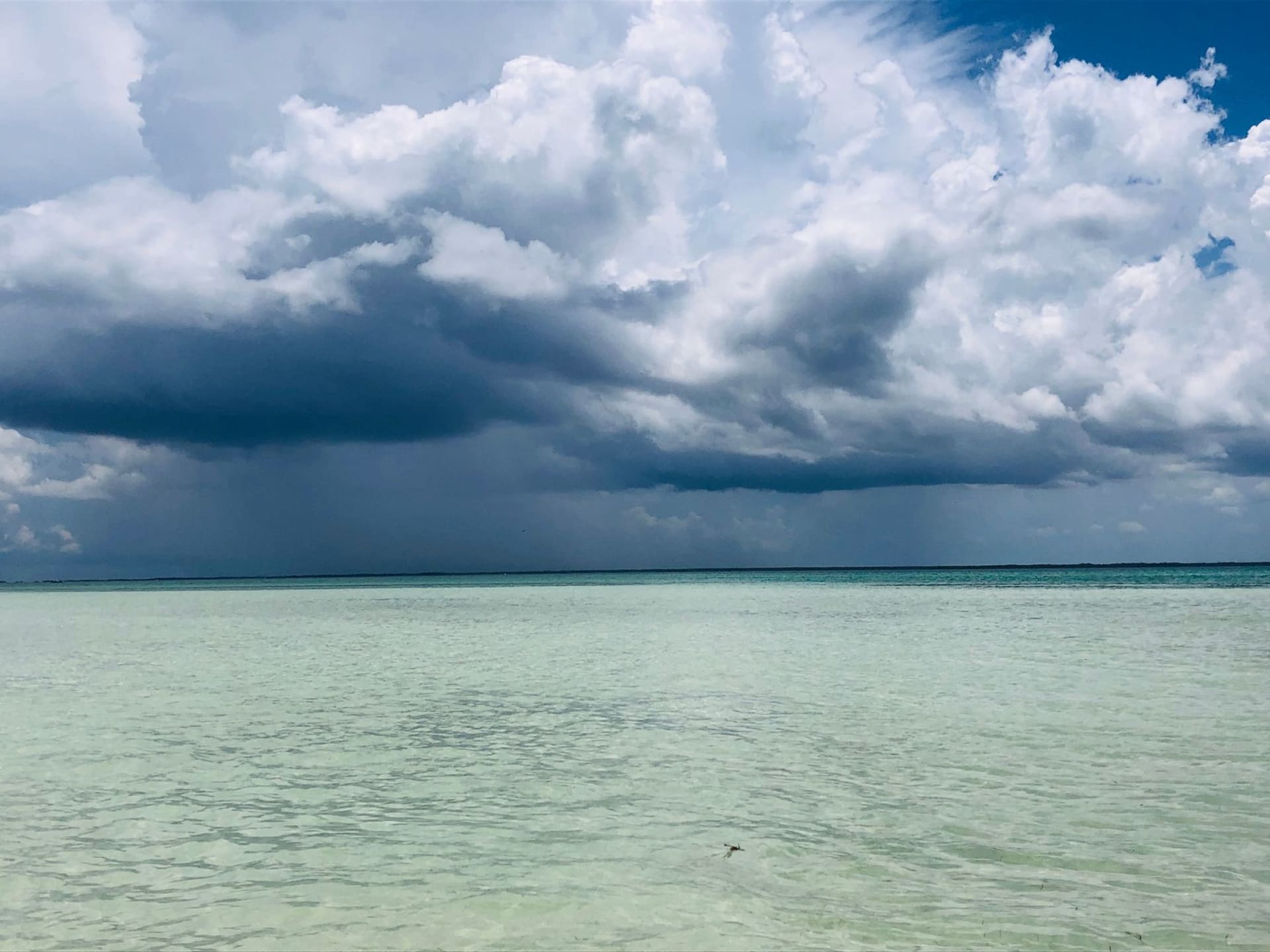
Río Lagartos
"The boatman cut the engine and pointed, and the whole shoreline turned out to be made of flamingos."
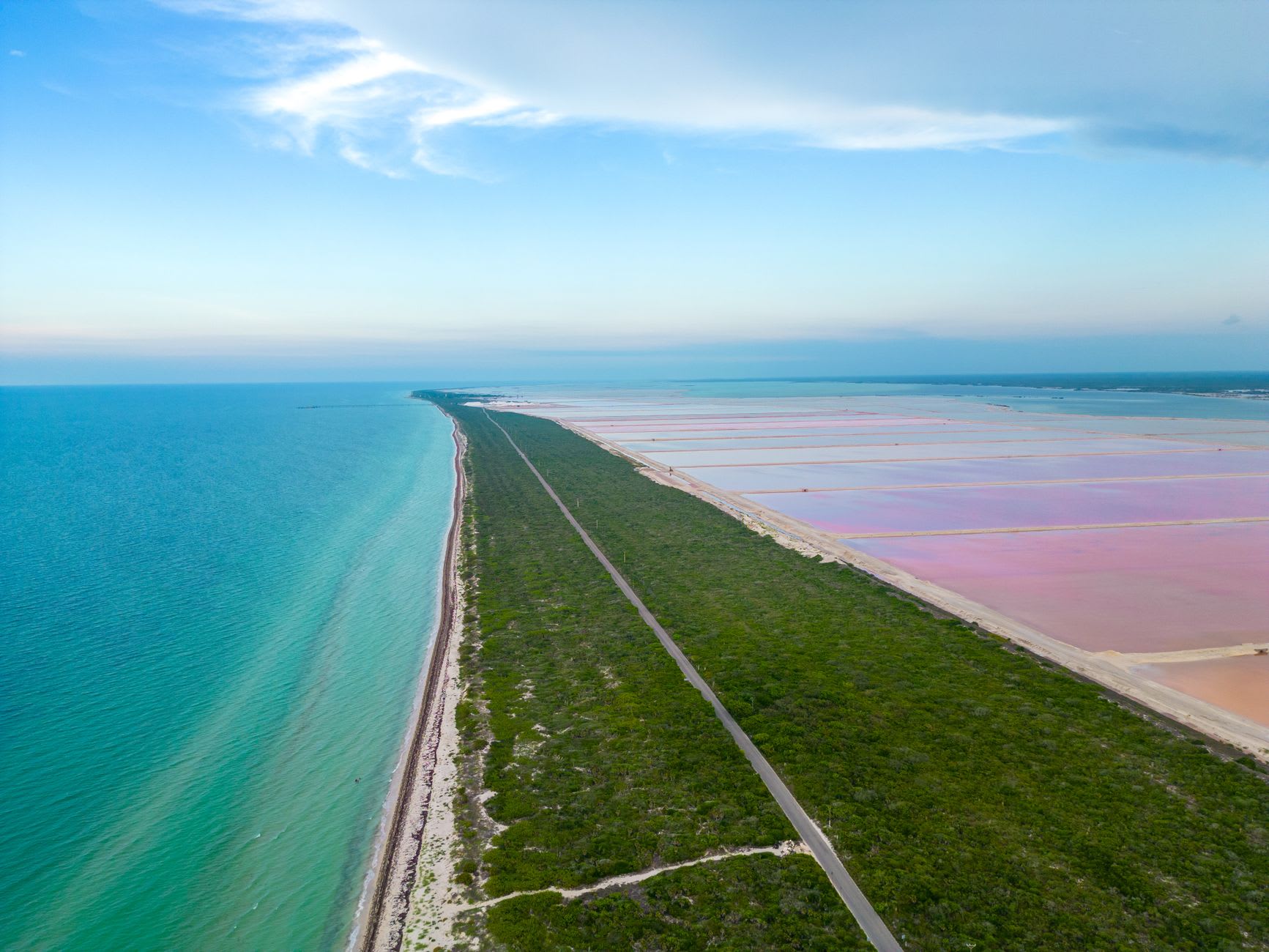
Río Lagartos sits at the top of the Yucatán, a long way north of the Tulum crowd, on the edge of a vast biosphere reserve where the land dissolves into mangrove channels and salt flats. The town itself is small and entirely about fishing — boats pulled up along the malecón, nets drying, pelicans loitering on every available post with the patience of professional thieves. We came mainly for the birds, and the birds did not disappoint.
The name means “river of lizards,” a misnaming by Spanish sailors who mistook the local crocodiles for caimans, or possibly just got the word wrong. The crocodiles are still here, incidentally — our guide pointed out two of them lying in the shallows like floating logs with opinions. But the real spectacle is feathered.
The Flamingos
We went out at dawn in a small panga with a guide named Wilbert, who had clearly done this several thousand times and still seemed to enjoy it. The boat threads through narrow mangrove cuts where herons stand frozen in the half-light, and then the channel opens and you start seeing them — first a few, then dozens, then a shoreline that is simply pink for as far as you can follow it.
These are American flamingos, the deepest-coloured of all the flamingo species, and seeing several thousand of them lift off at once is the kind of thing that resets your sense of scale. Wilbert kept the engine low and the distance respectful, which I appreciated; this is a protected breeding area and the birds are easily spooked. Lia, who had been skeptical about a dawn start, did not say a single word for about twenty minutes, which for Lia is the highest possible praise.
Las Coloradas, and a Word of Caution
A short drive east are Las Coloradas, the salt-evaporation ponds that have gone viral for being an improbable, lurid pink — the colour comes from the same algae and brine shrimp that turn the flamingos that shade. They are genuinely strange and beautiful to see. They are also a working industrial salt operation and a fragile one, and after years of Instagram crowds trampling the banks, swimming in the ponds is now banned and access is controlled.
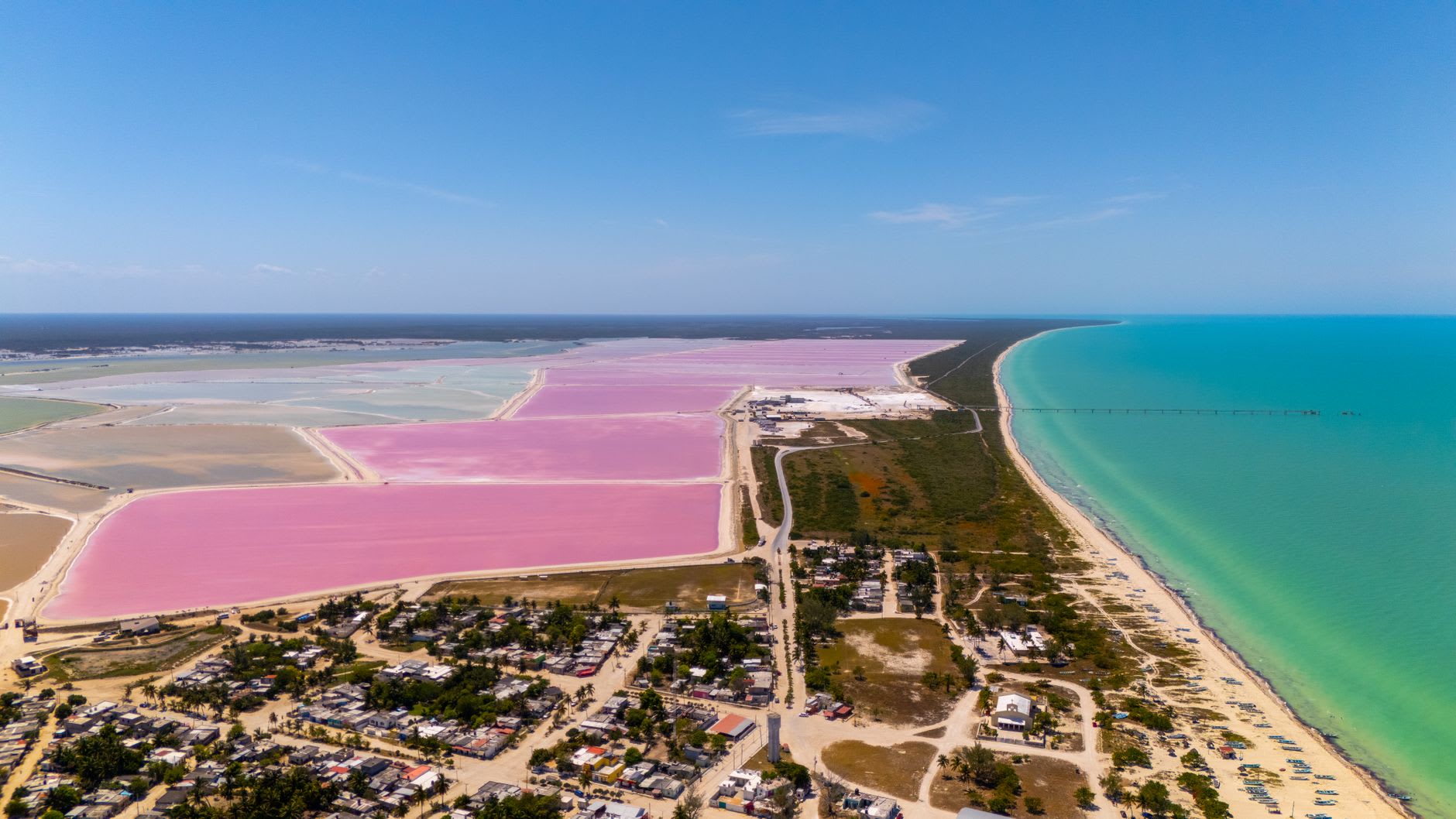
Go with a local guide, stay on the permitted paths, and resist whatever your phone is telling you to do. The pink is just as pink from where you’re allowed to stand.
The Town Itself
Back in the village, the pleasure is mostly in doing very little. We ate ceviche at a place on the waterfront where the fish had been swimming that morning, and a plate of fried whole fish that I am still thinking about. In the evening the heat finally breaks, families come out onto the malecón, and the only soundtrack is the slap of water against the moored boats. There is no nightlife to speak of, which is exactly the point.
When to go: the flamingos are present in large numbers from roughly April through August, with breeding concentrating them most spectacularly in summer. Go at dawn for the birds and the light, and book a certified local guide rather than turning up and hoping.