Americas
Yucatán Peninsula
"I swam in a cenote at noon and understood why the Maya considered them sacred."
I arrived in Mérida on a bus from Mexico City and walked out of the terminal into air so thick with heat and humidity it felt like pushing through warm water. It was six in the morning. By seven I was eating papadzules — hard-boiled eggs wrapped in tortillas soaked in pumpkin seed sauce — at a table on the main plaza, watching the city come to life in that unhurried way colonial cities do when they know they’ve been around long enough not to rush. Mérida is the capital of Yucatán state and one of the most livable cities in all of Mexico. Most people blow through it to get to Chichen Itzá or the beach. That is a mistake I watch tourists make constantly.
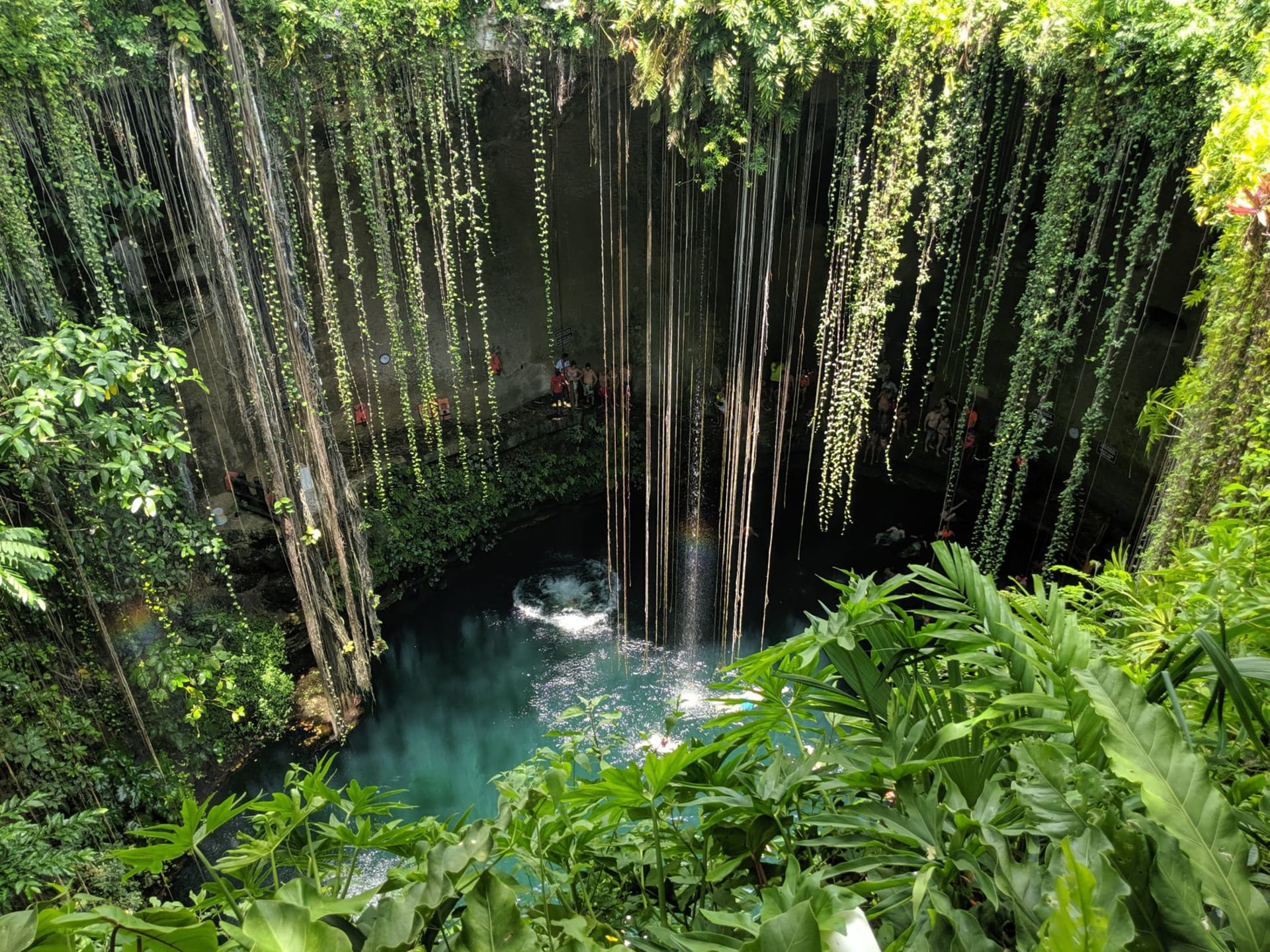
The peninsula is structured like a geology lesson you didn’t sign up for but can’t stop attending. The entire thing is flat limestone, and rainwater seeps straight through it, carving caves and underground rivers over millennia until the ceilings collapse and you get cenotes — those astonishing round pools of perfectly clear, perfectly cold freshwater that open up out of nowhere in the middle of jungle. There are estimated to be over six thousand of them across the peninsula. I’ve swum in maybe a dozen. Each one felt like a different secret. Cenote Ik Kil near Chichen Itzá is the famous one, the postcard, and it earns its reputation — hanging vines trailing down sixty feet of vertical limestone into an emerald pool while small fish circle your ankles. But the real pleasure is finding the smaller ones, the ones without ticket booths, where you share the water with a handful of local families on a Sunday afternoon.
Chichen Itzá itself is worth the early wake-up — arrive when the gates open at eight and you’ll have an hour before the tour buses arrive and the site becomes a slow-moving crowd. The scale of El Castillo, the main pyramid, doesn’t come through in photographs. Stand at its base and you understand that the people who built it were operating at a level of astronomical and architectural precision that would be impressive in any century. Eat before you go — the food near the site is bad and overpriced — and combine it with a stop at Valladolid on the way back, a smaller colonial town with its own cenote in the middle of a convent courtyard. Lunch at one of the spots around the main square. Order the cochinita pibil if it’s on the menu.
When to go: November through February is the sweet spot — dry, manageable temperatures in the low thirties, and the Caribbean coast is calm. March and April work too but get crowded around Semana Santa. Avoid July and August unless you enjoy sweating through your clothes before breakfast; the humidity is genuinely punishing and hurricane season runs June through October.
What most guides get wrong: They treat the Riviera Maya — Cancún, Playa del Carmen, Tulum — as if it’s the whole peninsula. It is the least interesting part. The interior of Yucatán, the haciendas converted into hotels, the Puuc Route with its lesser-visited Maya sites like Uxmal and Kabah, the slow pace of Mérida’s barrios — that’s where the place actually lives. The beach is fine. The civilization that preceded it is extraordinary.