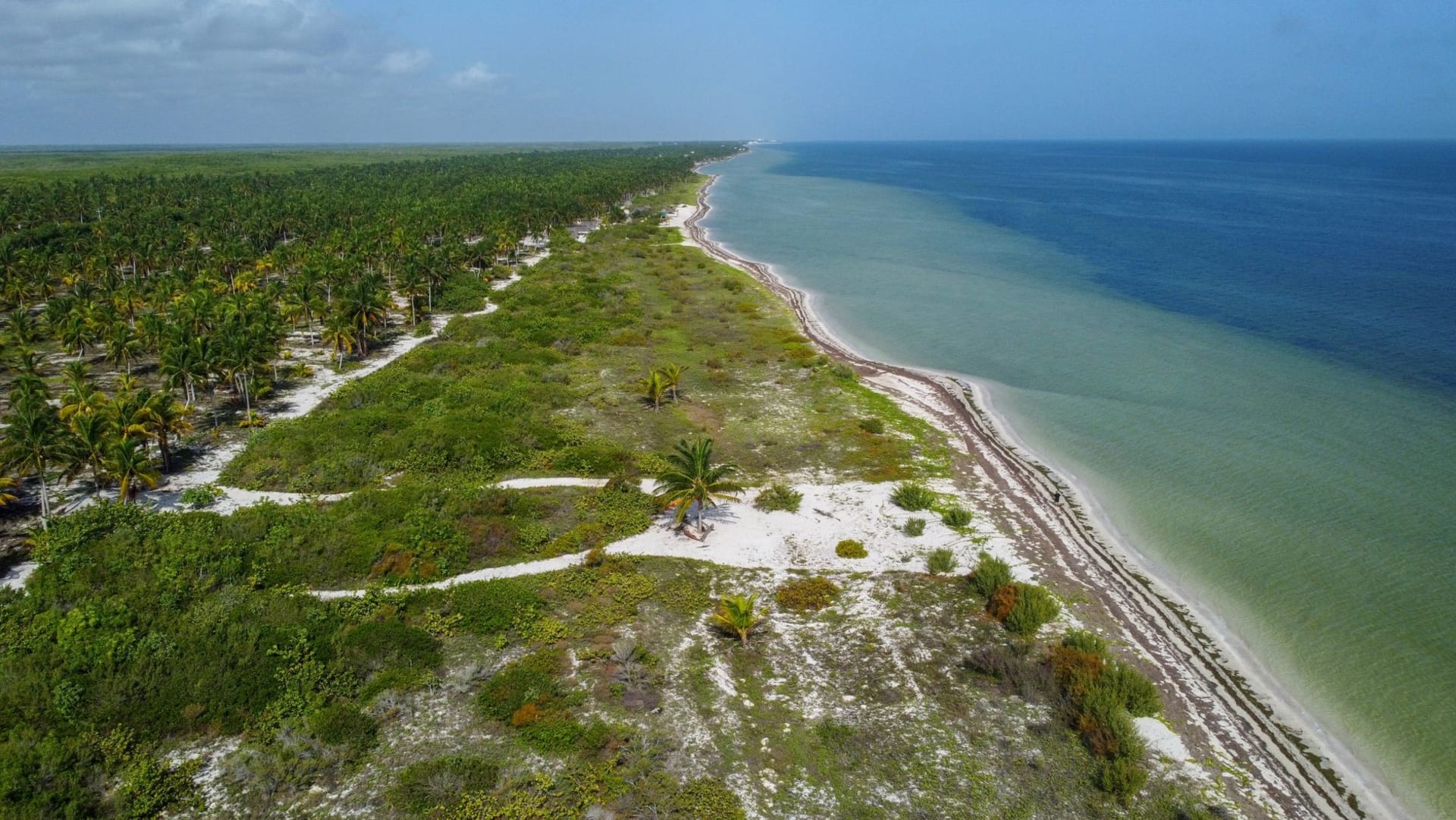
Getting to Holbox requires a bus to Chiquila, a ferry across the lagoon, and then a walk or a golf cart ride because there are no cars on the island. The sand streets are soft enough that bicycles are sometimes a commitment. None of this is a problem once you arrive, because the island has a quality of enforced slowness that functions like a reset.
I first came to Holbox because of the whale sharks and I’ve come back twice since without any agenda beyond sitting in the water until I remembered how to be still.
The Island Itself
Holbox is about 40 kilometers long and narrow, with the Gulf of Mexico on the north shore and a lagoon on the south. The main town clusters around the northwest end where the ferry arrives and spreads out in pastel-painted wooden buildings along sandy lanes. Pelicans park on the dock. Street dogs of impressive dignity trot the main drag. Golf carts — rented by everyone, driven by everyone at the same five-kilometer-per-hour pace — are the primary transport.
The north beach is wide and shallow and the water is warm year-round. It’s not the crystal Caribbean turquoise of Tulum; it’s a greener, silkier color, because this is technically Gulf water where the two seas meet. You can walk out fifty meters and still be knee-deep. Lia stood in it for an entire afternoon once, just watching the pelicans dive.
Whale Sharks
Between June and September, whale sharks congregate in the waters off Holbox’s eastern tip to feed on fish spawn at the surface. They are the largest fish in the ocean — the ones I’ve been in the water with ran 8 to 10 meters — and they are completely harmless to humans, which doesn’t stop your heart rate from doing something interesting when 10 meters of shark materializes from the blue below you.
The tours run from Holbox town every morning during season. You jump in, you snorkel alongside the shark for a few minutes, then you move to the next one. I’ve done it twice. The second time I was calmer and saw more — the way they feed with their mouths open, the remoras running alongside, the sheer patience of the animal moving through the water at a pace that requires effort to match.
Book a tour through a small local operator rather than through a hotel. The difference in group size and quality is significant.
Flamingos and Punta Coyote
There are flamingos on Holbox, which sounds like a detail someone invented but is accurate. At Punta Coyote on the lagoon side, a colony wades in the shallows at dawn and dusk, picking their way through the water on improbable legs, occasionally taking to the air in bursts of coral pink against the sky. The lagoon light at sunrise is particularly clear, the kind of light that makes photographs look processed when they aren’t.
It’s a 20-minute golf cart ride from town and worth doing on at least one morning, ideally the first or second day before you’ve settled into beach rhythms that make early rising feel unnecessary.
Eating and Drinking
The food on the island skews toward fresh seafood and lobster, with lobster pizza being the local specialty that sounds absurd and tastes better than it has any right to. There’s a fish taco stand near the main square that operates on a first-come logic and closes when the fish runs out. I’ve timed my mornings around it twice.
The cocktails involve a lot of fresh fruit and the kind of rum quantities that make sense on an island with no roads. Evenings on the beach with mezcal and whatever snack the nearest vendor is selling is the formula that works.
When to go: Whale shark season is June through September — warm, occasionally rainy, with calm water for swimming. November through February is drier and cooler with excellent birdwatching. Avoid Easter week and August if possible, when the island gets genuinely crowded.