Celestún
"A flamingo colony at distance looks like someone spilled something pink in the water. Up close it's something else entirely."
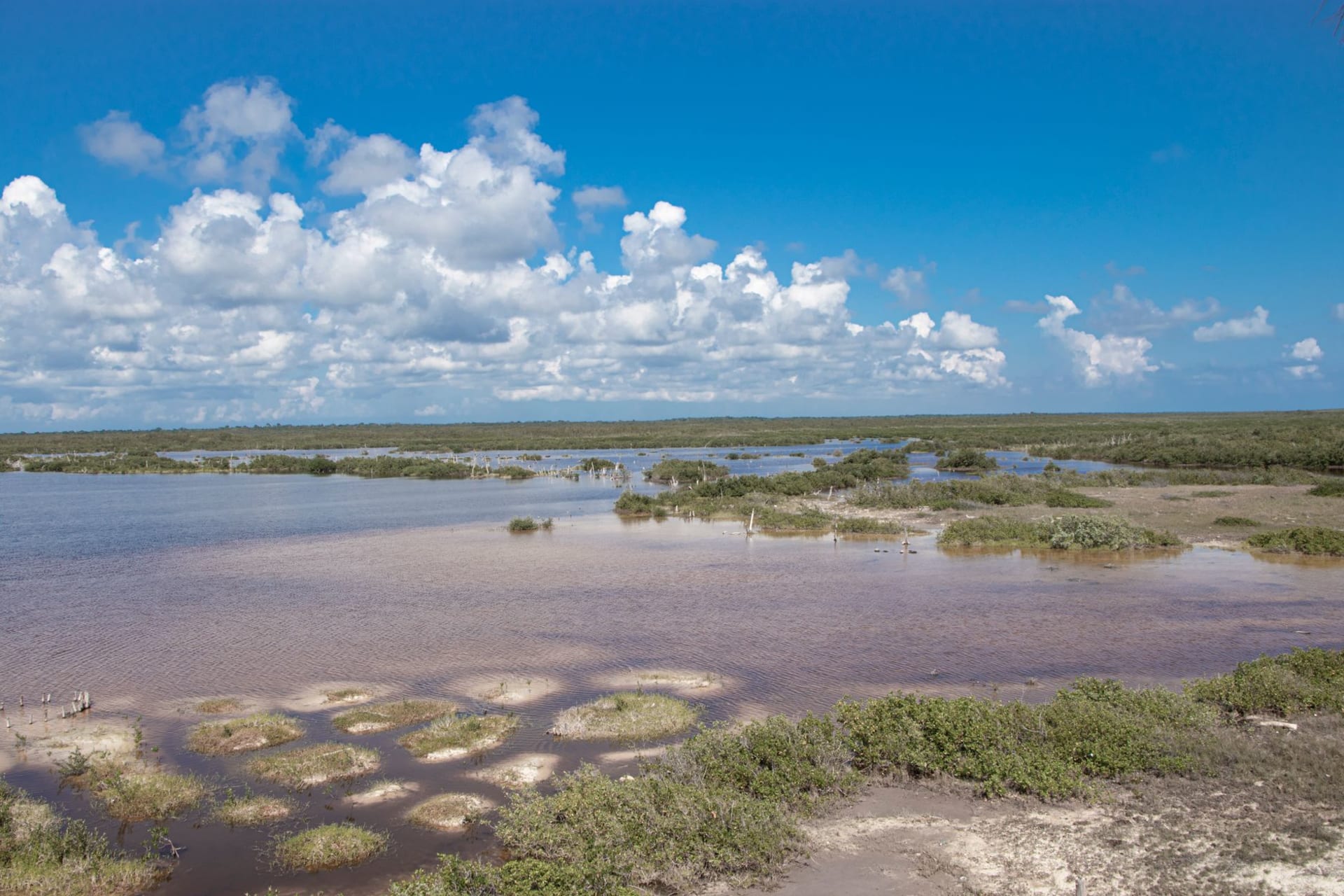
Celestún sits about 90 kilometers west of Mérida, at the end of a long peninsula where the land narrows to almost nothing between the Gulf of Mexico and the Ría Celestún biosphere reserve. Getting there requires driving two hours through scrub jungle on a road that delivers you suddenly to a small fishing town with one main beach street, a fleet of painted wooden boats, and somewhere between 10,000 and 20,000 flamingos in the estuary behind it.
It is one of the more disorienting arrivals in the Yucatan.
The Flamingos
The Ría Celestún is one of the most important flamingo habitats in the Americas. The birds come for the brine shrimp and algae in the brackish estuary water, which also gives their feathers the particular shade of salmon-coral-pink that varies with how well they’ve been eating. The ones in good health are the brightest.
Tours run every morning from the beach: flat-bottomed boats with outboard motors that take groups of four to eight people through the mangrove channels and out to wherever the main colony is feeding that day. The guides know the estuary’s rhythms and the flamingos’ habits and will position the boat with real skill to let you approach without disturbing the birds. At close range — twenty or thirty meters — a flock of several hundred flamingos becomes an experience that is hard to categorize. The sound is surprisingly loud, a collective honking that echoes off the mangroves. The movement is constant — birds stepping through shallow water, preening, taking short flights and landing again.
I’ve been to a lot of wildlife sites and Celestún is the one where I went completely quiet and stayed that way.
The Petrified Forest and Cenotes
The boat tours typically include a stop at a freshwater spring that flows up from beneath the estuary, and sometimes a detour through what’s called the “petrified forest” — a section of dead mangroves whose white bleached trunks rise from the water in formations that are simultaneously eerie and beautiful. The contrast between the stark white wood and the dense green living mangrove behind it is the kind of thing that makes you pull out a camera and then feel like no photograph is going to explain it.
Some tours include a cenote stop inland on the return trip. Worth it.
The Beach and the Seafood
The main beach at Celestún is a long curve of grey-white sand facing the open Gulf. It’s not the turquoise Caribbean — the Gulf here is greener, darker, with a different quality of water — but it’s clean and usually uncrowded and the waves are gentle. Palapa restaurants line the beach and the seafood is as fresh as anywhere I’ve eaten in Mexico.
The ceviche de jaiba — crab ceviche — is what I order every time without considering the menu. Also the fish fillet on the grill with roasted garlic and fresh lime. The restaurants on the beach don’t need to compete on quality because the fish comes off the boats of the family members; they compete on price and shade, and the competition is friendly.
Lunch at one of the palapa restaurants after a morning on the water, with a cold beer and a plate of things pulled from the sea that morning, is the formula Celestún executes better than anywhere.
Getting There
The drive from Mérida is about an hour and forty minutes on a direct road. There’s no reason to rush — the town is best experienced early (the flamingos feed more actively in the morning) and as a leisurely day or overnight. A couple of small guesthouses operate in the village if you want to be there at dawn before the day-trip boats from Mérida arrive.
When to go: November through March is peak flamingo season when the largest congregations gather in the estuary. The birds are present year-round in smaller numbers. December through February is the coolest and most comfortable time. Weekends bring families from Mérida; midweek visits are significantly quieter.