Bacalar
"Seven shades of blue is a claim that could be marketing. In Bacalar's case, it's just a fact."
I drove to Bacalar from Tulum on a morning when I was already tired of Tulum, which put me in exactly the right state of mind to appreciate it. Three hours south on the 307, mostly flat jungle on both sides, and then suddenly — through the windshield, through a gap in the palms — a lake that seemed to be lit from within.
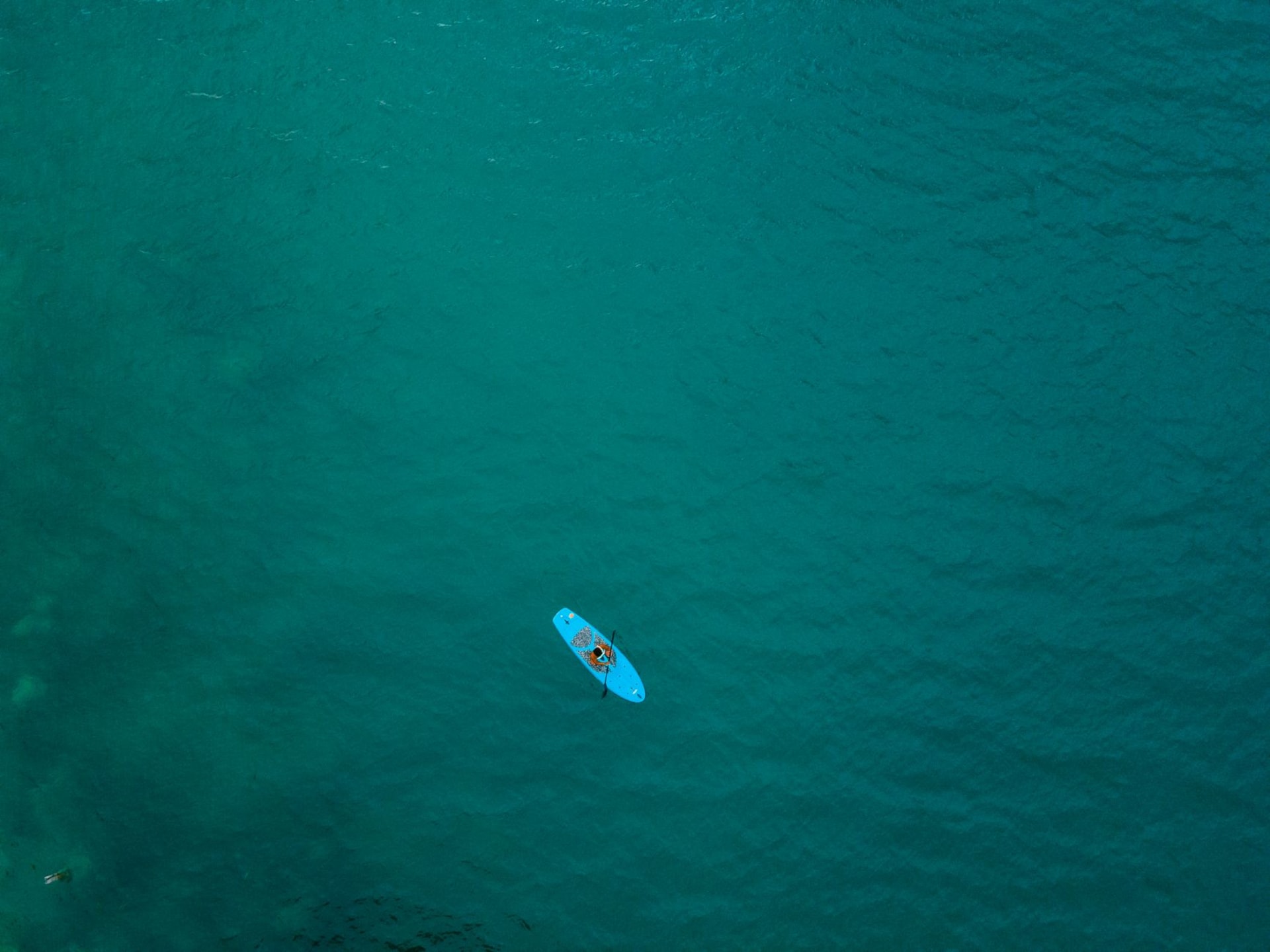
Laguna de los Siete Colores is named for the way its depth gradient creates seven distinct bands of color across its width: pale mint green in the shallows near shore, then turquoise, then aquamarine, then a deep Caribbean blue, then something approaching violet in the deepest channels. The colors are produced by the clarity of the water, the light sand and limestone beneath it, and the way the sun hits different depths. No filter involved. No post-processing. The lake just looks like that.
The Town and the Fort
Bacalar town is small — a few streets on a hill above the western shore of the lake, with a 17th-century Spanish fort (Fuerte San Felipe) standing at the water’s edge where the pirate-prevention logic of the era demanded. The fort is well-maintained and the views from its ramparts across the lake are the best available in town. Entry costs next to nothing.
The main street has been steadily filling with cafés, boutique posadas, and the kind of hammock shop that knows its clientele. This process is still early enough that Bacalar has more character than construction site, but that’s changing. When I first came here five years ago the restaurants were outnumbered by hardware stores. Now it’s roughly even.
On the Water
The activity that defines Bacalar is simple: get onto the lake. Sailing trips operate from the dock below the fort — small catamarans and traditional flat boats that take you out to the middle channel where the water is deepest and bluest, where you anchor and swim in water so clear you can see your feet fifteen meters below you. The sensation of floating above that depth, in that color, is genuinely difficult to convey.
There are also channels further south that lead through mangroves to areas of the lake where stromatolites — living reef structures that are among the oldest life forms on earth, predecessors of modern algae — grow on the lake floor. The guides who know where to find them are worth seeking out. Floating above a formation that’s been alive since the Precambrian while a beer sits in a cupholder behind you is an experience that requires some mental reconciliation.
Canal de los Pirata
The pirate channel — Canal de los Pirata — is a narrow passage cut through a sand spit that connects two sections of the lake. Swimming through it on a hot afternoon, the current gentle, the water green and cool on one side and blue on the other, with jungle close on both banks, is the free version of everything the boat tours offer. I swam it alone one Tuesday morning and came back to my towel feeling unreasonably restored.
Where to Eat
Lia found the best taco stand by walking three blocks from the waterfront and following the smell of wood smoke. It operated out of a house’s front room: a woman on a comal, her husband on the grill, two picnic tables, a handwritten price list. Fish tacos with a habanero cream that should have been too hot but wasn’t quite. We ate there twice a day for two days.
The waterfront restaurants charge three times as much for approximately similar food. The view from the nicer places is worth one meal’s premium. No more.
When to go: November through April is dry season and the lake is at its calmest and clearest. March and April get crowded with Semana Santa tourism. June through October brings rain and wind that chops the lake surface but also empties the town considerably — the lake is still beautiful, just less serene.