Socotra
"The dragon blood tree looks like someone drew a tree the way a child would, then made it real."
There is a tree on Socotra that looks like an umbrella designed by someone who had only ever heard umbrellas described. The canopy is perfectly flat and wide, the trunk pale and thick, and when you cut the bark it bleeds a resin so dark and red that the name—dragon blood tree—stops seeming fanciful and starts seeming obvious. I stood under one on the Dixam plateau for a long time, trying to place what I was looking at. I couldn’t. That’s the thing about Socotra: the usual filing systems don’t work here.
The island broke away from the African continent roughly twenty million years ago and spent the intervening time doing its own thing. The result is that roughly a third of its plant species exist nowhere else—not quite African, not quite Arabian, not quite anything you can name. The landscape feels assembled from multiple geological eras simultaneously: granite mountains, limestone karst, white sand beaches, desert plains. And over all of it, the dragon blood trees standing on the ridgelines like sentinels from a different epoch.
The Dixam Plateau
The drive up from the coast takes about two hours on roads that alternate between paved and optimistic, and then you round a corner and the dragon blood forest begins. I had seen photographs. The photographs are insufficient. The trees grow in clusters across the rocky plateau, their flat canopies creating a layered effect against the sky, and the silence up there is the silence of a place that has not been asked to accommodate human preferences for very long. A hoopoe landed near my feet while I was eating lunch and regarded me with what I interpreted as mild skepticism.
The Beaches
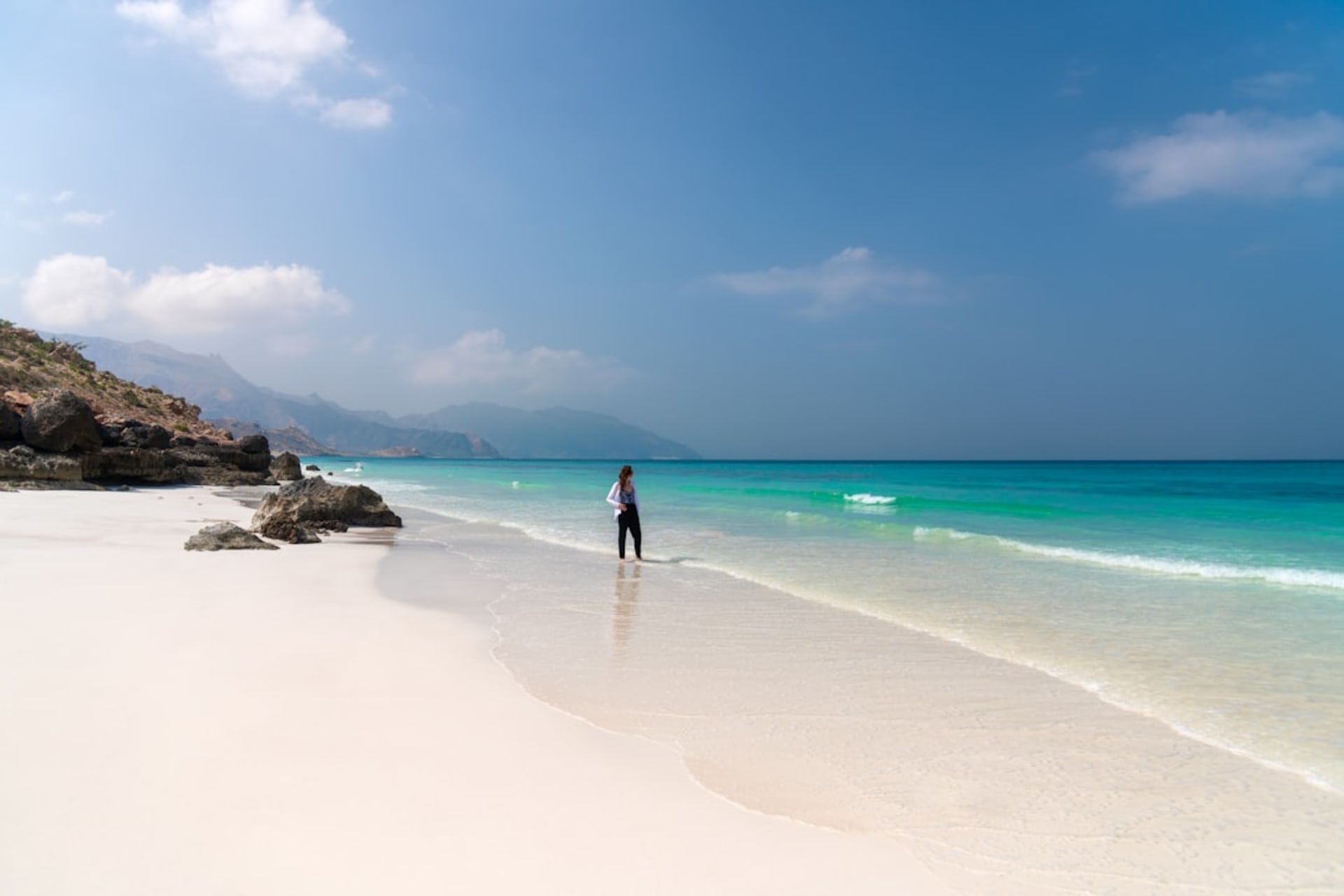
Socotra’s coastline has a quality I associate with places that people haven’t yet agreed to ruin. The sand at Qalansiyah lagoon is so white it registers as slightly blue in bright light, and the water is the kind of turquoise that looks filtered even when it isn’t. Lia swam for an hour while I tried to identify the fish from the shore—unsuccessfully, though I counted at least seven species I couldn’t name. The wind comes off the Indian Ocean most of the year, which keeps the beaches uncrowded in a very literal sense: the sand is constantly being rearranged, and any footprints you leave are gone within an hour.
Hadibo
The island’s main town is small enough to walk across in twenty minutes and offers the specific pleasure of a place that doesn’t quite know how to be a tourist destination yet. The market sells dried shark, frankincense, and phone cases with equal commitment. The tea shops run on a logic of hospitality that doesn’t require explanation—you sit, tea arrives, conversation happens or doesn’t. I spoke almost no Arabic and got along fine. The men I drank tea with spoke almost no French and also got along fine.
The Frankincense Factor
Socotra produces its own variety of frankincense, and you smell it constantly—in the markets, in people’s homes, occasionally just drifting across the plateau with no obvious source. It’s lighter than the Omani varieties I’d encountered before, more resinous, slightly citric. I bought a bag and have been burning it at home in Mexico ever since, though it smells different there. Most things do.
When to go: October through April is the window—the monsoon from June through September makes the island effectively inaccessible by sea and extremely difficult by air. November and December offer the most stable conditions. The Khareef (southwest monsoon) transforms the island but also closes it down; plan accordingly.