Middle East
Yemen
"Nothing I'd read prepared me for how old Yemen actually feels."
I landed in Sana’a on an early morning when the city was still wrapped in mist. The old town rose out of it in layers — those extraordinary tower houses, five and six storeys of dark volcanic stone trimmed with white gypsum fretwork, like something a child might draw if you asked them to invent an ancient city from scratch. I stood in the lane outside my guesthouse with a small glass of qishr — a spiced ginger-coffee husk drink that no one outside Yemen seems to know exists — and thought: I haven’t seen anything like this, anywhere.
That’s the thing about Yemen that no amount of context reading quite conveys. You know it intellectually — one of the oldest continuously inhabited regions on Earth, crossroads of the incense trade, home to the Queen of Sheba. But knowledge doesn’t prepare you for the physical sensation of standing inside that history. The suq in the old city of Sana’a is not a performance for visitors; it’s a working market where men sit on low stools amid sacks of dried hibiscus, loaves of flatbread, and bundles of qat leaves destined for afternoon chewing sessions. The smell alone — frankincense smoke, roasting coffee, dried fish from the coast — is enough to reorient your sense of where and when you are.
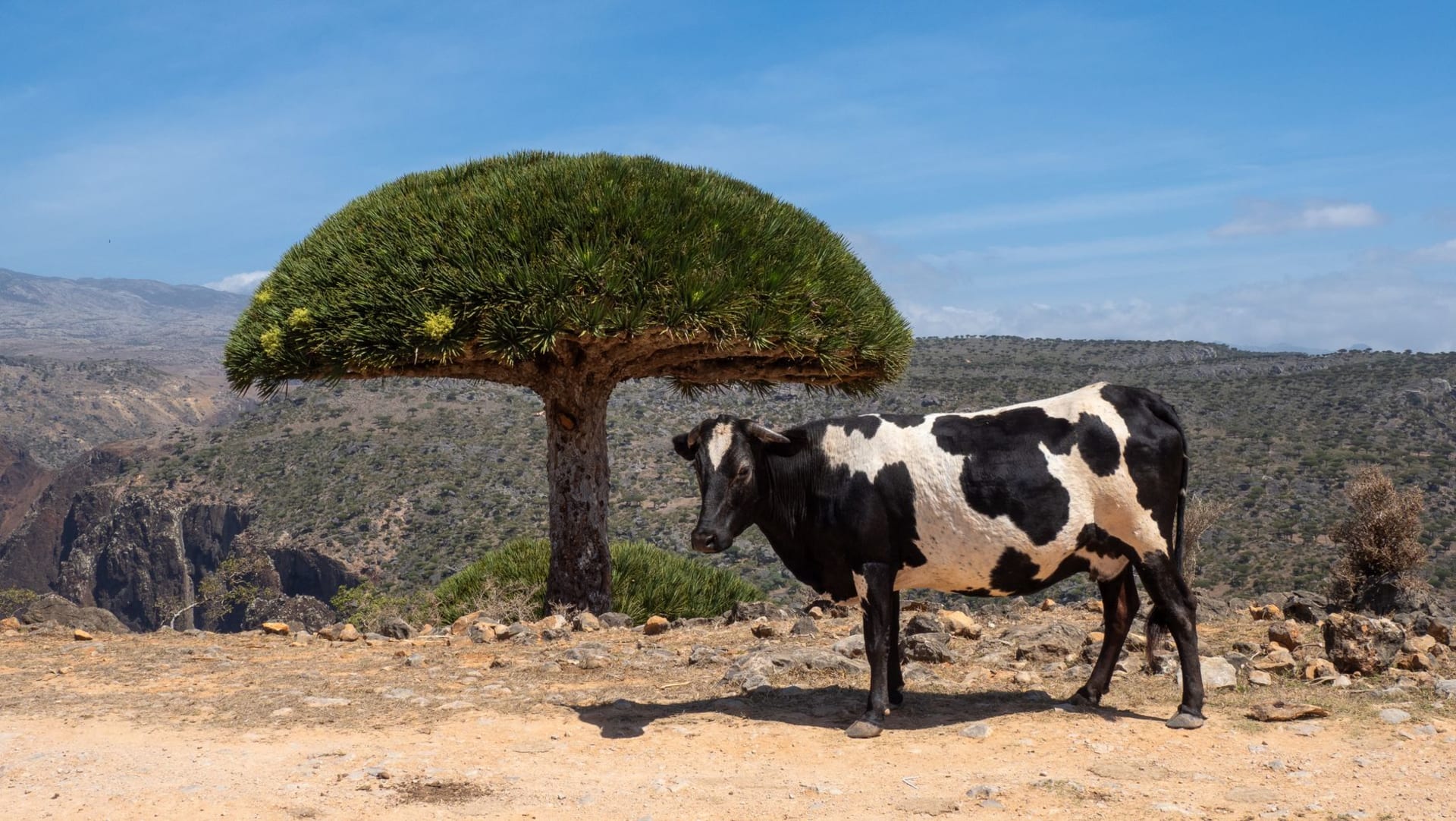
And then there’s Socotra. I took a small prop plane to the island and spent a week moving between the interior plateau and the white-sand coast. The dragon blood trees are genuinely unlike any other plant on Earth — flat-topped, umbrella-shaped, their trunks the colour of elephant hide, bleeding a dark red resin if you nick the bark. They grow in the rocky uplands as if placed there by a landscape architect with very eccentric taste. In the evening the light goes golden and the silhouettes against the sky are so specific to that place that photographs of it always look unreal, like someone ran a filter over a normal photo to make it strange.
When to go: October to April, before the summer monsoon closes Socotra and makes the coast brutal. December and January are ideal for Socotra — dry, clear, mild enough to sleep under the stars on the beach. Sana’a at any time in this window is comfortable, though January nights in the highlands can be cold.
What most guides get wrong: Coverage of Yemen, when it exists at all, tends to collapse the country into either its current conflict or its archaeological footnotes. Neither framing captures the texture of daily life — the afternoon qat sessions that structure every man’s day, the extraordinary hospitality (I was invited into more homes in a week than in a month anywhere else), the food culture built around lahoh flatbreads and saltah stew that gets almost no attention in Western writing about the region. Yemen is not simply a place to visit for ancient monuments. It’s a living culture with its own logic, its own pleasures, and its own pace — one that is far more present and particular than the word “ancient” tends to suggest.