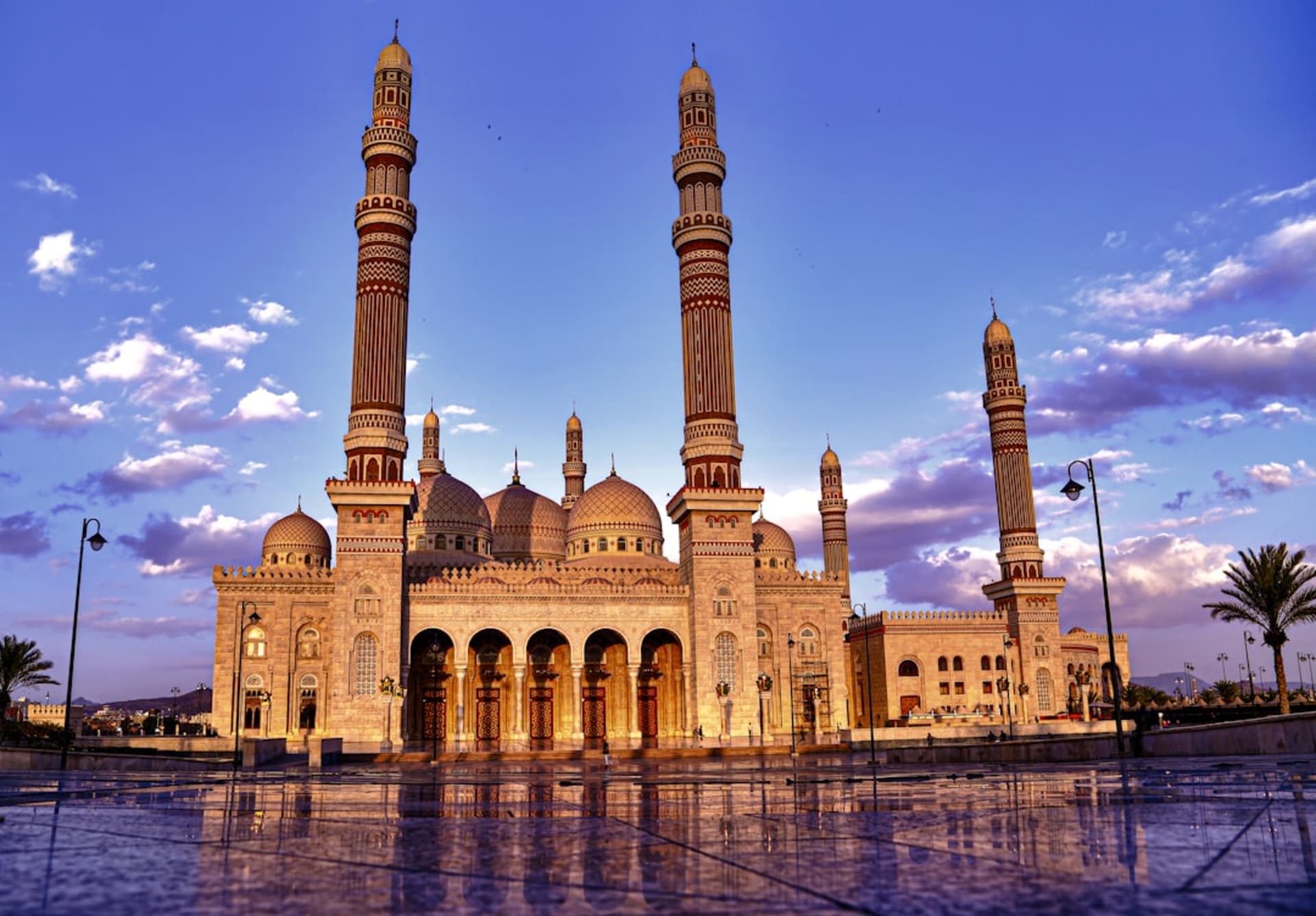
Mukalla
"A city that faced the Indian Ocean and let it inside—in the food, the architecture, the way people walk."
Mukalla arrives as a relief after the Hadhramaut desert. The city sits at the point where the limestone escarpment meets the Arabian Sea, and the transition—from the pale, baking interior to the seafront’s white buildings and salt air—is immediate and complete. The air changes character within a kilometer of the coast: cooler, heavier with salt, carrying the particular smell of a port city that has been in continuous operation for several centuries, which means diesel and fish and something maritime I can’t break down further.
The Hadhramaut’s principal port, Mukalla has a different cultural texture from the interior cities. The Indian Ocean trade routes ran through here for centuries—dhows trading fish and dates for Indian cotton and East African goods—and the city absorbed influences from each direction. The architecture on the seafront has a hybrid quality: Yemeni foundations, Indian decorative details around the windows and upper floors, occasional Swahili-inspired structural choices that make architectural sense only when you know that the people who commissioned these buildings had seen Zanzibar and Malabar and the Malabar coast and were trying to synthesize them in a single façade.
The Seafront
The seafront boulevard is Mukalla’s social spine, and it functions the way good seafronts do: as a place where the whole city comes to look at the sea without needing a reason. In the late afternoon, families and groups of men occupy the low wall along the promenade, and the quality of the gathering is relaxed in a way I associate with cities that have always had a waterfront to go to—the sea is a given, not an amenity. Fishing boats return in the afternoon and the harbor becomes briefly active, then settles again. Pelicans work the water just offshore with the unhurried efficiency of specialists.
The Sultan’s Palace
The Qu’aiti sultans who ruled the Hadhramaut from Mukalla until 1967 left a palace on the seafront that is now a government building of unclear function but considerable façade. The multi-story white structure with its arched windows and crenellated roofline sits at the harbor’s edge and reflects in the water on very calm days, which are frequent on the protected bay. The combination of Arabic, Indian, and Ottoman decorative elements on the exterior is specific to a particular moment in Indian Ocean history when the sultanates of this coast were in active dialogue with every port from Bombay to Mombasa.
The Fish Souq
The morning fish market runs on Arabian Sea logic: the dhows come in early, the fish are sorted on the quay, the auction happens in a rapid-fire vernacular that seems designed to exclude observers, and by 8 a.m. the best of the catch is gone. The variety is wider than I expected—tuna, kingfish, shark, several species of snapper, cuttlefish, occasionally something I couldn’t identify—and the prices reflect a market that has always sold to people who know exactly what they’re buying. I spent an hour watching and bought a piece of yellowfin that I had grilled at a small restaurant two streets back, where the cook did not ask me how I wanted it done and was correct in his assumptions.
The Hadhramaut Diaspora Connection
Mukalla is the point of departure for one of history’s more remarkable diaspora communities: the Hadhrami people who emigrated from this coast to Southeast Asia, East Africa, and India from the eighteenth century onward and built trading networks of extraordinary reach. The connection is still visible in the seafront buildings—in the decorative grilles, the tile patterns, the way certain window frames are proportioned. And it is still audible: the older generation in Mukalla sometimes has relatives in Jakarta or Hyderabad whose families left three generations ago and have not entirely returned.
When to go: October through March is ideal—the Arabian Sea is calm, temperatures hover around 28°C, and the fishing fleet is active. The summer khareef (southwest monsoon) brings rough seas and heavy humidity to the coast; the city slows and the sea becomes inaccessible for small boats. The fish market warrants an early alarm in any season.