Tashkurgan
"The town is small enough to walk across in ten minutes, but standing at the edge of it you feel the weight of three borders."
End of the Road (Almost)
Tashkurgan is as far as foreigners can get on the Karakoram Highway without a special permit for Pakistan, and the town has the feeling of all frontier settlements: practical, provisional, oriented toward departure. The main street has a handful of guesthouses, a post office, a fuel station, a market selling dried fruit and household goods. The residents are predominantly Tajik—not the Tajiks of Tajikistan proper, but the Pamiri Tajiks, an Iranian-language group with a distinct culture who have been living on this plateau since long before the borders were drawn.
I arrived after the climb from Karakul, which adds another thousand meters of altitude and another level of drama. The plateau opens up around Tashkurgan into grassland and wetland—there are seasonal lakes and reed beds in the valley bottom—and the contrast with the rocky passes you’ve just driven through is genuinely startling. Yaks graze in the wetlands. The Stone City ruins rise from a natural mound above the marsh.
The Stone City
The Stone City—Shitou Cheng in Mandarin—has been occupied in various forms since at least the Han dynasty, when Chinese texts record it as a waypoint on the southern Silk Road branch heading toward India. What remains is a series of earthen and stone ramparts, watchtowers, and city walls spread across a rocky outcrop above the valley. The material has eroded into shapes that are more geological than architectural: towers that look like natural hoodoos, walls that blend into cliff faces.
I walked the perimeter in about two hours, climbing to the highest remaining tower to look out at what the garrison soldiers would have seen: the Wakhan grassland spreading south toward the Wakhjir pass into Pakistan, Kongur Tagh’s 7,719-meter bulk to the northeast, the valley of the Tashkurgan River threading through the middle. The strategic logic of the location was immediately obvious. So was why you’d find it desolate.
Tajik Culture
The Pamiri Tajiks in Tashkurgan wear distinctive embroidered hats and a style of dress that differs from both Uyghur and Han clothing. The women’s headdresses in particular—tall cylindrical hats with embroidered bands—are specific enough that you know immediately you’ve crossed a cultural boundary from Kashgar’s Uyghur world. The Tajik language here is a branch of Persian, comprehensible to speakers of Dari or Farsi, which creates the odd situation of a language with a closer living relative in Iran and Afghanistan than in China.
The weekly market draws herders from surrounding valleys and occasionally from the Pakistani side when border relations permit. The goods are basic—food, fabric, hardware—and the social function is obviously primary. I spent a morning at the market understanding almost nothing verbally and quite a lot visually.
The Plateau Beyond Town
The best hours I spent in Tashkurgan were a half-day walk south along the river toward the stone wetlands. The path follows irrigation channels through fields of barley—this is near the limit of cultivation at this altitude—before opening into open grassland where yaks and semi-wild horses move in family groups. The silence up here is the genuine kind: no wind means no sound at all. I stopped and stood in it for a while, feeling the altitude in my chest.
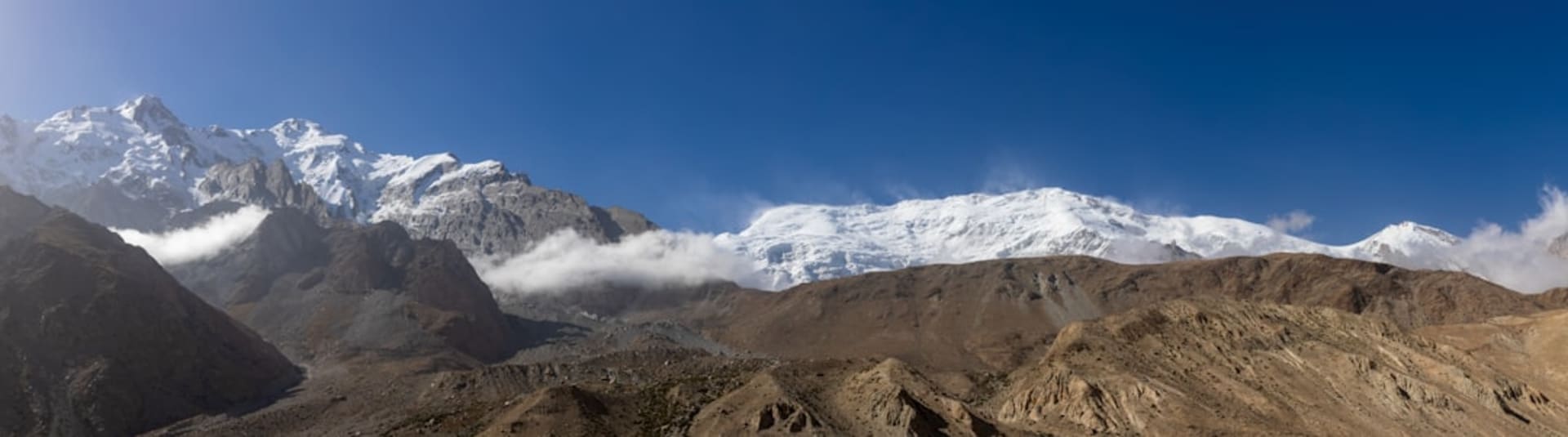
Kongur Tagh and the neighboring Kongur Tiube, both over 7,500 meters, are visible from everywhere in the valley and their scale takes adjustment. They are not the dramatic needle peaks of more famous mountains—they are broad, massive, built for the long game.
When to go: May through October, with July and August warmest but also busiest with expeditions. September offers good weather with fewer people. The road south to the Pakistan border is subject to closure; confirm conditions before traveling. Altitude acclimatization is worth planning for—come from Karakul rather than driving directly from Kashgar if time allows.