Asia
Xinjiang
"I came expecting desert and left rearranging everything I thought I knew about China."
I arrived in Kashgar on an overnight train from Urumqi with no real frame of reference. Nothing in years of travel through Central Asia, through the Middle East, through western China had prepared me for that Sunday bazaar — ten thousand people trading sheep, spices, copper pots, and handwoven rugs in a space that smelled of cumin and livestock and something ancient that I still cannot name. Uyghur, Russian, Kyrgyz, Tajik — conversations layered over each other like a market that has been running, in some form, for two thousand years. Which it has.
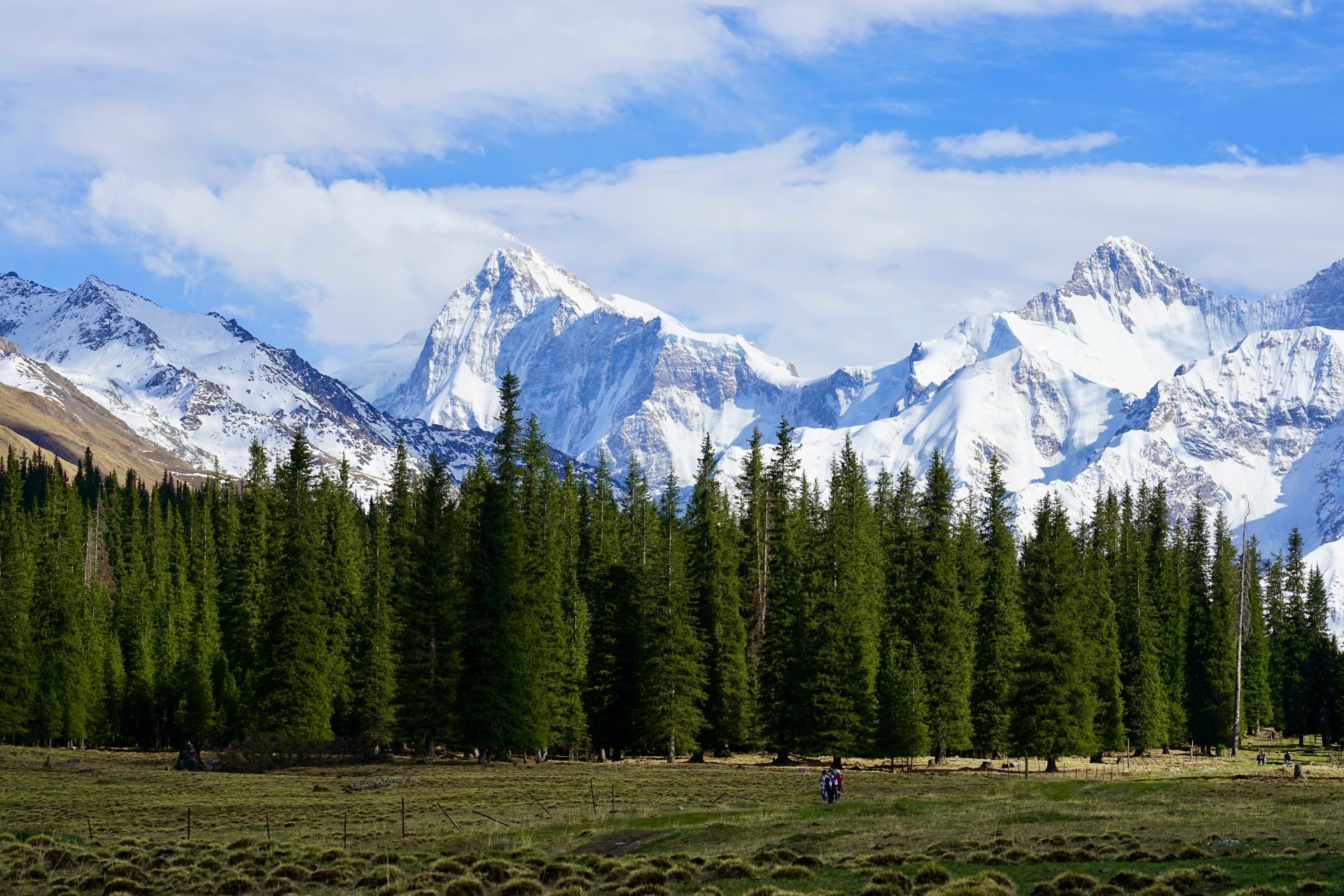
The scale of Xinjiang is the first thing that defeats the imagination. The Taklamakan Desert alone is larger than France. The Tianshan range — snow-capped, impossibly dramatic — cuts through the region like a spine, and the valleys on either side exist in almost separate climates. The Ili Valley in the north is green in ways that blindside you: alpine meadows, flower fields in spring, Kazakh nomads moving their herds between winter and summer pastures. The photo I keep coming back to from that trip is not of desert dunes or ancient minarets. It is of a morning in Zhaosu County, the mountains catching early light above a tree line so dense and saturated it looked painted. That image has nothing to do with the Xinjiang that exists in most people’s mental library, and that gap is exactly the point.
The food is reason enough. Laghman noodles hand-pulled to order and tossed with lamb, peppers, and tomatoes — a dish that migrated west along the Silk Road and became the ancestor of Italian pasta, if you believe the food historians, and standing at a cart in Kashgar eating them in the street, you find it easier to believe. Polo — the Uyghur rice pilaf cooked with carrots and mutton fat in a cauldron the size of a small car. Samsa, the baked lamb dumplings that come out of clay ovens burning your fingers. And the bread: naan baked on the walls of tandoor ovens, seeded with sesame, still warm, still the best bread I have eaten anywhere.
When to go: Late April to June for the Ili Valley’s wildflower season and mild temperatures. September for harvest, golden light, and fewer visitors in the south around Kashgar and Hotan. August brings the heat to the Taklamakan but also clearer skies in the mountains. Avoid January and February — Urumqi winters are genuinely brutal.
What most guides get wrong: They present Xinjiang as either a desert curiosity or a political headline. Neither captures what it is on the ground: a region of extraordinary geographic and cultural complexity where the Silk Road is not a metaphor but a living tissue still connecting people, cuisines, and traditions across borders that maps insist on drawing differently than people experience them.