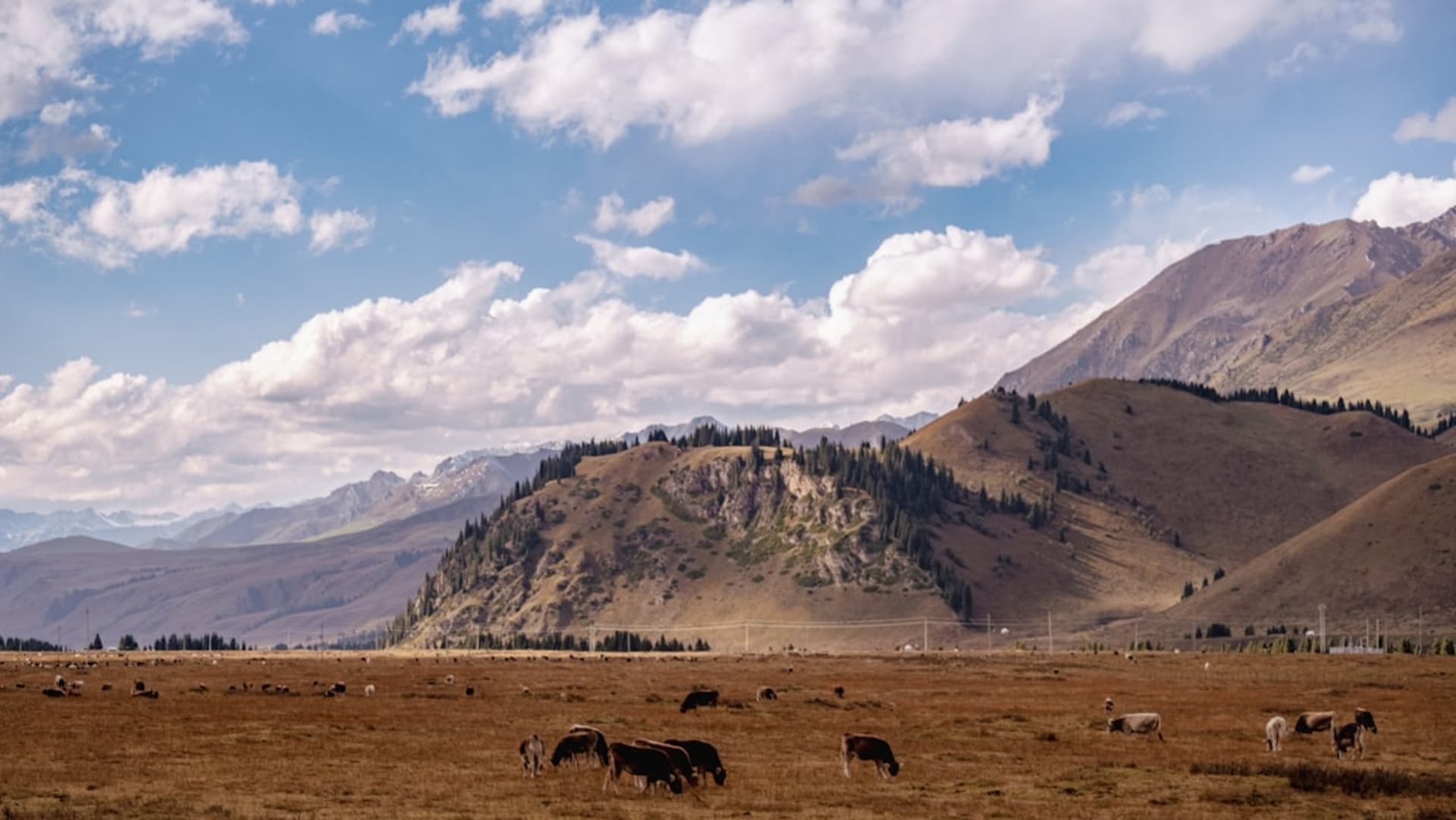
The Karakoram Highway
The Karakoram Highway climbs south from Kashgar toward Pakistan through landscapes that get more extreme with every kilometer. By the time you reach Karakul Lake, the road has been climbing for three hours, the air is noticeably thin, and the scale of everything has ratcheted up past the point where normal spatial intuitions work. The lake appears suddenly after a curve, navy blue and absolutely still, with the 7,546-meter cone of Muztagh Ata reflected in it so precisely that the reflection looks more solid than the mountain itself.
I had rented a seat in a shared van from Kashgar, wedged between a Kyrgyz family returning home from the city with boxes and bags occupying every cubic inch of space not already occupied by a person. The baby in the mother’s arms slept for the entire journey. The grandmother ate sunflower seeds and offered them to me periodically. By the time we reached Karakul I felt I had been genuinely transported rather than merely moved.
The Yurt Camps
The Kyrgyz families who have camped at this lake for centuries now operate yurt guesthouses for travelers. The yurts are the real thing—circular felt structures with a central fire opening and wooden lattice walls—supplemented with foam mattresses, sleeping bags of variable warmth, and electric lights running off solar panels. The hospitality is organized around tea: black tea with salt and butter, served constantly, refilled before you’ve finished. Flatbread appears with it, and at mealtimes a mutton dish with potatoes arrives in a shared pot.
I spent a night and I’m glad I did, though the cold at 3,600 meters in September dropped below zero by midnight and the sleeping bag provided was not quite equal to the task. I layered every piece of clothing I owned and managed. The reward was waking at five to find the lake completely still in pre-dawn dark and the stars at this altitude so dense they looked like something had gone wrong with the sky.
Muztagh Ata and the Climbers
Muztagh Ata—“Father of Ice Mountains” in Uyghur—is considered one of the most accessible seven-thousanders in the world, attracting commercial climbing expeditions that use Karakul as a base camp staging point. During the climbing season (June through August) the lake shore mixes Kyrgyz herders, Chinese trekkers, and international climbing teams in a combination that shouldn’t work but somehow does. A Dutch mountaineer at the yurt camp showed me photos from the summit plateau and described the view of the Pamir spread out to the west in language that made me want to have different knees.
The hiking options from the lake don’t require mountaineering ambitions. A walk around the lake’s northern shore takes a few hours and gets progressively more remote from the highway. A longer day hike toward the Subashi pass reaches higher ground with views back to the lake and forward into upper valleys where glaciers descend between lateral moraines. At this altitude, even walking feels like working.
The Light
The quality of light at Karakul is something I find genuinely hard to describe without leaning on clichés. The altitude and the dryness and the surrounding ice fields create a clarity that removes the usual atmospheric haze. Colors are oversaturated compared to sea-level experience. The mountain in afternoon light turns a particular orange-white that looks digitally enhanced. I took photographs knowing they would be inadequate and took them anyway.
When to go: June through September is the main window; July and August have the warmest nights and are peak climbing season. September has colder nights but fewer people and excellent light. The road is sometimes closed in winter and spring due to snow. The highest passes toward Pakistan close from November through April.