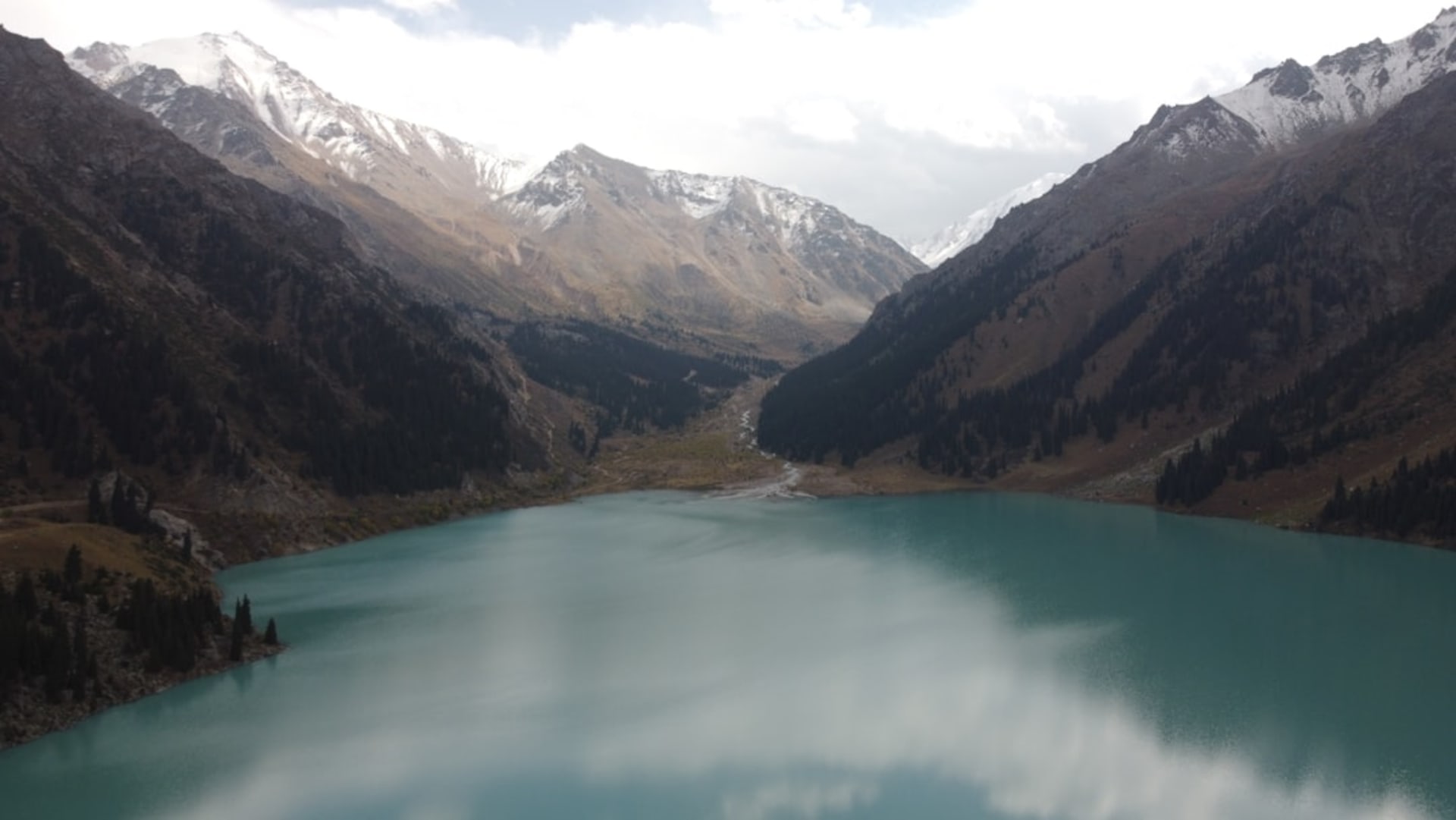
Kanas Lake
"Everything about this place insists you are not in China—and then the souvenir shop appears."
The Altai Anomaly
Northern Xinjiang operates under different rules than the rest of the region. Where the south is desert and heat and the weight of Central Asian history, the Altai corner is cold, forested, and wet enough to sustain birch and Siberian larch. Kanas Lake occupies the heart of this anomaly: a lake seventeen kilometers long, two hundred meters deep in places, fed by glaciers that are still visibly present on the peaks above. The water is a shade of blue-green that photographs embarrassingly like a screensaver and looks exactly that way in real life.
I came in early October, which is peak season for the larches turning gold and red, and the competition for a good morning viewing spot on the observation deck was real. I set an alarm for five-fifteen and still wasn’t first. But the light at six, with fog sitting on the lake surface and the forest color bleeding into the still water, was worth the aggressive alarm.
Tuvan Villages
The indigenous Tuvan people—a Turkic group more closely related to the Tuvans of Russia than to any Chinese ethnic category—have lived in this valley for centuries. Their wooden log houses, built in a style nearly identical to those in the Tuva Republic across the Russian border, cluster in three main villages along the lake road. The practice of herding horses and cattle in these forests has shaped the landscape in ways you notice but can’t quite name: the undergrowth is grazed to a certain height, the meadow clearings persist, smoke from pine fires drifts through the tree line in the afternoon.
Lia and I visited a family who offered us homemade koumiss—fermented mare’s milk—and dried cheese that had the texture of chalk and a flavor that required adjustment. The koumiss was tart and thin, lower alcohol than I expected, and it grew on me by the second bowl. The family’s hospitality was real and the transaction beneath it was also real: a tip was expected and reasonable. This is tourism. I didn’t mind; the conversation, mediated by a village kid who had decent Mandarin and no English, was genuinely interesting.
Walking the Valley
The park infrastructure—shuttle buses, boardwalks, timed entry tickets—is elaborate and somewhat suffocating if you want to walk freely. But the scenery that the infrastructure is managing is spectacular enough to make the management tolerable. The trail above Moon Bay, the S-curve section where the river bends through meadows before reaching the lake, is best in early morning when the park buses haven’t started running yet and you can stand on the viewing platform hearing only the river.
The real escape is on the trails leading up into the side valleys above the main tourist corridor. An hour’s climb past the last shuttle stop puts you in open alpine meadow with grazing horses and views back down to the lake below. The horse herders up there operate with no particular interest in tourists, which felt like relief after the structured experience at the main viewpoints.
The Monster and Other Stories
The lake supposedly harbors a large unknown creature—stories of a dark mass that surfaces and drives fish to shore have circulated for decades. The Tuvan explanation is more spiritual than cryptozoological: the lake has a spirit, and what people see is the spirit’s presence. I spent an evening watching the water from a shoreside rock and saw nothing except the light shifting and a family of ducks. Which was enough.
When to go: Early October for the larch color—the peak is narrow, roughly two weeks, and the crowds are serious but the payoff is real. July and August are green and warm but busy. May and June see the snow melt and wildflower blooms. Winter is accessible but infrastructure is reduced.