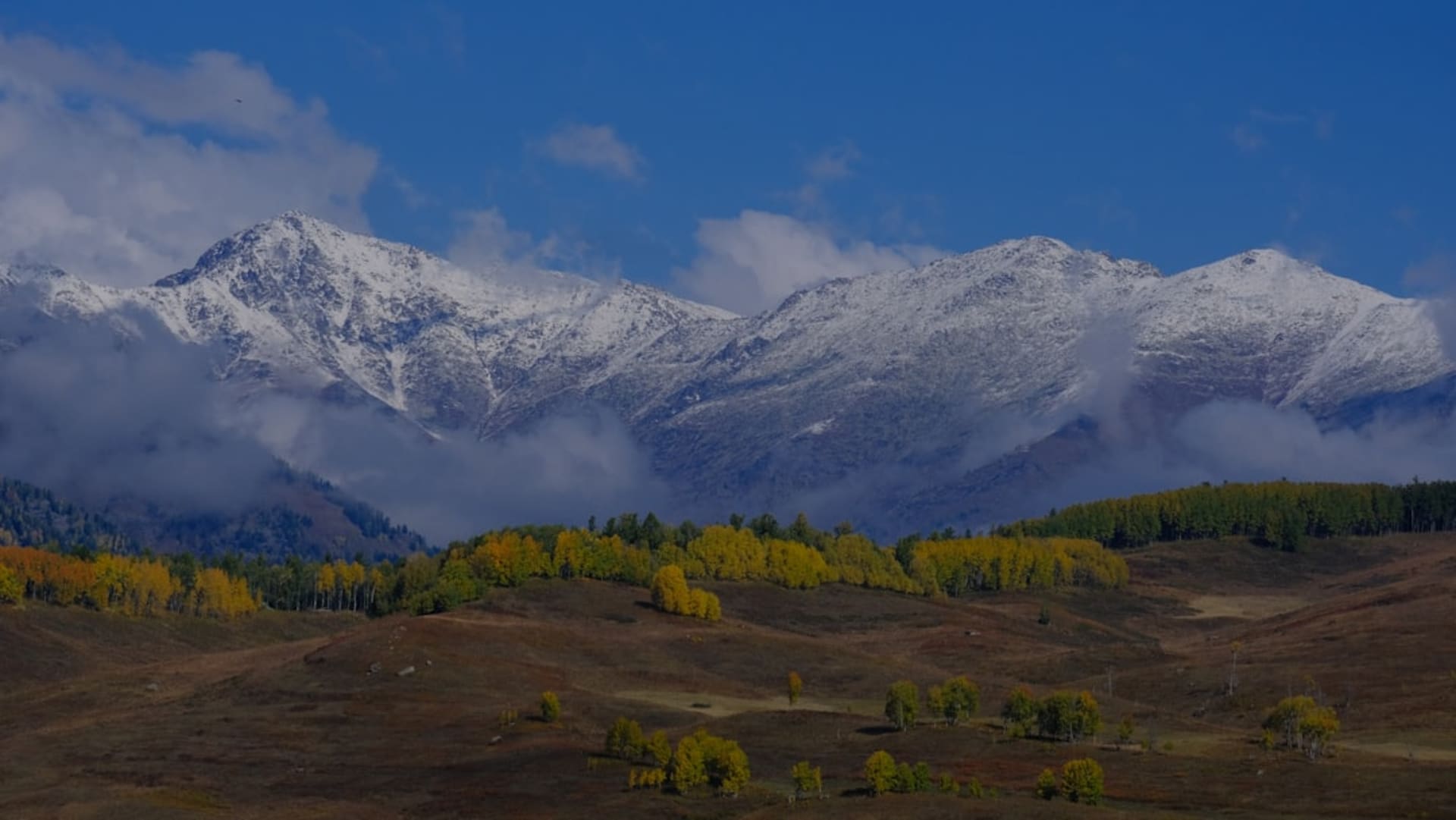
The Green Surprise
Most conversations about Xinjiang center on the Taklamakan, on Kashgar, on the drama of desert and rock. Nobody had warned me properly about the Ili Valley. Coming over the Tianshan pass from Urumqi on the overnight train, I woke at dawn to find the landscape had fundamentally changed: instead of the brown basin I’d become accustomed to, there was a wide green valley with a river running through it and horses standing in meadows that looked Irish. The woman in the berth above me saw my face and said, “Yes, everyone does that when they first see it.”
The Ili River flows west toward Kazakhstan, and the valley around it—sheltered by the Tianshan to the north and south—catches enough moisture from the Atlantic and from snowmelt to sustain grasslands that support a substantial Kazakh population. Yining, the main city, has a Russian-influenced old quarter left from the Soviet era, when this region briefly fell into Soviet influence, alongside Kazakh, Uyghur, and Han neighborhoods that each have their own social gravity.
Wild Tulips and Grassland Spring
In late April and early May, the hillsides above the valley explode with wild tulips—Tulipa iliensis, the species that’s a genetic ancestor of many European cultivated varieties. The blooms are small compared to Dutch market tulips, more cup-shaped and wind-buffeted, in shades from yellow to deep red. They cover slopes of dry grass that look brown and dead until you’re standing in the middle of them. I walked one afternoon through a hillside above Nalati grassland where the density was high enough that stepping without crushing something required attention.
The Nalati Sky Grassland—a plateau above the main valley—is accessible by cable car or on horseback, and the views looking both down into the valley and up toward the glaciated peaks are the kind that make you stand quietly for longer than you planned. Kazakh families run yurt camps up there from May through September, serving mutton stew and naan cooked in cast-iron pans over dried dung fires.
Lavender Season
The Ili Valley is China’s main lavender-growing region, and the farms around Yining and the nearby town of Huocheng hit peak bloom in June and early July. The fields are real—commercial operations that supply essential oil and dried flower markets—not primarily tourist attractions that have secondarily become Instagrammable, though they have certainly become that too. The smell on a warm afternoon when the fields are being walked through is the strongest lavender I’ve encountered outside of Haute-Provence.
Lia and I arrived at a farm early on a Sunday morning before the tour buses, and for about forty minutes we had the rows mostly to ourselves. The color in low morning light—purple shading to blue at the field edges, bees audible across the whole area—was worth the early start. By ten o’clock the buses arrived and the experience shifted into something more managed.
Kazakh Hospitality and Horse Culture
The horse culture here is as serious as anything I’ve seen in Central Asia proper. Buzkashi, the game involving a goat carcass and horses at full gallop, happens at festivals, and even the everyday riding style of Kazakh herders is different from the cautious tourism-horse version—fast, low, with the horse doing real work. I didn’t ride myself but watched a family moving a small cattle herd along a valley road for about half an hour and felt like I was watching something that would be the same whether I was there or not.
When to go: Late April to early May for the wild tulips. June to early July for lavender. Summer through early September for grassland camping and yurt culture. The valley is accessible year-round but winters close many mountain passes and the grasslands go dormant. Avoid Chinese national holidays when the lavender farms become extremely crowded.