Snowdonia
"The cloud came down around noon and I stopped seeing where I was going, which turned out to be fine."
The Mountain Above Everything
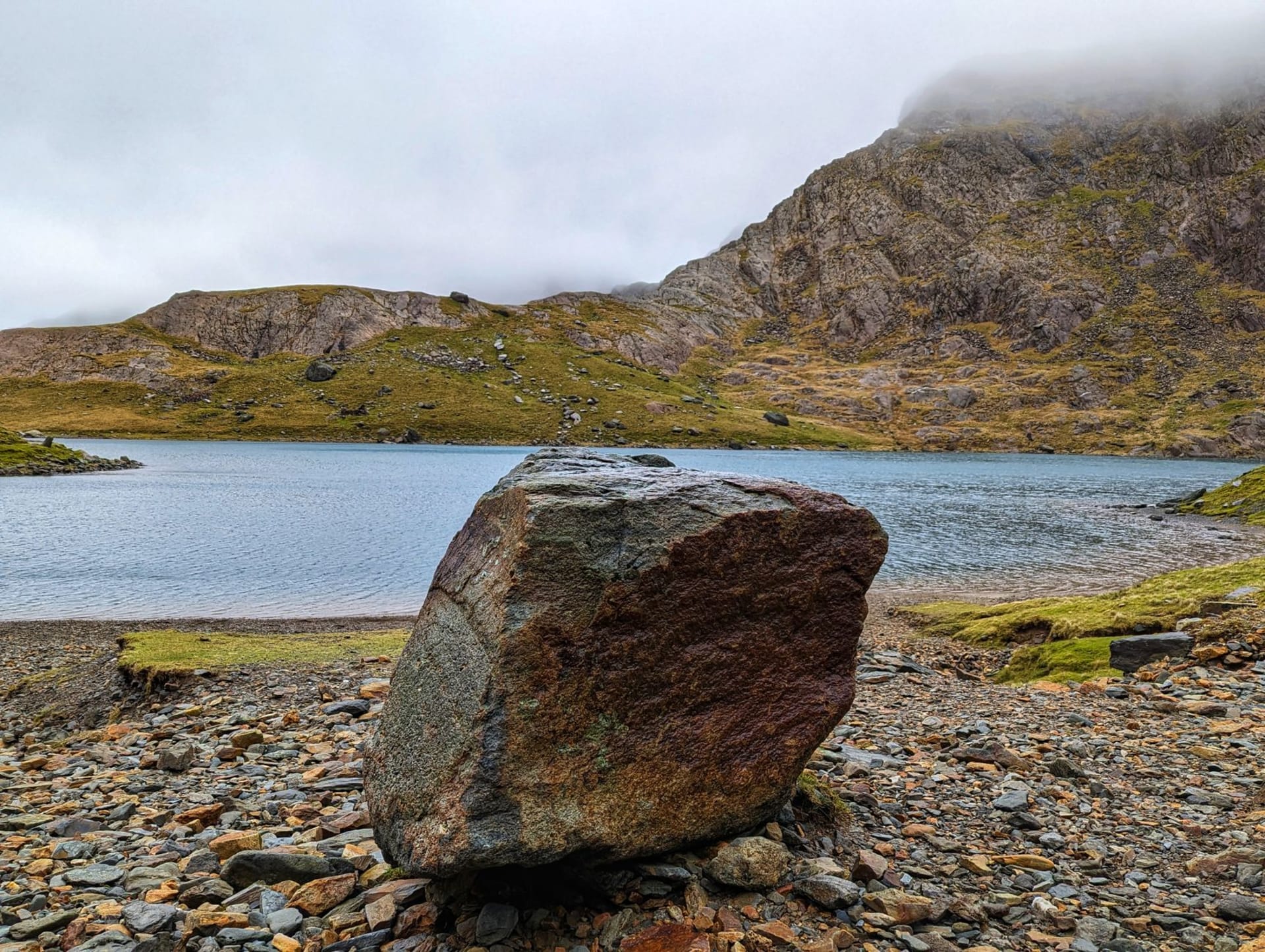
Snowdon — or Yr Wyddfa in Welsh, which translates roughly as the tomb, which tells you something about how seriously the Welsh take their highest peak — is a mountain that rewards stubbornness. I climbed the Pyg Track in October, which was either brave or poorly researched depending on who you ask. The path switchbacks up from Pen-y-Pass through a landscape of purple-grey scree and stunted grass, past a lake that sits in a glacial hollow like someone dropped it there and forgot about it.
The cloud rolled in around the halfway mark. By the time I reached the summit ridge I was walking in white nothing, following the path by instinct and the occasional cairn materialising out of the mist. At the top there’s a visitor centre — the Hafod Eryri — a building of rough Welsh slate that manages to feel both entirely appropriate and somehow astonishing. I ate a bowl of soup inside while the windows rattled and the cloud pressed against the glass, and felt the particular contentment of having done something moderately difficult.
The train also goes to the summit, if you prefer. I don’t judge. The Snowdon Mountain Railway is a Victorian cog railway from Llanberis, and on a clear day the views from the carriage are apparently extraordinary. I’ll take their word for it.
Llanberis and the Slate Country
The village of Llanberis at the foot of Snowdon is a serious little place — climbers’ gear shops, a good chippy, a bunkhouse culture that assumes you’ve come to suffer and enjoys this. But the bigger story is just up the road at the National Slate Museum, built into the Victorian quarry workshops of the Dinorwic Quarry, which once employed thousands of men cutting slate from the surrounding mountains.
Walking through the workshops is unexpectedly moving. The machinery is still there — the water-powered saw frames, the splitting tables — and the silence in the big shed feels like something is still held in it. The quarry terraces on the hillside opposite are the kind of scar that time hasn’t entirely healed and probably never will. You can walk up into them and look back over Llyn Padarn and feel the scale of what this industry was.
The Valleys and the Water
Snowdonia isn’t just Snowdon. The park holds a dozen other peaks, most of them less crowded and equally rewarding — the Glyderau above the Ogwen Valley, the Carneddau in the north, the Cadair Idris massif far to the south, a mountain so associated with poetic inspiration that the old stories claim a night on its summit makes you either a poet or a madman.
Lia wanted to try Cadair Idris. We took the Fox’s Path up from Llyn y Gadair in late afternoon and reached the ridge in fading light, the valley below disappearing into shadow. The summit plateau is broad and volcanic-looking, studded with small lochans that caught the last orange of the sky. We were definitely not mad by the end of it. Poets, I cannot say.
The Glaslyn Valley and the village of Beddgelert offer a gentler version of all this — riverside paths, waterfalls, the kind of pastoral Wales that turns up in Victorian watercolours. Good for the day after Snowdon, when your legs are reminding you of decisions made.
Eating Between Climbs
Betws-y-Coed is the market town at the eastern edge of the park and the place most people end up between hikes. It’s slightly too full of outdoor clothing shops, but the Pont y Pair falls are five minutes from the main street and worth every tourist you have to step around. The pub food is reliable; the Welsh lamb is always the thing to order.
When to go: June through early September for reliable enough weather to see what you’re walking through. October has the bracken turning amber and the crowds thinning, but cloud and rain are near-certainties. Avoid January through March unless you’re a serious winter climber — the summit can ice over fast and the light is gone by half past four.