Pembrokeshire Coast
"The path dropped toward the sea and the wind hit me sideways and I understood immediately why people spend their whole lives walking this coastline."
The Edge of the Country
The Pembrokeshire Coast Path runs for 299 kilometres from Amroth in the south to St Dogmaels in the north, following every headland and cove and inlet with a fidelity to the coastline that amounts to mild obsession. I’ve never done the whole thing. I’ve done sections of it over different trips, arriving by car or bus to walk a headland and double back, which is probably cheating but is also how most people actually do it.
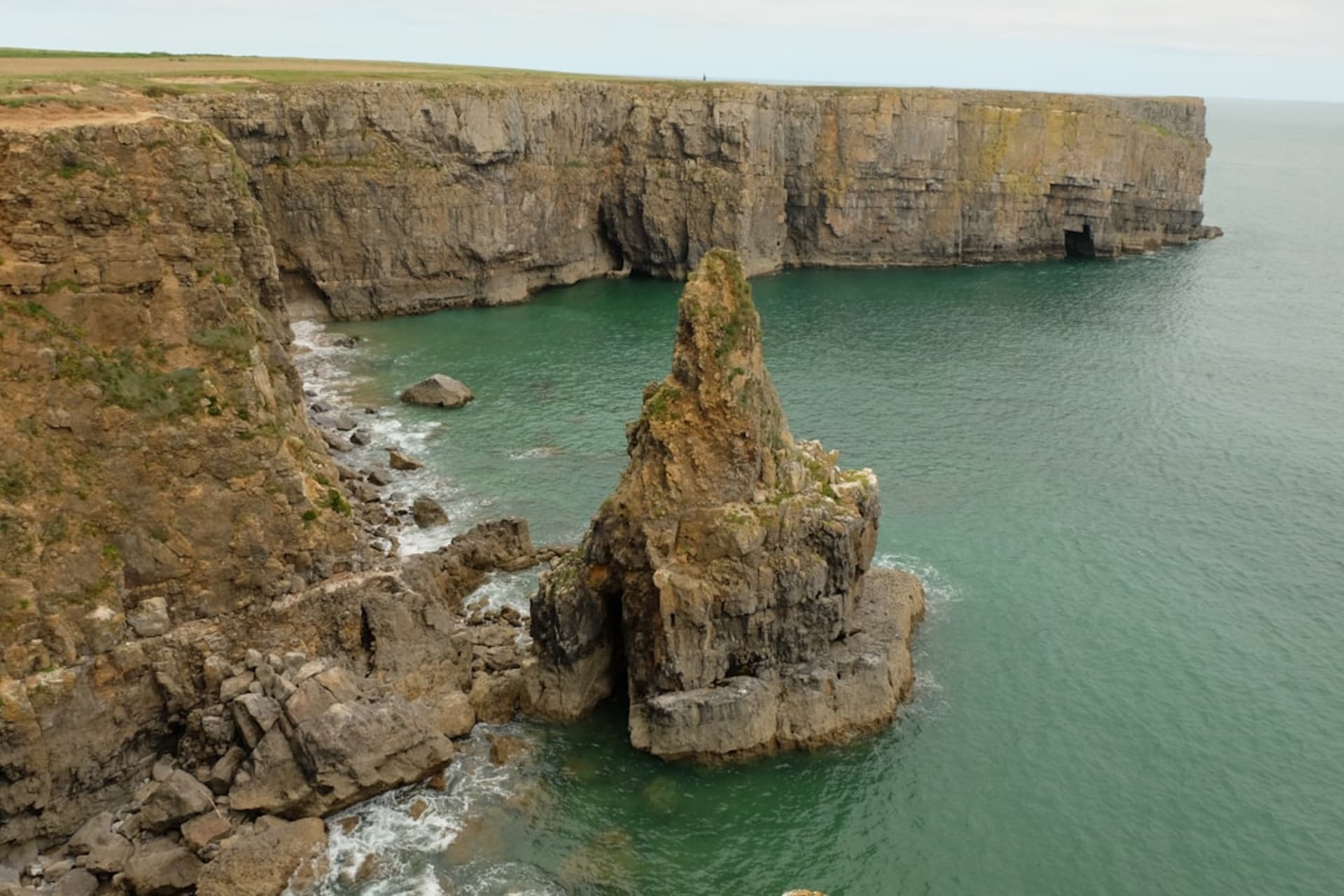
The stretch from St Govan’s Head to Stackpole is where the geology turns theatrical. The limestone here has been folded and fractured until it looks like something an architect designed in a dream — stacked pavements, blowholes that exhale sea spray, sea stacks standing offshore like witnesses at some old proceeding. St Govan’s Chapel, a sixth-century hermitage built into a fissure in the cliff, is small enough that you nearly miss it until you’re already on the steps down. Inside it smells of candle wax and cold stone, and the sound of the sea is perfectly framed by the narrow door.
Marloes and the Western Edge
The Marloes Peninsula in the far southwest is the part of Pembrokeshire I keep returning to. The beach at Marloes Sands is a long curve of red and grey sand backed by tilted sandstone strata, and in September it’s empty enough that you can hear the waves individually. Seal pups appear on the rocks at the southern end in autumn; the colony at Skomer Island is the largest grey seal colony in southern Britain.
Skomer itself is worth the boat crossing from Martin’s Haven — puffins in summer, Manx shearwaters in extraordinary numbers, a landscape that’s been largely unchanged since the Iron Age field systems still visible in the thin grass. The boat is small, the crossing is fifteen minutes, and tickets sell out weeks ahead in peak season. I booked three weeks in advance and still got the last spots.
The bird life along the whole coastline is relentless. Choughs — the red-billed, red-legged crow that appears on the Welsh coat of arms — nest on the headlands. Peregrine falcons hunt the cliff faces. Gannets work the offshore swells in long diagonal dives that end in white explosions just above the wave tops.
Tenby and the Towns
Tenby is the tourist centre of Pembrokeshire and is entirely unapologetic about this. The pastel-painted Georgian townhouses on the harbour are genuinely beautiful, the beaches are wide and sandy, and in July the whole place feels like Britain on holiday. It’s also walled — medieval walls, mostly intact, that you can walk stretches of.
I have mild affection for Tenby and strong affection for the fact that you can catch a boat from the harbour to Caldey Island, where a community of Cistercian monks makes chocolate and perfume and sells it in a small shop near the abbey. The chocolate is better than you expect. The island is very quiet.
Narberth, inland, is the place for eating. It’s a small market town that’s accumulated an unreasonable number of good restaurants for its size — farm-to-table cooking, local cheeses, the best Welsh cakes I found in the county, from a woman who makes them on a bakestone in the Saturday market.
The Water Itself
Coasteering — the activity of scrambling, swimming, and jumping into the sea along rock faces — was invented here in Pembrokeshire. It sounds like something invented specifically to frighten me, and the first time I tried it I was right to be frightened. Then I jumped off a ledge into a channel between two rocks and the cold water closed over my head and I came up laughing. It’s that kind of coast.
When to go: May and June for the puffins on Skomer and the wildflowers on the cliff tops — thrift and sea campion in full pink bloom. September for seals, emptier beaches, and the light turning gold by five. Avoid August unless you like queuing for car parks; the coast path gets very busy.