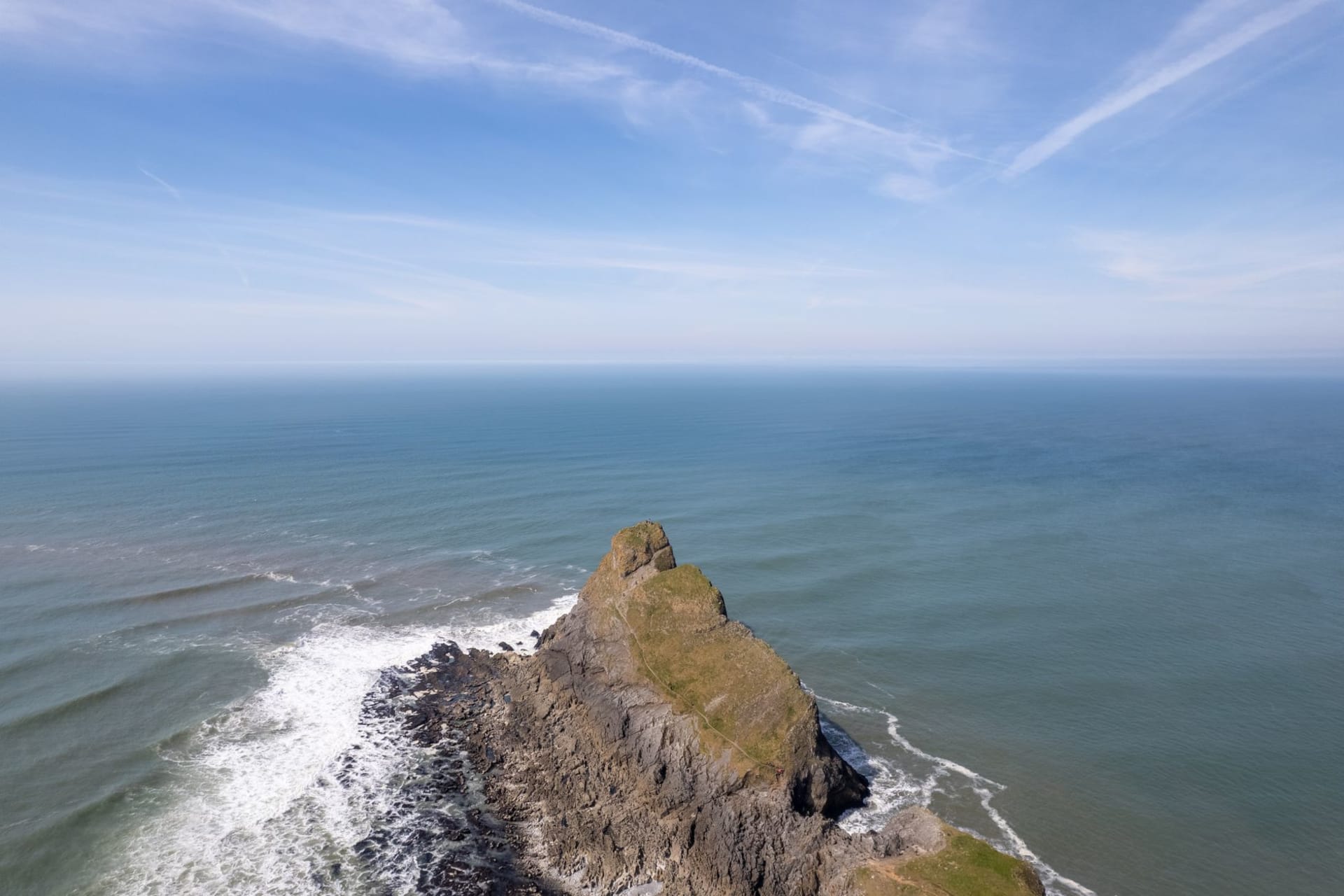
Llŷn Peninsula
"The land just keeps narrowing until there's nowhere left to go but the sea, and somehow that feels like arriving rather than stopping."
The End of the Road
The Llŷn is what’s left when Wales runs out of room. It points southwest from Snowdonia into the Irish Sea, getting thinner and quieter the further you drive, until the road dwindles to single track between hedges taller than the car and you start meeting tractors you have to reverse a quarter mile to let past. I did this badly the first time. Lia took over the reversing after the second tractor, on the grounds that I was going to put us in a ditch out of pure French stubbornness, and she was probably right.
This is one of the strongholds of the Welsh language — you hear it in the shops, on the beach, in the pub, not as a performance for visitors but as the ordinary medium of the place. I speak no Welsh and felt, correctly, like a guest. People switched to English for me with a kindness that didn’t quite hide the fact that I’d interrupted something.
The villages are small and salt-scoured. Aberdaron sits at the very tip, a clutch of whitewashed houses around a beach and a church that has stood so close to the sea for so long that the graveyard wall is half its defence against the waves. The church served pilgrims for centuries — three pilgrimages to this corner of Wales counted as one to Rome, which tells you both how holy it was and how far it was from anywhere.

The Island You Can See But Rarely Reach
Two miles off the tip lies Bardsey, Ynys Enlli, the island of twenty thousand saints. The name comes from the medieval belief that this is where the pilgrims came to die and be buried, and standing on the mainland looking at it across a sound notorious for its currents, you understand why a small green island that’s hard to reach acquired a reputation for being halfway to heaven.
You can cross when the weather and tides allow, on a small boat from Porth Meudwy, and the operator will tell you cheerfully that you might not get back on schedule. We didn’t go — the sea was up and the crossing cancelled the morning we’d planned it — and I’ve made peace with the fact that Bardsey is, for me, an island I looked at. There’s something appropriate about that. Not everything sacred is supposed to be convenient.
Beaches, Sheep, and Whistling Sand
What we did instead was walk. The coast path along the Llŷn is the kind of walking I’d cross a continent for — cliffs of folded grey rock, coves you reach down sheep tracks, and the three peaks of Yr Eifl rising abruptly from the sea like the land’s last assertion before it gives up.
At Porthor, the beach is famous for sand that squeaks underfoot — the “whistling sands,” caused by the particular shape and dryness of the grains. I scuffed across it like a six-year-old, producing a sound somewhere between a balloon and a complaint, while Lia filmed me with the steady patience of someone documenting a man’s regression. The sea here is genuinely turquoise on a good day, cold enough to take your breath, and almost empty.
When to go: May and June for long light, wildflowers on the cliffs, and the best chance of a Bardsey crossing. September for warm sea and quiet beaches. Avoid August, when the narrow lanes fill with caravans and the reversing gets competitive.