Cardiff
"The market smelled of rain and fresh bread and something that might have been coal dust, though that's probably just romance."
A City Still Figuring Itself Out
Cardiff doesn’t announce itself the way capital cities usually do. There’s no grand boulevard, no triumphal arch, no moment where you feel the weight of centuries pressing down on you. Instead you get a very good covered market, a castle stuck improbably in the middle of a roundabout, and the particular energy of a place that’s been reinventing itself since the coal money dried up.
I arrived on the train from London and walked straight from the station into Cardiff Central Market. It’s the kind of indoor market that doesn’t try to be artisanal about itself — butchers alongside fabric stalls, a café with the best flat white I found in Wales, a woman selling handmade cawl from a thermos. The ceiling is Victorian cast iron, painted cream, and on a grey Tuesday morning the light filtered through the skylights like something out of a Turner painting nobody thought worth keeping.
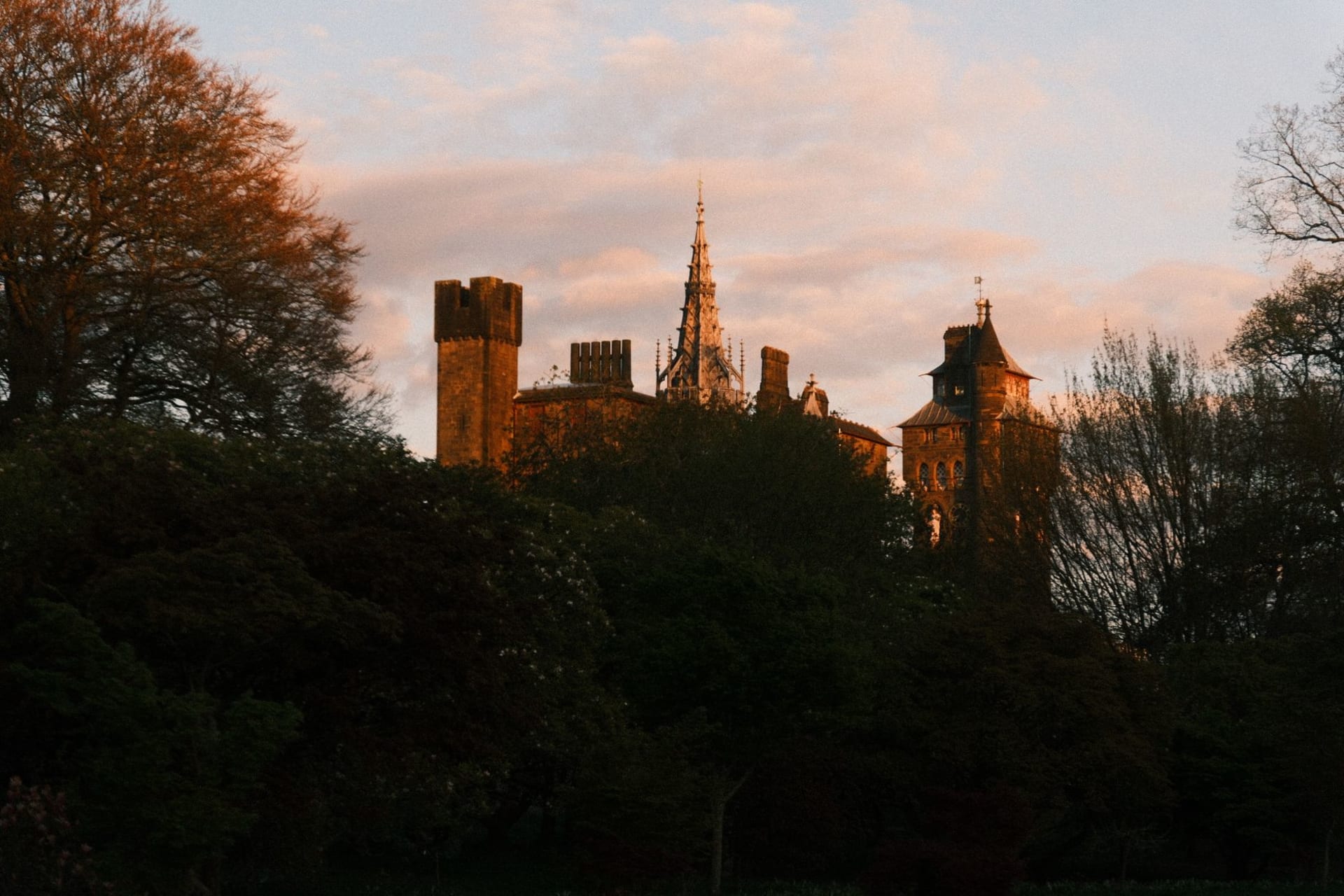
The castle is stranger than it looks in photos. The Norman keep on its mound is fine — historical, expected — but the Victorian Gothic apartments built into the walls by the Marquess of Bute are something else entirely. Arabesque ceilings, a clocktower library, painted murals of the zodiac. Bute had more money than taste could contain, and the result is a fever dream of medievalism that feels more Disneyland than Wales, until you stop fighting it and just let it wash over you.
The Bay Transformation
Cardiff Bay is what happens when a city decides its post-industrial waterfront is an asset and not an embarrassment. The old docklands — once the world’s largest coal-exporting port — now hold the Senedd, the Welsh Parliament, and the Wales Millennium Centre, a building whose facade is inscribed in Welsh and English with lines from Gwyneth Lewis’s poem about being creative in the darkness.
Lia read the lines aloud and said it was the best thing she’d seen written on a building. I’m inclined to agree. Inside, you can catch Welsh National Opera, touring dance companies, or just stand in the foyer and watch the water move in Roald Dahl Plass. Yes, they named a public square after Roald Dahl. Cardiff is that kind of city.
Arcades and Breweries
Cardiff has more Victorian and Edwardian covered arcades per square kilometre than any city in the UK, which is either a piece of trivia or a way of life, depending on how rainy it gets. The Royal Arcade and the Morgan Arcade are the obvious ones, all painted glass canopies and independent shops selling Welsh wool and second-hand vinyl. I spent an afternoon in the latter and left with a record I didn’t need and a bowl of ramen from a side door that shouldn’t have been there.
The craft beer scene has settled into the city in a way that feels earned rather than imported. Pipes Beer is the best of it — brewed in an archway under the railway and served in a tap room that could double as a film set for urban grit. The Taff Trail runs along the river and out into the countryside, which means you can run off the beer the following morning if your legs hold.
Eating Welsh Without Apology
Cardiff is the best place in Wales to eat Welsh food. That sounds obvious but it took me a while to understand it — the lamb here is extraordinary, the laverbread (seaweed, essentially, dressed with bacon and oatmeal) is an acquired taste I acquired somewhere around day two, and the rarebit in a certain pub on the city’s southern edge is worth building a morning around.
When to go: May through September gives you the best chance of the bay glittering rather than grey. The Hay Festival overflow events and the Cardiff Festival fill August with noise. Avoid the Six Nations weekends unless rugby is the point — half the city loses its mind in the best possible way, and every pub is standing room only from noon.