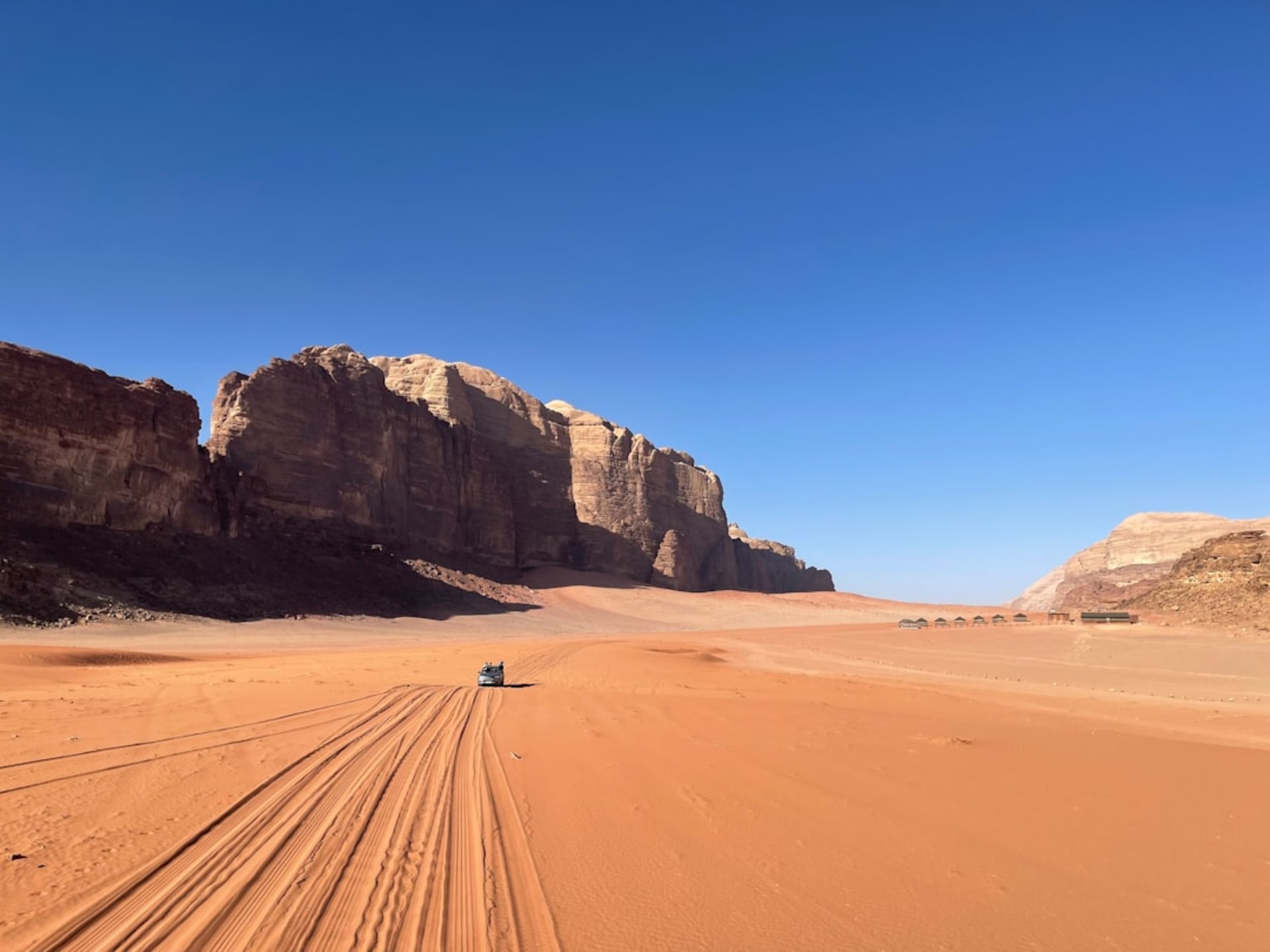
The Bedouin driver cut the engine and pointed up a short boulder scramble without saying anything. That’s how most things in Wadi Rum get explained — someone points, you go. I climbed maybe ten meters up the flank of Jebel Umm Ishrin, expecting another panorama of open desert, and instead found myself standing in front of a wet crack in the cliff face where the rock was dark with moisture and a fig tree had rooted itself into nothing.
The spring is not dramatic. It’s easy to miss entirely, which is maybe the point — the desert keeps its secrets in small places.
What T.E. Lawrence Actually Said
Lawrence wrote about camping near this spring during the Arab Revolt, and the visitor center in Rum Village treats this connection as more certain than it probably is. But standing here, I didn’t need the history verified. The geography alone makes sense of it: the spring sits just high enough on the cliff to offer shade in the afternoon, with a clear sightline down into the valley. If I were traveling by camel through this desert a century ago, I would have stopped here too.
There are Nabataean inscriptions on the rock face just below — names and dedications in a script that looks like wind-worn grass. The Nabataeans were serious record-keepers. They left their marks everywhere water appeared in this desert, which tells you something about what water meant out here.
The Sound of It
What struck me most was sound. Wadi Rum is one of the quietest places I’ve been — the silence has texture, a kind of pressure. So when I pressed close to the cliff and heard water moving behind the rock, it felt disproportionately significant. A thin trickle comes out at the base of the fig roots and disappears almost immediately into the sand. The sound lasts longer than the water does.
In the heat of midday, the shade here is genuine. The moisture cools the air a few degrees. I stayed longer than I planned, which is the other thing nobody tells you — the spring is a place you linger even when there’s nothing left to look at.
Getting Here Without Getting Lost
The spring sits on the northeast shoulder of Jebel Umm Ishrin, about four kilometers from Rum Village. Every jeep tour includes it as a stop, usually early in the route when the light is still low and the sandstone is the color of dried blood. The scramble to reach it is short but requires hands on rock — not a hike, more of a climb-adjacent experience. Sandals are a bad idea.
I’ve seen groups of twenty people here and it still felt private. The scale of the cliff absorbs crowds the way the desert absorbs sound.
When to go: Morning visits are best, when the east-facing cliff catches direct light and the spring stays cool. Summer mornings before 9am are particularly good — by afternoon the heat makes the scramble miserable. April and October offer the most comfortable conditions overall.