Samara has a bunker fifty meters underground that was built in 1942 for Stalin to use if Moscow fell to the Germans. Stalin never came. The bunker was completed, staffed, maintained for decades, and kept classified until 1990. It is now a museum. You descend by elevator, walk the original corridors in their original paint colors, and sit in the conference room where decisions were meant to be made and weren’t. The air down there is constant: 15°C year-round, slightly metallic, completely still. It is one of the more unusual things I have done in Russia.
Rockets and Space History
Samara was a closed city during the Soviet era — foreigners were not permitted — because it was the place where Korolev’s design bureau built the R-7 rocket, and then the Soyuz, and then every iteration of Soyuz after that. Gagarin’s rocket was made here. The cosmonaut training city of Baikonur in Kazakhstan launched those rockets, but Samara assembled them. The Progress Space Rocket Centre still operates. The Samara Space Museum holds an actual Soyuz rocket vertical in a glass tower you can see from across the city, which is either a wonderful thing or a very large piece of public art depending on your mood.
The Embankment and Wooden Houses
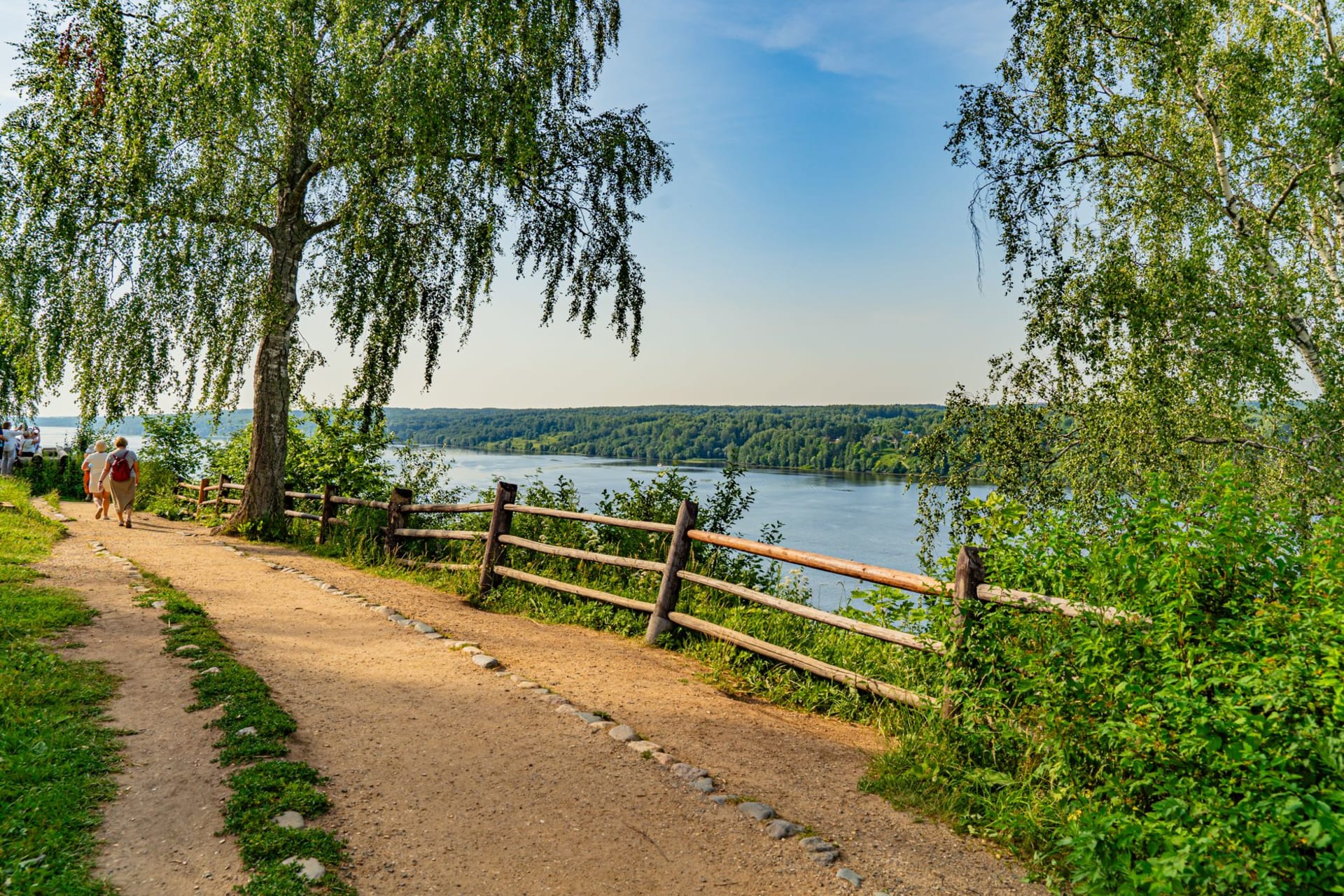
The Volga embankment at Samara is five kilometers long, sandy-beached in summer, and locally beloved. On weekends in July the beach fills with families and volleyball nets and people swimming in the wide brown river with the unselfconsciousness of people who have been doing it for generations. Behind the embankment, toward the center, the streets of the old merchant city survive in patches — wooden houses with carved window surrounds, brick warehouses with rounded arches, the occasional manor house in faded Empire style.
The neighborhood near Leninskaya Street holds the best concentration of wooden architecture, and unlike Nizhny Novgorod’s Maryina Roshcha, some of these buildings have been restored properly: new foundations, original cladding preserved. Lia found a wooden house turned into a design hostel and considered staying there instead of our hotel. I understood the impulse.
Beer, Bread, and the Zhiguli Hills
Samara makes Zhigulyovskoye beer, a Soviet lager that became famous through scarcity and is now famous through nostalgia. The original Zhiguli brewery on the embankment still produces it, and the beer from the tap at the adjoining bar is noticeably different from the bottled version sold everywhere — lighter, colder, somehow more itself. The Zhiguli Hills themselves, across the Volga, form the Samara Bend, a protected nature area where the river loops around a peninsula and the hills rise unexpectedly above the flat steppe. Day trips by ferry are easy and the hiking is genuinely good.
The City’s Energy
Samara has a student population, several art museums that punch above their weight, and a street food culture built around samsa (Central Asian meat pastries) and grilled fish from the river. The main boulevard, Kuibysheva Street, has nineteenth-century facades that the city has maintained without turning into a pedestrian zone, which means it still feels like a street rather than a set. The mix of space-age heritage and merchant-city bones gives Samara a layered quality that rewards staying longer than a single day.
When to go: June through August is Samara at its best — beach weather, river swimming, long evenings on the embankment, and ferry access to the Zhiguli Hills. May and September are excellent for the city itself with smaller crowds. The Space Museum is compelling year-round. Winters are cold and the embankment empties, but the bunker museum is if anything more atmospheric in the grey months.