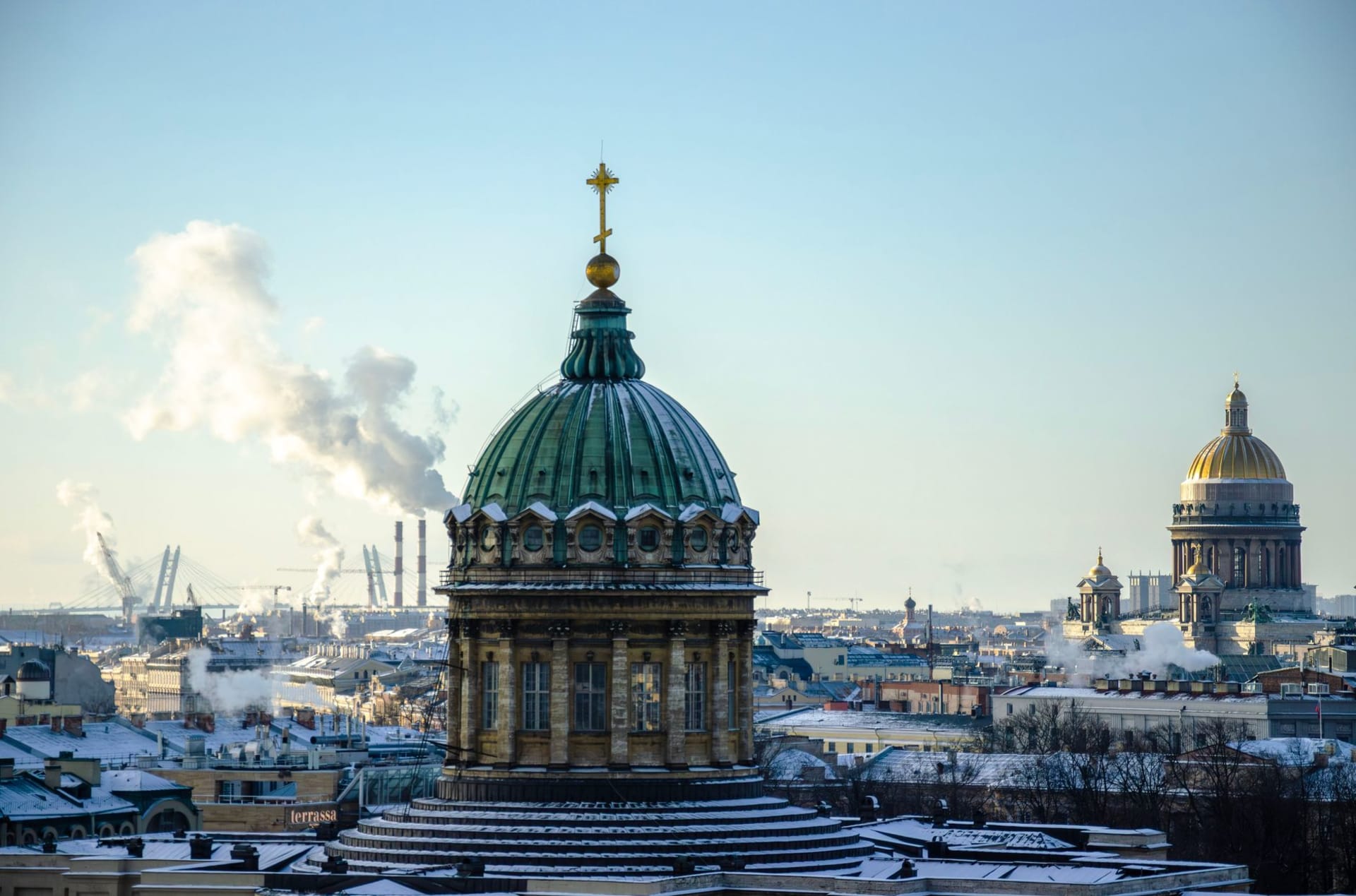
I arrived in Kazan on a sleeper train from Moscow and stepped onto the platform into air that smelled of bread and diesel and something floral I couldn’t name. The taxi driver had a Tatar surname and a Russian radio station and seemed unbothered by the contradiction. That’s Kazan in miniature: a place that has been two things at once for so long it stopped keeping score.
The Kremlin on the Hill
The Kazan Kremlin sits on a limestone bluff above the Kazanka River, and what makes it unlike any other kremlin in Russia is the coexistence at its center. The white-and-turquoise Kul Sharif Mosque — reconstructed in the 2000s on the site of the original destroyed by Ivan the Terrible — rises in direct view of the Annunciation Cathedral, which Ivan himself commissioned after the conquest of 1552. Both buildings are immaculate. Both are visited by tourists photographing each other in front of the other’s sacred site. I found this somehow moving rather than absurd.
The leaning Söyembikä Tower at the kremlin’s edge dates from the seventeenth century and tilts visibly enough to reassure you that you’re not imagining it. Nobody seems particularly alarmed by this.
Tatar Food and the Old Quarter
The Bauman Street pedestrian zone is tourist-polished but the lanes feeding off it hold something better. I found a small cheburek stand run by a woman who fried the meat pastries to order, pressing the edges closed with practiced efficiency. The dough blistered and hissed. I burned my fingers and didn’t care.
Echpochmak — triangular pies stuffed with lamb, potato, and onion — appear in every bakery window. The correct technique is to bite the top corner and sip the broth that pools inside before it escapes. Lia figured this out faster than I did. The chak-chak, fried dough bound in honey and shaped into a dome, is sold everywhere and is genuinely excellent in a way that tourist sweets rarely are.
Along the Kazanka
The riverfront has been redeveloped in the way that all post-Soviet riverfonts have been redeveloped — smooth granite, angular benches, optimistic lighting — but the view back toward the kremlin in the late afternoon is legitimately beautiful. The limestone goes gold. The mosque’s minarets catch the light before the cathedral does, or maybe it’s the other way around depending on the season. I watched a man feed pigeons with methodical dedication while a wedding party photographed itself nearby. The river moved slowly behind them all.
What Kazan Actually Feels Like
This is a university city — Kazan Federal University is one of the oldest in Russia, Tolstoy and Lenin both studied here though not simultaneously — and the student population gives the city an energy that the Soviet-era blocks in the outer districts can’t entirely suppress. By evening the bars near the university fill with a mix of languages and Tatar pop plays from somewhere you can’t locate. The metro is deep and clean and the station names are in both Russian and Tatar, which seems obvious and yet felt quietly significant the first time I noticed it.
When to go: Late May through early September is ideal — summers are warm and dry with long evenings perfect for river walks. The Kazan City Day celebrations in late August draw crowds but add atmosphere. Avoid February, which is brutal; if you must come in winter, the kremlin in snow is genuinely striking, but bring layers that mean business.