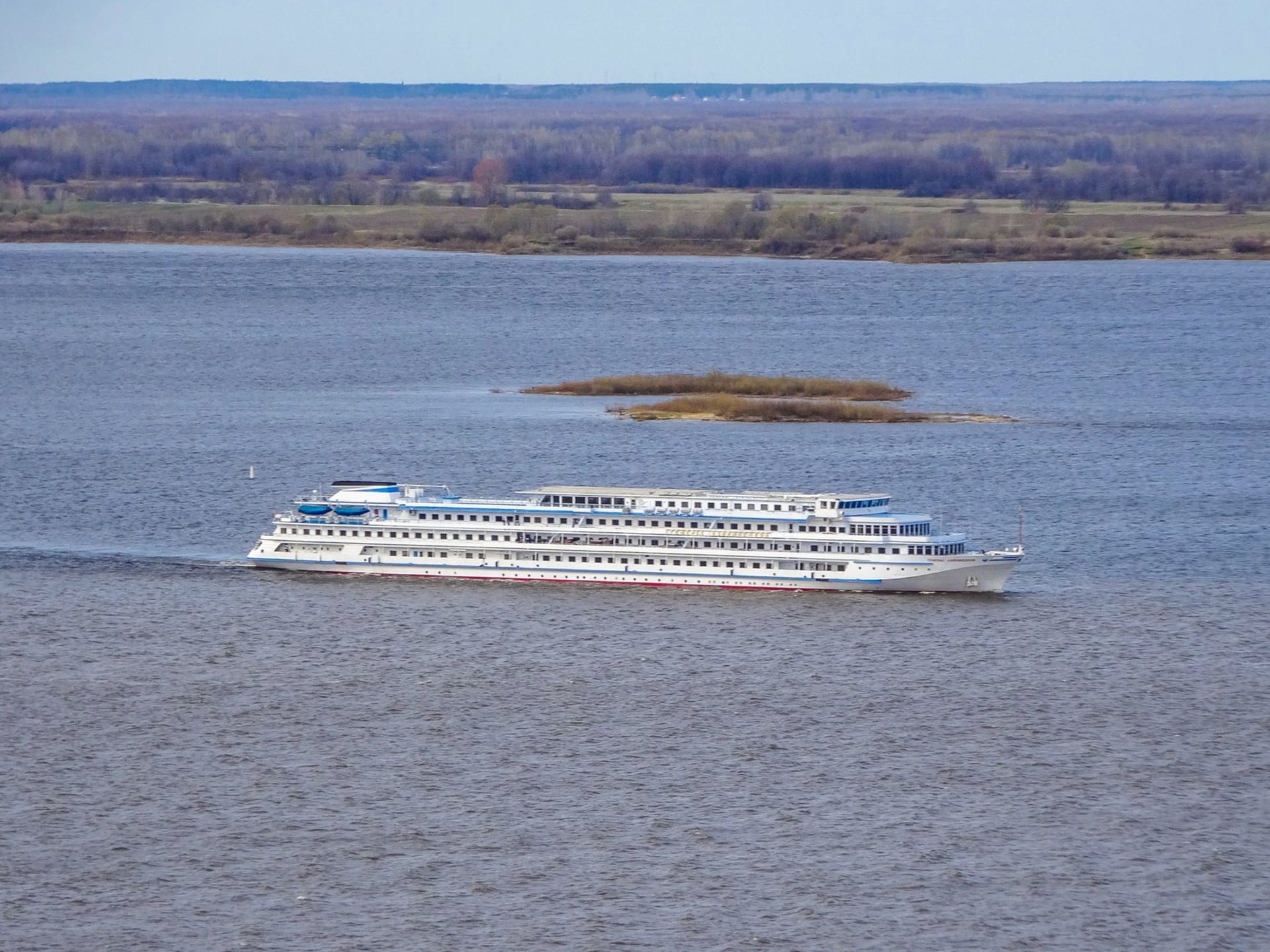
Astrakhan is where Russia runs out. Not dramatically — the steppe doesn’t end with cliffs or fanfare — but the Volga, which has been a single purposeful river for 3,500 kilometers, suddenly cannot decide which way to go and spreads itself into eighty channels that wander south through reeds and shallow lakes toward the Caspian Sea. The city sits at the top of this delta, on an island between two main branches, and it has the feel of a place that exists at the edge of several things at once: Europe and Asia, desert and water, Russia and somewhere that hasn’t quite decided.
The Kremlin and the Old Lanes
The Astrakhan Kremlin is a sixteenth-century white-walled fortress on a low hill — not limestone this time but the local Bely Gorod white brick — and inside it the Assumption Cathedral has the kind of ornate interior that takes ten minutes of standing still before the details begin to resolve. The iconostasis is gilt-heavy and the light comes from narrow windows that don’t quite reach the floor.
Below the kremlin, the old Tatar neighborhood and the former Persian quarter have lanes that narrow to the width of a cart, with wooden houses leaning inward and wooden gates that still work. A market near the central bazaar sells dried fish from the Volga — vobla, bream, pike — hanging in rows by their tails, and the smell on a warm afternoon is extremely specific and not unpleasant if you approach it in the right spirit.
The Lotus Fields
The reason people come to Astrakhan in July and August specifically is the lotus. In the shallow channels of the delta, Nelumbo caspica blooms in quantities that seem impossible — hectares of pink flowers on stems rising from brown water, petals open in the morning and closing again by afternoon. The plants are native here, not ornamental, and they have been in the delta for as long as anyone has been recording such things.
You reach them by hiring a flat-bottomed boat from one of the villages south of the city. The boatman cuts the engine when you’re in the middle of the bloom, and for a few minutes the only sounds are dragonflies and the faint creaking of reeds. I am not someone who uses the word transcendent easily, but the lotus fields in morning light make a reasonable case for themselves.
Caspian Fish and Delta Evenings
Astrakhan’s cuisine is organized around fish in a way that feels pre-industrial and entirely correct. Ukha — fish soup, made here with multiple species in sequence — is serious food: clear broth, potatoes, dill, a piece of pike perch that has been poached rather than boiled to death. The better restaurants serve beluga caviar legally and at prices that are high but not Moscow-high. Lia ordered the set with blinis and we did not speak for a while.
The evenings in summer are long and warm and the riverside cafés fill with families. There is a pedestrian bridge over one of the channels that is locally romantic and I have no objection to that. The heat breaks after sundown and the air that comes off the water has salt in it from the Caspian, which is 100 kilometers south but present anyway.
When to go: July through mid-August for the lotus bloom, which is the primary reason to visit. The weather is very hot (35-40°C) but the delta boat trips are worth it. September is more comfortable with fishing season in full swing. Spring flooding makes April-May difficult for delta access. Winter is bleak and the delta largely inaccessible.