Panglao
"I did the early dive before coffee, which felt like a sacrifice. Balicasag Island made it seem like a reasonable trade."
Alona Beach: The Compact Republic
Alona Beach is about eight hundred meters of white sand organized into a functioning economy of dive shops, guesthouses, seafood restaurants, and massage tables that has achieved a density per square meter unusual even by Southeast Asian backpacker standards. This is not a criticism. The compression produces a specific atmosphere — the easy sociability of strangers sharing a small space they’ve all arrived at for the same general reasons — that is less exhausting than it sounds and more genuinely pleasant than you’d predict.
I arrived by habal-habal motorbike from Tagbilaran City — the unofficial way to reach Alona — and negotiated a room at a guesthouse two rows back from the beach for six hundred pesos a night. The room was adequate, the fan was strong, and within twenty minutes I was eating grilled pusit at a table in the sand while watching the dive shops organize their morning briefings.
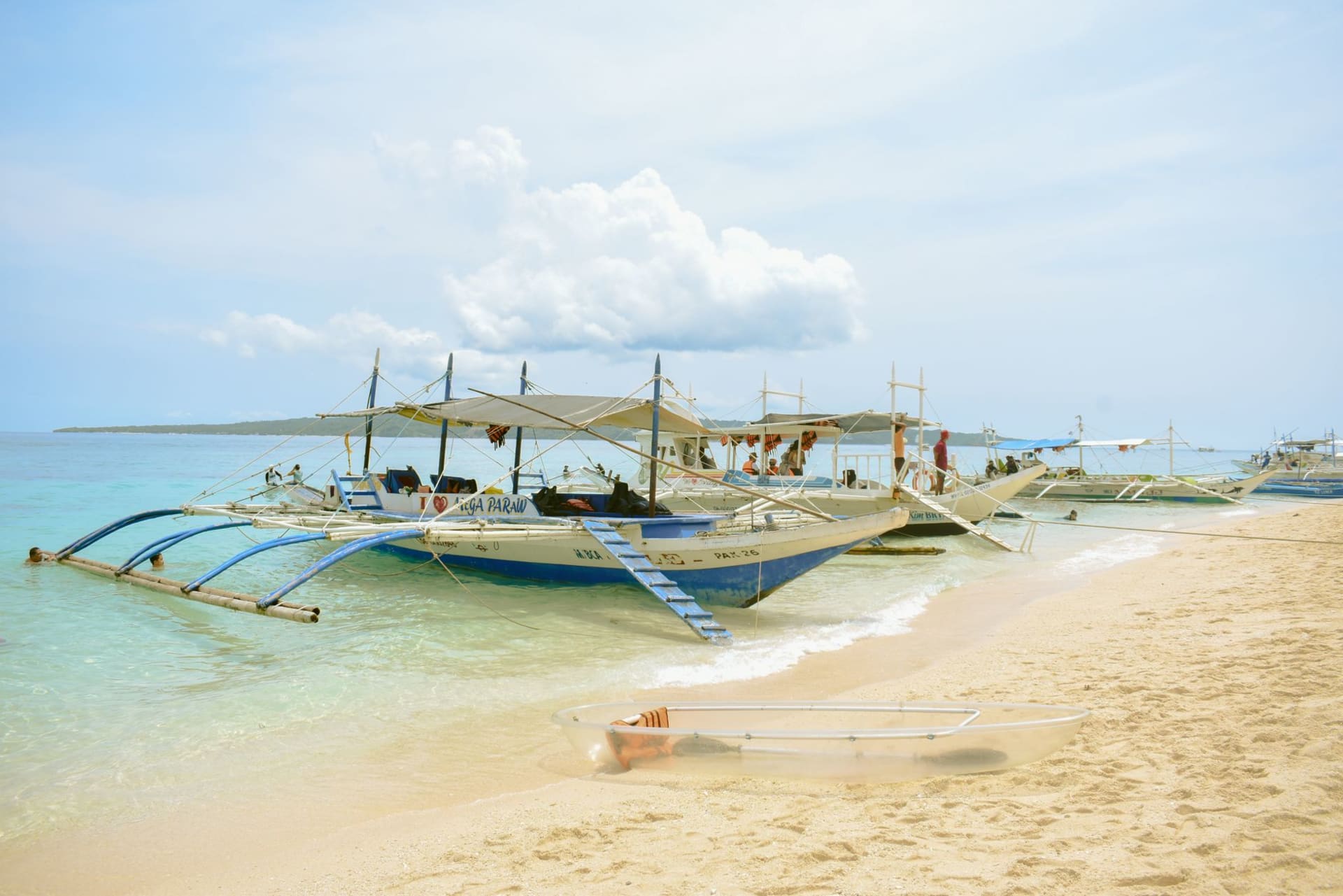
The beach itself, at low tide, extends far enough to walk at a pace without collision. At high tide it narrows to the point where the sun loungers are sharing water. The optimal time on Alona is the early morning, before the majority of guests have made coffee decisions, when the light is low and the outrigger boats are being loaded for the first dives and the whole thing has a purposeful calm that the afternoon heat will undo.
Balicasag Island
The dive sites around Balicasag Island, eight kilometers west of Panglao, are why serious divers make the journey to this corner of the Visayas. Balicasag is a marine sanctuary with near-pristine coral walls that drop from the surface to 40 meters and below. The visibility on a clear morning runs to 20-plus meters. The fish density is extraordinary.
I dived Black Forest, the signature site — a wall of black coral interspersed with sea fans, gorgonians, and enough reef fish species to exhaust any identification attempt. At 20 meters, a school of bigeye trevally materialized from the blue, circled the dive group for ninety seconds with what seemed like appraisal, and then moved off toward deeper water. At 15 meters on the ascent, three green turtles were feeding on the coral shelf with the concentrated focus of large animals that have concluded they have nothing to worry about.
The boat ride to Balicasag takes twenty-five minutes from Alona. Dolphins appear in the channel most mornings. On one crossing, a spinner dolphin performed three full aerial rotations beside the boat without apparent reason, which is the right kind of behavior for an animal called a spinner dolphin.
Hinagdanan Cave
The stalactite cave at Hinagdanan, in the island’s interior, contains an underground freshwater lake whose source is unclear but whose color, in the blue light filtering through the cave’s single ceiling opening, is a translucent mint-green that photographs oddly but in person makes you want to stay longer than your lungs require. Locals swim in it. The water is cool and perfectly clear.
The cave smells of wet limestone and bat guano in proportions that depend on which direction you’re facing. The bats — a colony of thousands — roost in the upper reaches. The effect is specifically Gothic, which makes the swimming pool at the base of the formations feel like a particularly good joke.
Dumaluan and the Quieter Beaches
Panglao has stretches of beach beyond Alona that receive a fraction of the footfall. Dumaluan Beach, on the island’s southeast coast, is longer, slightly less fine-grained, and almost empty on weekday mornings. A resort operates at one end; the rest of it is open sand backed by palm trees and the occasional vendor selling cold coconuts from an ice-filled cooler.
I spent an afternoon there reading without speaking to anyone, which felt like a luxury.
When to go: March through June is the sweet spot — dry, clear visibility for diving, and calm enough for the Balicasag crossing. Avoid the Christmas-New Year peak for Alona Beach if you value personal space. November through January brings the northeast winds but also the lowest prices and thinnest crowds.