Asia
Visayas
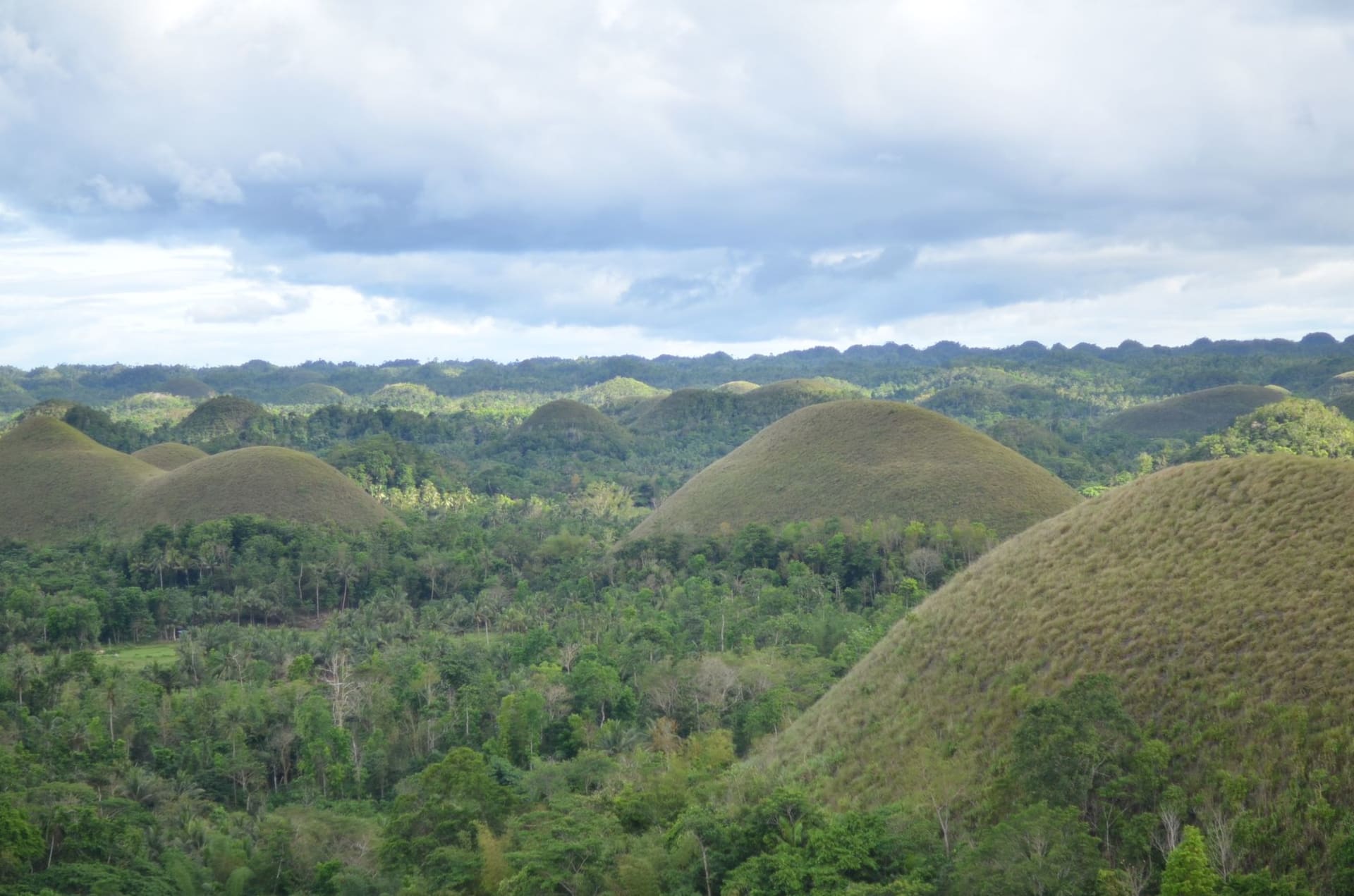
"I stood among the Chocolate Hills and felt like the Earth had been showing off."
I arrived in Cebu City at two in the morning, took a bus that smelled of diesel and fried snacks to the pier, and boarded a ferry to Bohol before sunrise. By the time I reached the observation deck above the Chocolate Hills — 1,268 perfectly symmetrical limestone mounds rolling across the interior of the island like a geological fever dream — I had not slept in twenty hours. It did not matter. There are moments when the landscape is so strange and so specific that it resets your brain entirely. This was one of them.
The Visayas is the archipelago within the archipelago — a cluster of islands in the central Philippines, each with its own personality, each refusing to be summarized. Bohol has the hills and the tarsiers, those enormous-eyed primates clinging to branches in the jungle sanctuary outside Corella that are smaller than your fist and somehow even more absurd in person than in photographs. Cebu has the diving — Moalboal’s sardine run is one of the great spectacles of the underwater world, a tornado of tens of thousands of fish that moves as a single organism around you. Siquijor has the reputation for sorcery and the reality of empty white beaches and waterfalls you reach by motorcycle with a local who knows where the path stops being obvious. Negros has the sugar haciendas, the muscovado farmers, and the city of Dumaguete that feels like what a Philippine university town looked like before mass tourism discovered everything else.
The food in the Visayas tilts sweeter than the rest of the Philippines, which is already not shy about sugar. Cebu’s lechon — suckling pig roasted over coconut husks — has a legitimate claim to being the finest version of that dish in the country, with crackling so thin it shatters. Bohol’s peanut kisses, the local sweet sold in every market in Tagbilaran, are the kind of thing you buy as a joke and then finish before the ferry leaves. Eat kare-kare in a carinderia with no menu, choose from what is in the pots, pay less than two dollars, and eat better than you would in almost any restaurant targeting foreigners.
When to go: December through May for reliable dry weather. February and March are ideal — the heat has not yet peaked, the seas are calm enough for island-hopping, and the crowds that gather around Cebu during Sinulog in January have dispersed. June to November brings rain and occasional typhoons; travel is still possible but requires flexibility and a willingness to change plans.
What most guides get wrong: They treat Cebu City as a base and the rest of the Visayas as day trips. It is the wrong framing. The islands deserve nights, not hours. Bohol in particular changes completely after the tour groups leave on their afternoon ferries — the river cruise on the Loboc, the back roads between the hills at dusk, the cheap seafood by the water in Alona Beach — none of it belongs to the same experience as a seven-hour group tour from Cebu. Slow down, book a room, and stay.