
Dumaguete
"I came for a night and stayed four days — Dumaguete has a way of making urgency feel impolite."
A compact university city on Negros Oriental's coast where intellectuals drink bitter coffee on the boulevard and the sea turtles of Apo Island gather less than an hour offshore.

The Boulevard at All Hours
Rizal Boulevard runs along Dumaguete’s waterfront for about a kilometer — a wide promenade with a concrete sea wall, a row of acacia trees, and a string of outdoor restaurants that specialize in fresh seafood and in making time pass without urgency. I arrived on a Tuesday evening and found the whole length of it occupied: couples sitting on the wall, families eating grilled tuna, a group of Silliman University students running through what appeared to be philosophy seminar notes. The smell was salt water, charcoal, and frangipani from a tree somewhere nearby.
Dumaguete is called the “City of Gentle People,” which is the kind of tourism-board epithet I usually ignore. Here it had a literal ring. People gave me directions without being asked. The waiter at a seafood stall on the boulevard spent fifteen minutes explaining the difference between two types of squid before I ordered. The city moves at a pace determined by its two universities — Silliman (founded 1901 by American Presbyterians) and Foundation University — and both institutions give the place a reflective, slightly bookish quality that distinguishes it from the more commercial coastal towns.
Silvanas and the Sweet Architecture of Dumaguete
I ate silvanas on my first morning. The silvana is Dumaguete’s signature pastry — a disc of cashew meringue cookies sandwiching frozen buttercream, coated in breadcrumbs that give the whole thing a paradoxical crunch. I bought a box of eight from Sans Rival Cakes and Pastries on San Jose Street. They lasted forty minutes. Lia, who is generally skeptical of things described as “famous local sweets,” ate four of the eight and went back for more the following day.
The other essential stop is Lee Super Plaza’s row of coffee shops and the cluster of cafes around Silliman’s campus, where the campus trees are enormous and old enough to make the student conversations happening beneath them feel appropriately significant.
Apo Island
The real reason to linger in Dumaguete is what lies 45 minutes offshore by outrigger boat: Apo Island, a volcanic outcrop with a marine sanctuary that has been community-managed since 1982 and is, in my estimation, one of the better arguments for what protected marine areas can achieve. The water clarity around the island is extraordinary. The coral is dense, varied, and populated by enormous numbers of fish — parrotfish, surgeonfish, lionfish, schools of fusiliers moving like shifting curtains. And the turtles.
Green sea turtles here have been habituating to human presence for decades and are correspondingly unbothered. I floated above a hawksbill turtle for several minutes as it grazed on coral in eight meters of water, turning occasionally to surface for air, completely indifferent to my presence. I am not a person who uses the word “transcendent” without irony. I am going to use it here.
Twin Lakes and the Inland Road
The crater lakes of Balanan and Danao sit in the mountains forty minutes from Dumaguete, accessible by a road that climbs through sugarcane plantations and small barangays where roosters patrol the roadside. Balanan is the lower lake, ringed by dense forest; Danao is smaller and higher, its water a deeper shade of green. Motorized boats are prohibited on both, which means the surface is perfectly still in the mornings, mirror-reflecting the treeline and the occasional egret landing.
When to go: December through June is dry and reliable. August through October brings the most turtle activity around Apo Island, with the clearest visibility in March and April. Avoid typhoon season for boat trips — October and November can be rough.
Keep exploring
More from Visayas
 visayas-philippines
 Guimaras
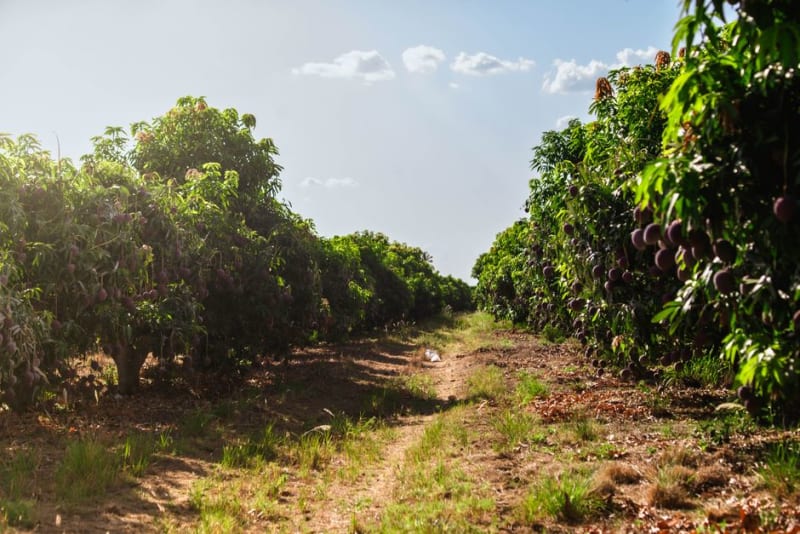
A quiet island a short ferry hop from Iloilo, planted end to end with mango orchards that grow what a lot of people insist is the sweetest fruit on earth.
Explore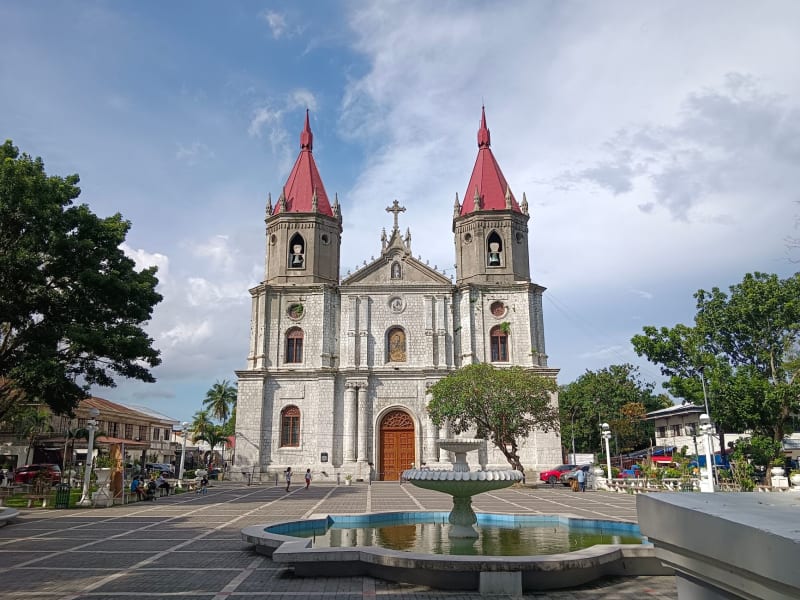 visayas-philippines
 Iloilo City
Western Visayas' proud capital serves the Philippines' best bowl of noodle soup in ornate Spanish-era churches that smell of incense and polished stone.
Explore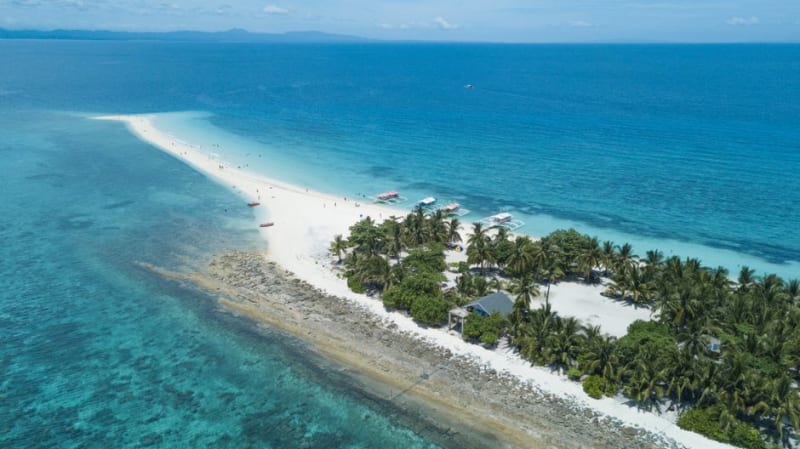 visayas-philippines
 Kalanggaman Island
A slender sandbar off the coast of Leyte with no permanent residents, just two curling tails of white sand and water so clear it barely counts as an obstacle to sight.
Explore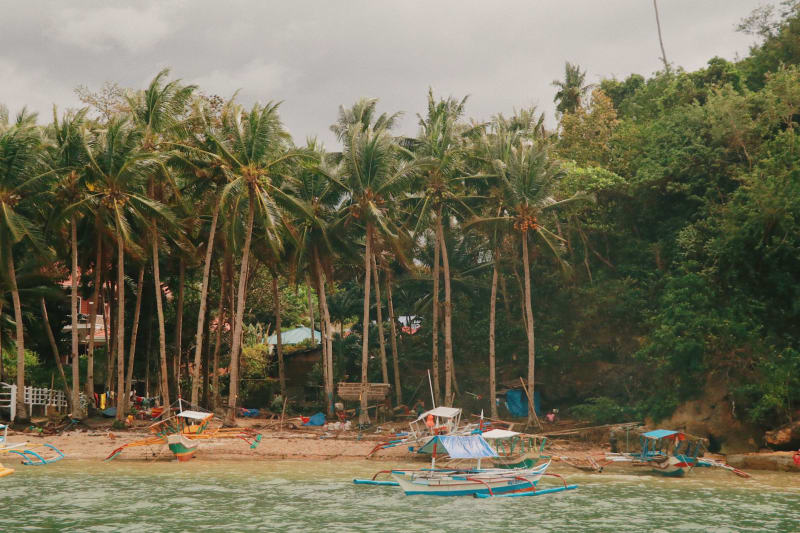 visayas-philippines
 Leyte
An island shaped by one of WWII's decisive naval battles and one of the worst typhoons in recorded history — and still, after all that, defiantly green and quietly spectacular.
Explore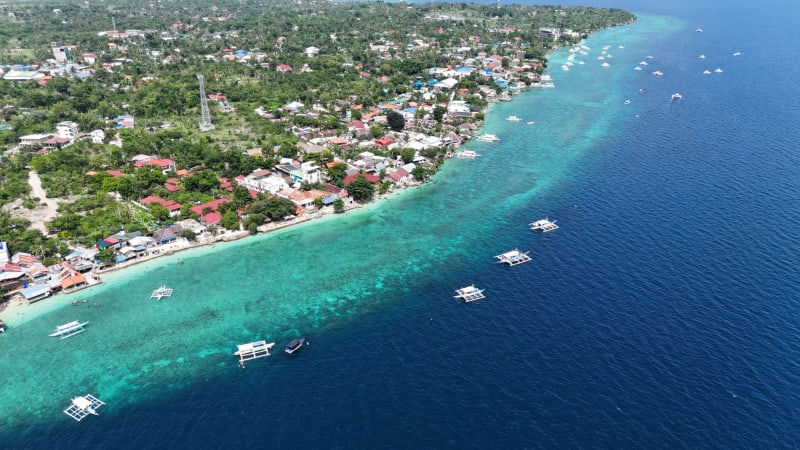 visayas-philippines
 Malapascua
A tiny island at the northern tip of Cebu where fishing village life coexists with the only place on earth where thresher sharks reliably appear at diveable depths every morning.
Explore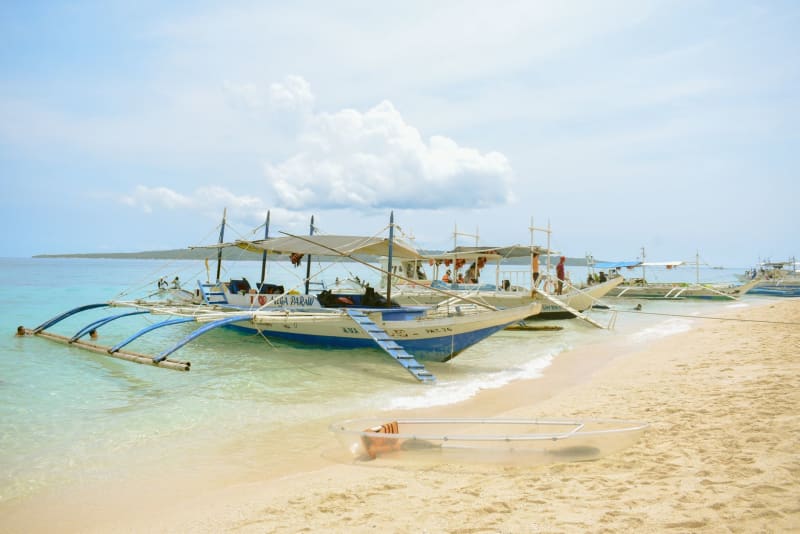 visayas-philippines
 Panglao
An island connected to Bohol by two bridges, where Alona Beach packs backpacker energy into one small cove while the rest of the island quietly hosts some of the best diving in the Visayas.
Explore