Bantayan Island
"I expected another Boracay and found an island that simply forgot to get famous."
Getting to Bantayan is a small commitment, and I think that is precisely why it has stayed the way it has. You drive or bus all the way to the northern tip of Cebu, to a town called Hagnaya, then take a ferry across to Santa Fe. By the time you arrive you have shaken off the day-trippers and the cruise crowds, and what is left is a flat, low island the colour of bone, ringed with beaches that rival anything in the Philippines and almost entirely free of the development that swallowed Boracay. Lia and I rented a scooter at the pier and within ten minutes we were the only people on a stretch of white sand watching fishermen mend their nets. That set the tone for the whole week.
Santa Fe and the Beaches
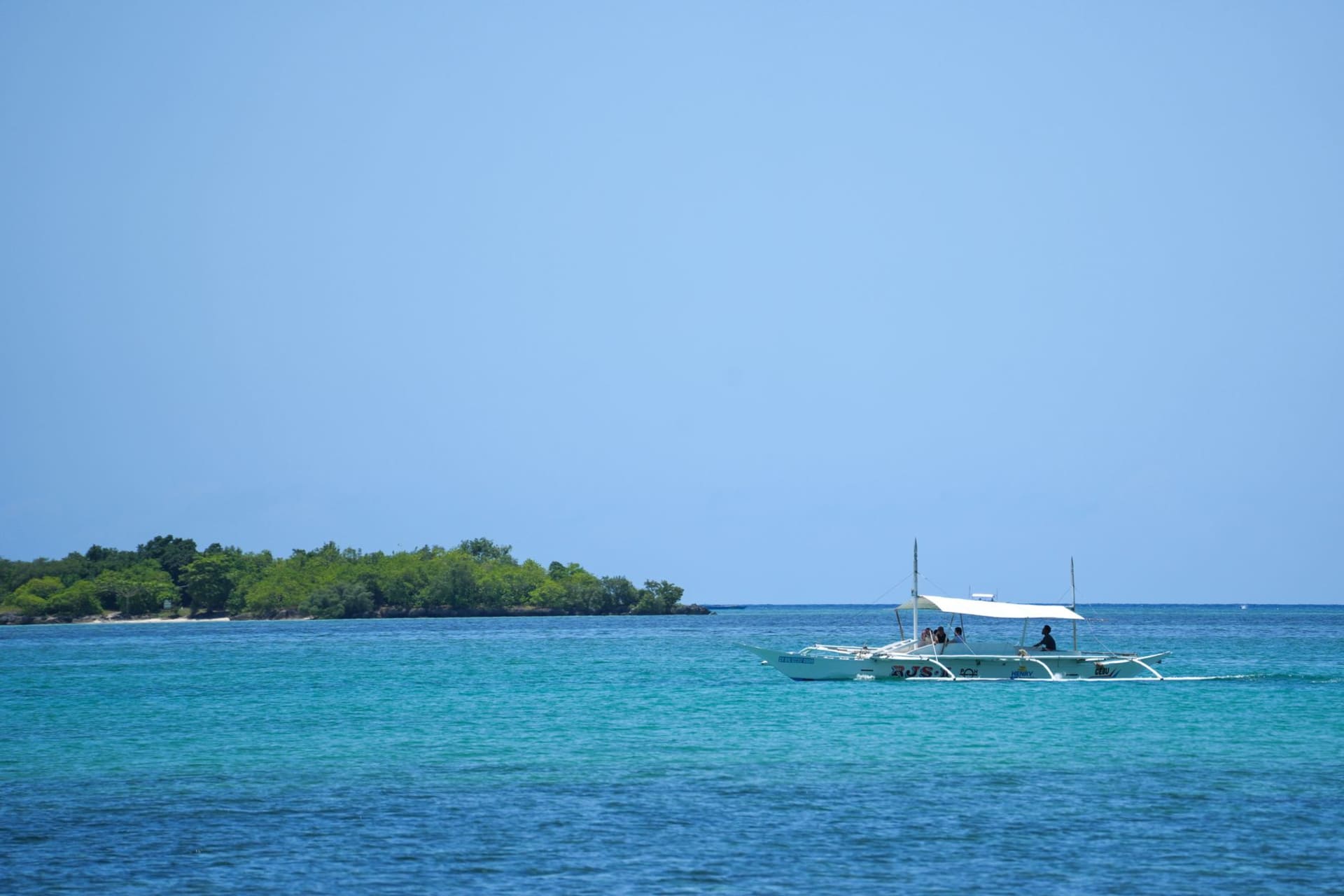
The beaches around Santa Fe are the headline, and they deserve it. The sand is powder — the kind that squeaks underfoot — and the water shelves out so gradually that you can wade a hundred metres and still only be waist-deep. At low tide, sandbars emerge out in the shallows, and the locals will take you out to Virgin Island and Kota Island in a bangka for the price of a decent lunch. We spent a morning on a sandbar that existed only between tides, the kind of place that is underwater by afternoon, eating grilled fish a boatman had cooked over coconut husks. There are no jet skis here, no thumping beach clubs, no one trying to sell you a parasailing package. Just the sea, the heat, and the occasional dog asleep under a banca.

The Town and the Church
Bantayan town, on the western side, is the island’s other face — older, devout, and built around one of the most important churches in the Visayas. The Saints Peter and Paul Parish Church dates from the Spanish era, a great coral-stone fortress of a building that anchors the town square and fills, every Holy Week, with one of the largest religious processions in the region. The island has a peculiar dispensation, granted centuries ago, that allows residents to eat meat during Lent — a relic of an old papal exemption made because the islanders’ livelihood depended so heavily on fishing that abstaining would have been a hardship. I love these little historical footnotes, the way a 16th-century bureaucratic decision still shapes what people eat on a Friday in spring.
The town also runs on chicken and eggs in a way that surprised me — Bantayan is one of the great poultry producers of the central Philippines, and the smell of grilled chicken drifts down every evening street. We ate at a plastic table outside a carinderia, chicken inasal blackened over coals, garlic rice, a bottle of cold beer sweating in the heat, while the church bells rang for evening mass. It cost almost nothing and it was one of the best meals of the trip.
The Pace
What stays with me about Bantayan is the pace. There is genuinely nothing to do here, in the best possible sense. You wake when the light comes through the window, you swim before it gets hot, you nap through the worst of the afternoon, you ride out to watch the sunset from whichever empty beach you find. Lia, who normally needs an itinerary to feel calm, gave up on hers by the second day. The island does that. It quietly insists that you stop.
When to go: February to May for dry, settled weather. Avoid Holy Week unless you specifically want the processions — ferries and rooms fill months ahead.