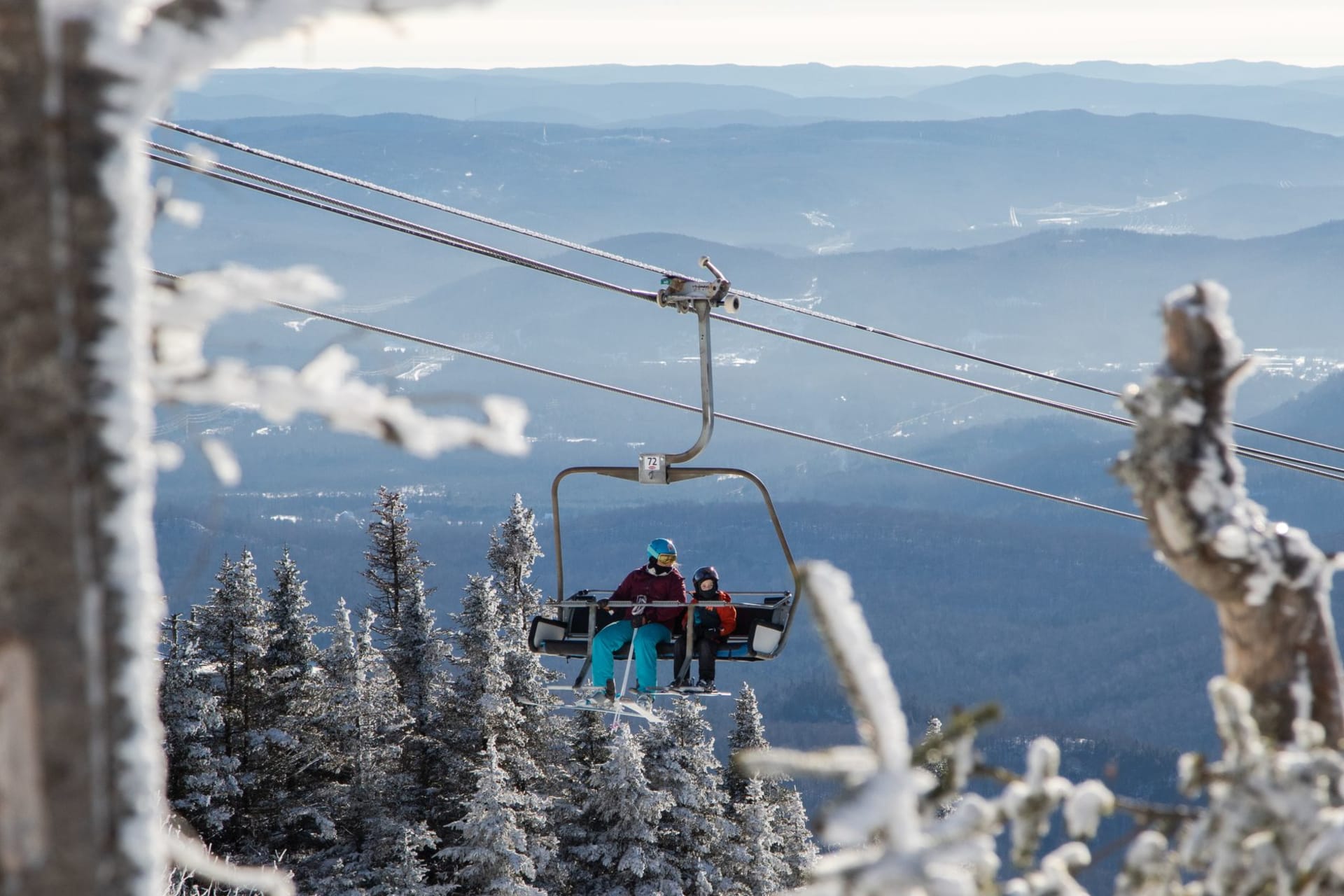
Killington is not subtle. It’s the largest ski resort in the eastern United States, spread across six mountain peaks, with a vertical drop over 3,000 feet, terrain that ranges from genuinely terrifying to nursery slope, and a base area culture that has earned the nickname “the Beast of the East” both for its snow capacity and for its nightlife, which I will charitably describe as enthusiastic. I came in March for the skiing and left with more opinions about this mountain than I expected.
The Mountain Itself
Killington’s scale requires the better part of a week to properly understand. The six interconnected peaks — Killington, Skye, Ramshead, Snowdon, Sunrise, and Bear Mountain — are accessed by a network of lifts that takes time to decode. The trail map looks like a cable wiring diagram. On a clear day I rode the K-1 gondola to the summit of Killington Peak and understood immediately why people make the drive from Boston and New York every winter — the view extends west to the Adirondacks and north past the ski runs into a fold of mountain country that seems to have no end.
The expert terrain on the Killington and Bear Mountain faces is legitimate. Outer Limits, which runs along the Bear Mountain ridge, is a double black that required a few minutes of standing at the top before commitment was possible. The mogul runs on Killington peak are not decorative. This is a mountain that rewards skiing ability in proportion to how much you have of it.
Intermediate Abundance
Where Killington excels beyond any comparison in the East is intermediate terrain. The Snowdon and Skye areas have miles of groomed blue runs that, in good conditions, are as satisfying as anything I’ve skied outside of the West. On a Tuesday morning in late February, I found myself alone on a run called Chute that drops through the trees on a consistent pitch, perfectly groomed, the light coming sideways through birch and maple, and the silence interrupted only by my own edges and something that sounded like distant snowmaking. That run cost me about eight minutes and I took the lift back up four times.
The Base Area Question
The Killington base area is where opinions diverge. The resort village is a cluster of hotels, bars, and ski shops along Killington Road that has the energy of a large college party — not all of it unpleasant, but not exactly restful. The Wobbly Barn has been the epicenter of Vermont’s loudest après-ski since the 1960s and maintains that reputation without apparent nostalgia. The Foundry at Summit Pond, by contrast, is quieter and has a nice view and better food than the base area would suggest.
I stayed in Killington village the first night and then drove to Woodstock for the remainder of the trip, treating the resort as a day-trip destination. This is a reasonable strategy — the drive is twenty minutes and the contrast between Killington’s purpose-built intensity and Woodstock’s composed beauty is instructive.
Spring Skiing and Why It Matters
Killington’s snowmaking operation is the most sophisticated in the East, which means the season extends well past what natural snowfall would support. The resort historically opens in October — sometimes the earliest in New England — and often skis into late April or early May. Spring skiing here has a particular character: slushy mornings that firm up by 9am, warm light, the smell of mud at the base and actual snow at altitude, and a relaxed afternoon crowd that has long since stopped performing skiing and is simply doing it. I prefer this to the December crush.
When to go: January and February for the most reliable snow conditions and full terrain access. March and April for spring skiing with better temperatures and fewer crowds. Killington claims the earliest opening and latest closing of any resort in the East — if you want to ski in October or May, this is one of your few options in New England. Summer brings mountain biking and the resort operates in a quieter mode that’s worth knowing about if you want the trails without the lift lines.