Malekula
"My guide spoke five languages before lunch, none of them English, and we managed fine."
Malekula has the most intense concentration of linguistic diversity in Vanuatu, which already has more languages per capita than anywhere else on earth. There are over thirty distinct languages spoken on this single island, many of them mutually incomprehensible, separated by valleys and ridges and centuries of deliberate isolation. Coming here feels like arriving somewhere that took the question of human cultural variation and answered it as thoroughly as possible.
The island is not easy. The roads are rough and inconsistent, the interior is steep and jungle-covered, and travel between villages requires planning. It is also, for exactly these reasons, one of the most interesting places I have been in the Pacific.
The Big Nambas and Small Nambas
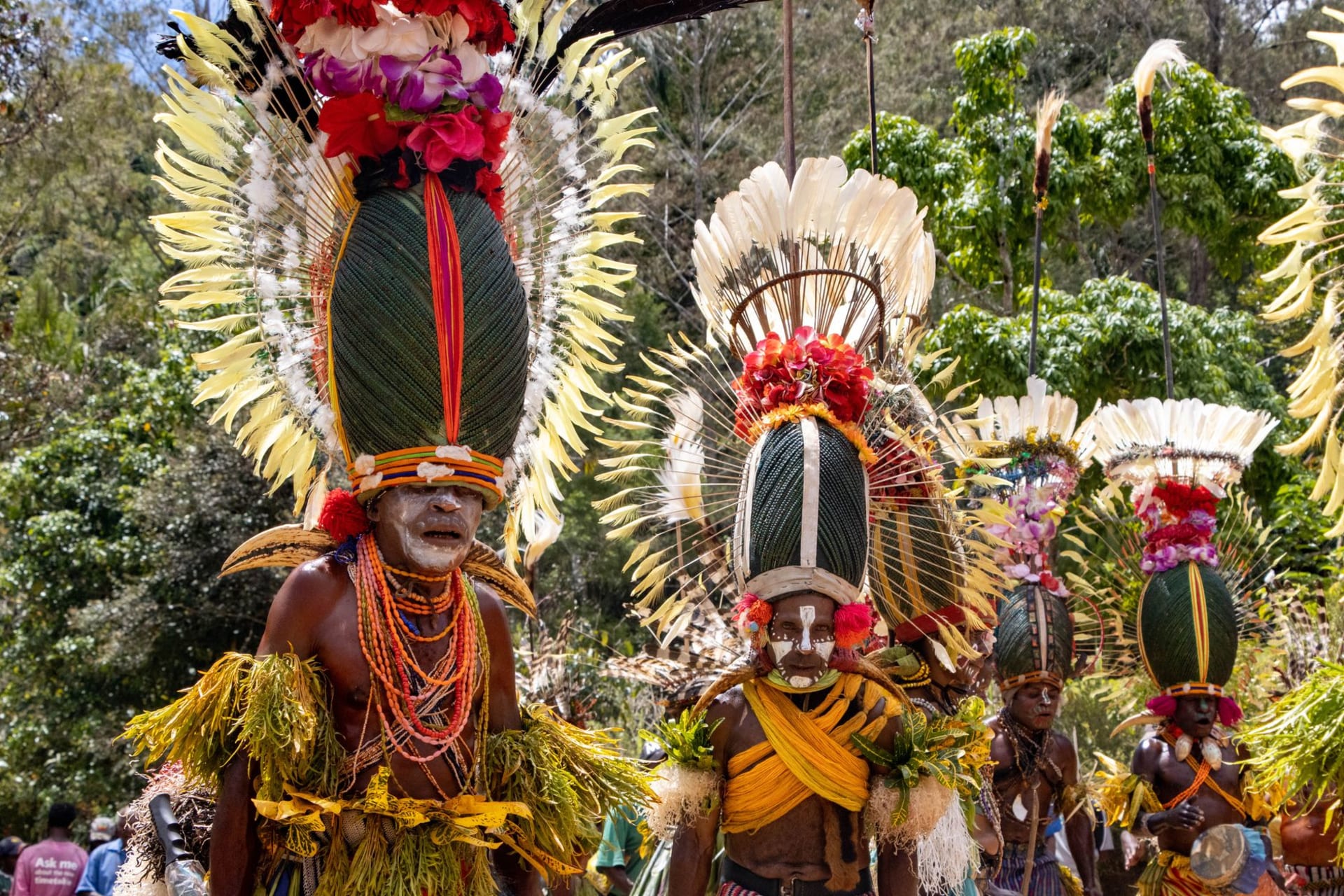
Malekula is divided historically between the “Big Nambas” in the northwest and the “Small Nambas” in the south and interior — names derived from the traditional dress worn by men, specifically the nambas, a penis sheath woven from pandanus. These are not merely ethnographic curiosities. The cultural distinctions between these groups include different ceremony systems, different rank structures, and different approaches to nearly everything. A guide from a Big Nambas village will tell you things about the island that a guide from a Small Nambas village would frame entirely differently.
I spent three days in the northwest with a guide named Robert who was from a Big Nambas village and spoke with straightforward authority about his culture’s practices, including the tooth-chipping ceremony still performed on young men as a mark of cultural identity. He demonstrated the circular stone paths used in traditional dances and showed me a carved figure representing an ancestor that stood in a garden clearing with the casual presence of something that had always been there.
The Malekula Coast
The west coast has a series of small villages accessible by boat or 4WD that offer snorkeling, fishing, and the particular pleasure of being in a place that sees relatively few visitors. The water here is calm in the dry season and the reef systems run close to shore. I hired a local fisherman for a morning — his name was Elvis, delivered without irony — who took me out past the reef in a fiberglass dinghy and showed me where the turtles fed at dawn.
Lakatoro and the Market
Lakatoro, the island’s administrative center, is a modest town with a market that convenes on weekend mornings and functions as a genuine social event. Women come from interior villages carrying produce on their heads — enormous bundles of garden greens, yams the size of my forearm, bunches of bananas still attached to the stalk. The market smell is clean and vegetable and damp. I bought a bowl of tuluk — a Malekulan lap lap variation stuffed with crab — and ate it standing up because there was nowhere to sit.
Cultural Protocol
More than almost anywhere else in Vanuatu, Malekula requires that visitors approach kastom sites and villages with a genuine understanding of permission and protocol. Things that look like paths may be paths to ceremony grounds that outsiders are not welcome on. Your guide is not being cautious when they redirect you — they are navigating actual cultural law. Listen to them. The reward for doing this correctly is access to things that most travelers never see.
When to go: May through October for the dry season, when interior tracks are passable and coastal conditions are calm. Malekula has no tourist season to speak of — it is consistently quiet — so there is no particular advantage to high season timing beyond weather.