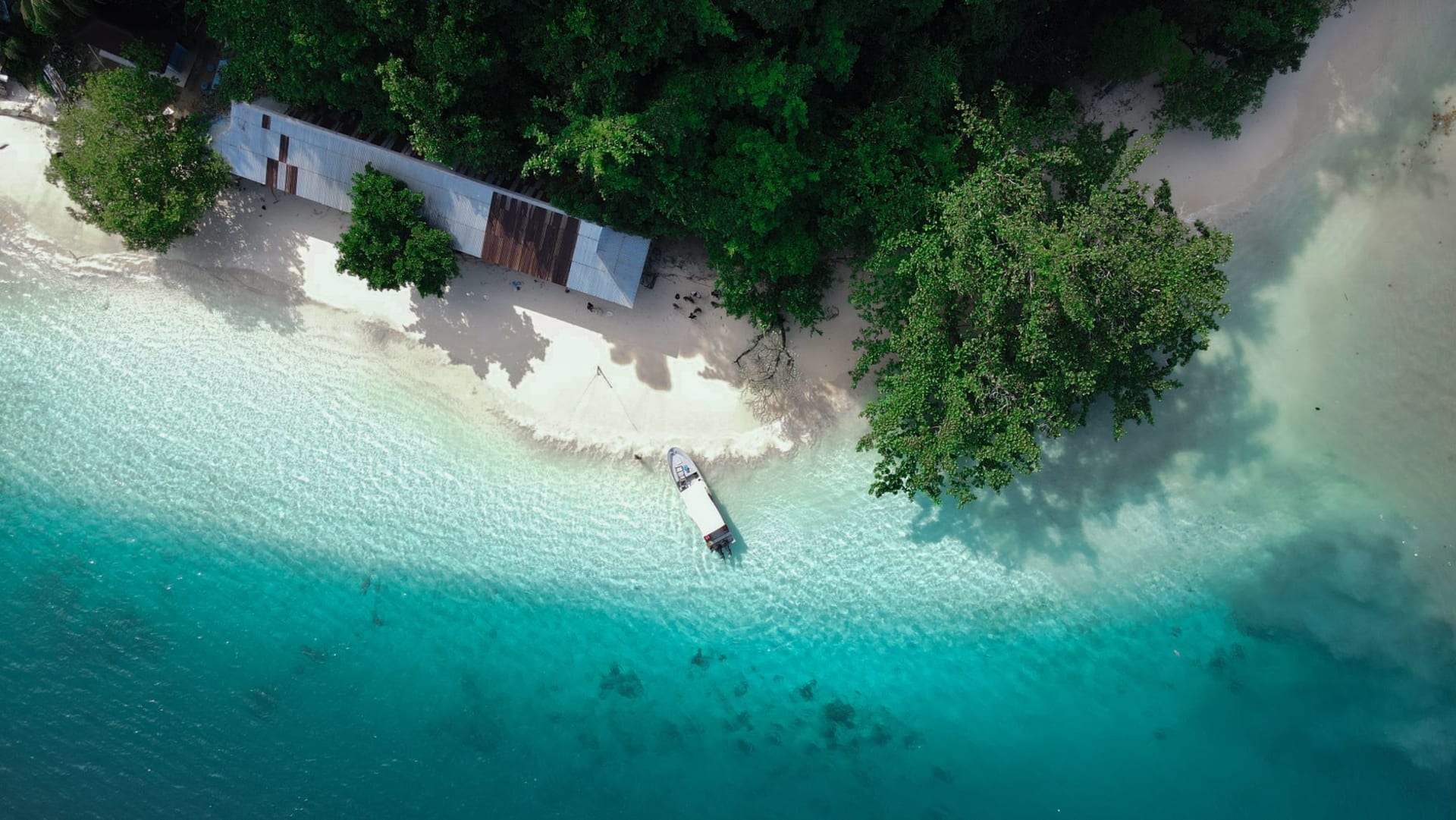
Efate Island
"The water was so blue it looked like someone had dissolved a crayon in it. I jumped in before I could think about it."
Most people who visit Vanuatu land on Efate — it’s where the main airport is, and Port Vila sits on the western side of the island with its French bakeries and waterfront nakamals. But Efate itself is worth a full circuit, and the further you get from the capital, the more the island starts to reveal the quieter Vanuatu that exists outside the tourism economy.
The island road rings Efate in something close to a complete circle — it takes about three hours to drive without stops, which means it takes all day with them.
The Blue Holes
Efate has several freshwater blue holes — limestone sinkholes where groundwater wells up in shades of blue that have no real business occurring in nature. The most famous is at Eton on the north coast: a pool roughly thirty meters across, surrounded by jungle, with water so dense with minerals that the blue is almost solid-looking. A rope swing hangs from a banyan tree over the deepest part. Lia jumped from the rope first. I watched her surface, saw her expression, and jumped before she could say anything.
The water is cold compared to the ocean — maybe 22°C — and the shock of it after a hot morning’s drive is considerable. Local families come here on weekends and the atmosphere is completely unpretentious. You pay a small fee to the custom landowners and they give you access to the pool and a shaded area to dry off.
There are smaller blue holes further around the island, some requiring a short walk through coconut plantations to reach. These see almost no visitors and the water quality is identical.
Eton Beach and the North Coast
North of the blue hole, the road follows the coast past Eton Beach — a long stretch of coarse sand facing the open Pacific with a reef close in and consistent waves that attract the occasional surfer. The northeast corner of the island has the best snorkeling accessible from shore: a shallow reef terrace running parallel to the beach with good coral coverage and fish life that suggests it has not been heavily fished or dived.
I stopped at a village near Eton and bought mangoes from a woman selling fruit from a bucket outside her house. She had four varieties, including a small red-skinned one with flesh the color of sunset that I have never seen before or since. I bought the entire bucket.
The South Coast Villages
The south coast road passes through villages that live at a different pace from the capital. In the village of Epao, there is a community-run cultural center where local men perform tam-tam drumming and traditional dance — not as a scheduled show but as an activity that can be arranged through the village with a day’s notice. I found this out after the fact, unfortunately.
The south coast also has good fishing, and at low tide the reef flat exposes a landscape of tidal pools that stretches out fifty meters from the beach. I spent an hour here doing nothing but looking at things in rock pools. This is not a criticism of the place.
Havannah Harbor
At the island’s northwest corner, Havannah Harbor is a deep, sheltered bay historically used as an anchorage since the colonial era. Today it has a small resort and a scattering of live-aboard dive boats at anchor. The sunset from the harbor looks west over open ocean and takes about fifteen minutes to complete in a way that makes you feel the earth actually moving. The harbor bar, where yachties and resort guests mix in the early evening, runs on cold Tusker and an admirable lack of urgency.
When to go: Efate’s circuit road is driveable year-round, but June through October gives the best blue hole water clarity and the most comfortable driving temperatures. The north coast surf is best June through August when southeast trade winds generate consistent swell.