Zion National Park
"The canyon doesn't open up — it swallows you, and you're grateful for it."
There’s a specific moment walking the Zion Canyon floor where the walls close in enough that the sky becomes a thin blue ribbon above you, and you realize the scale has completely broken your internal compass. I’ve stood in gorges in Mexico, in canyons in Spain, and nothing quite prepares you for how close Zion feels. The rock doesn’t just surround you — it leans.
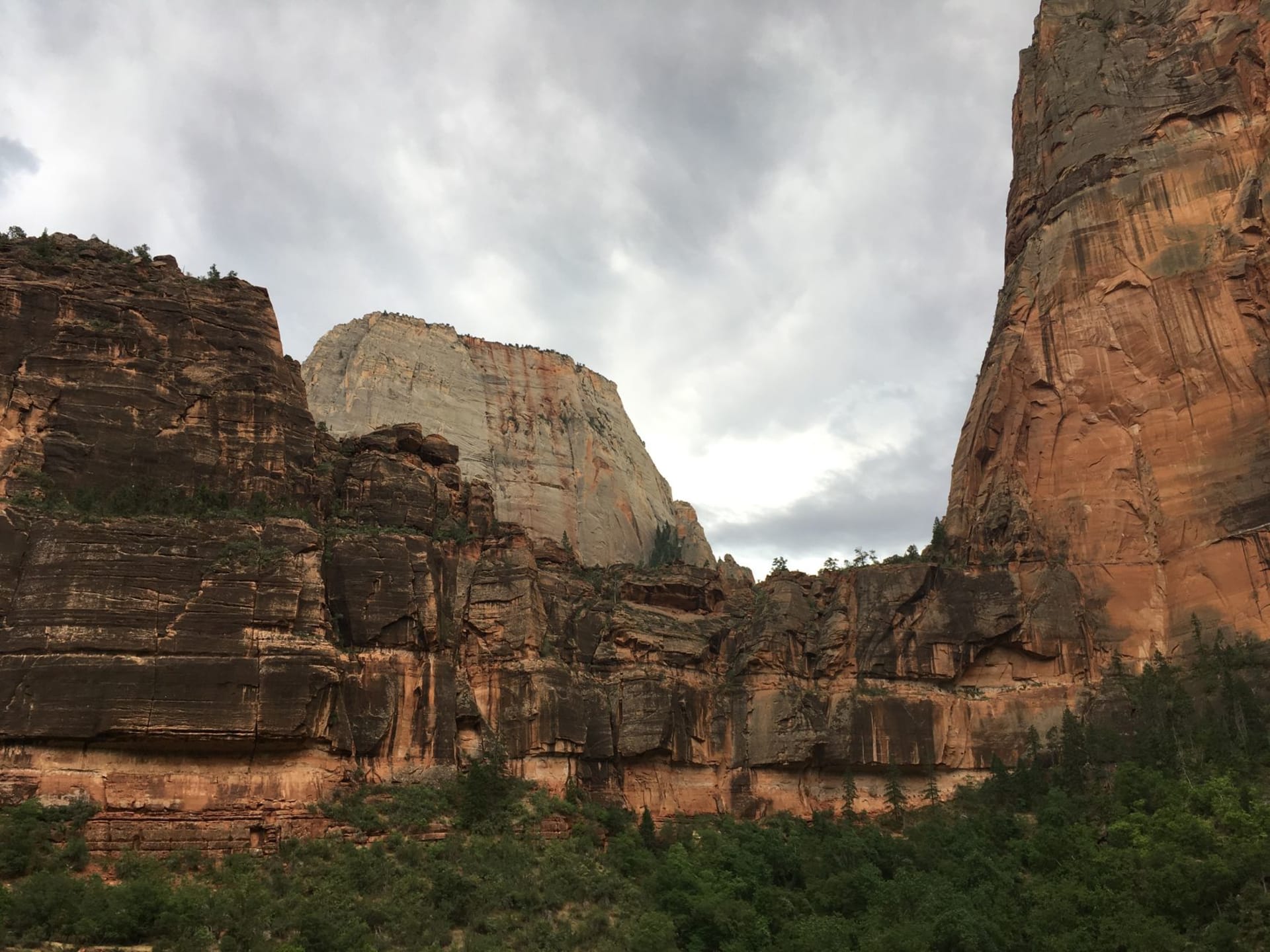
We took the shuttle in from Springdale just after dawn, which is the only honest way to do it. By 9am the trams are packed and the trail shoulders are three people wide. At 6:30 in early October, the canyon was cool enough that I could see my breath against the sandstone walls, and the first light was doing something extraordinary to the upper rim — turning it the color of a blood orange while the valley below was still in shadow.
The Narrows
I’d been warned about the Narrows and still wasn’t ready for them. You’re walking in the Virgin River itself, boots soaked inside five minutes regardless of whatever waterproof spray you applied the night before. The canyon walls on either side shrink to fifteen meters apart in places, sometimes less, and the light arrives filtered through layers of sandstone until it turns a warm amber that has nothing to do with actual sunshine. I kept stopping to look up. Lia kept moving forward. We were both right.
The cold hits somewhere around the first kilometer — that deep cold of snowmelt even in shoulder season — and then your feet go partially numb and you stop caring. The only way out is through, which is usually good life advice.
Angels Landing
I’ll be honest: I am not someone who enjoys exposure on narrow ridgelines with a thousand-foot drop on both sides. Angels Landing is famous precisely because it delivers that exposure in concentrated doses, via a chain-assisted scramble up a fin of rock that would be terrifying if it weren’t so obviously worth it. The view from the top reframes the entire canyon — you can see the Snake Curve of the river, the campgrounds looking like something from a model train set, and the Great White Throne sitting across the canyon like a judge.
I gripped the chains harder than was probably necessary. No one needs to know.
Springdale and the Edges
The town of Springdale sits right at the park entrance and is small enough to walk end to end in twenty minutes, which is about how long you need. There are a handful of good restaurants — we ate at a place with a patio facing the canyon walls, drinking Utah beer (weaker than advertised everywhere, which I’d been told) while watching the rock change color through dinner. The food was secondary. The light was not.
The lesser-visited corners of Zion — Kolob Canyons to the northwest, the Subway trail that requires a permit — are where the park breathes a little. If you have an extra day and managed to score a permit, the Subway is a slot canyon that makes The Narrows look like a wide boulevard.
When to go: Mid-September through October and late March through May are the sweet spots. Summer brings brutal heat at canyon floor level and shuttle queues that start at 5am. The Narrows can close with flash flood risk at any time of year — check conditions the morning you plan to go. November can be strikingly beautiful and uncrowded if you can handle cold feet.