Americas
Utah
"Nothing prepares you for the scale of this place — it simply doesn't register as real."
I drove into Moab at dusk with the windows down and the AC off, which felt insane given the heat, but the smell of the desert — dry sage and iron-rich dust — demanded it. The Colorado River was running low and brown on my right, and above it the sandstone walls were doing something I still haven’t quite reconciled: glowing from inside, as if the rock had stored the day’s light and was slowly releasing it back. I’d seen photos. Everyone has seen photos. They don’t help.
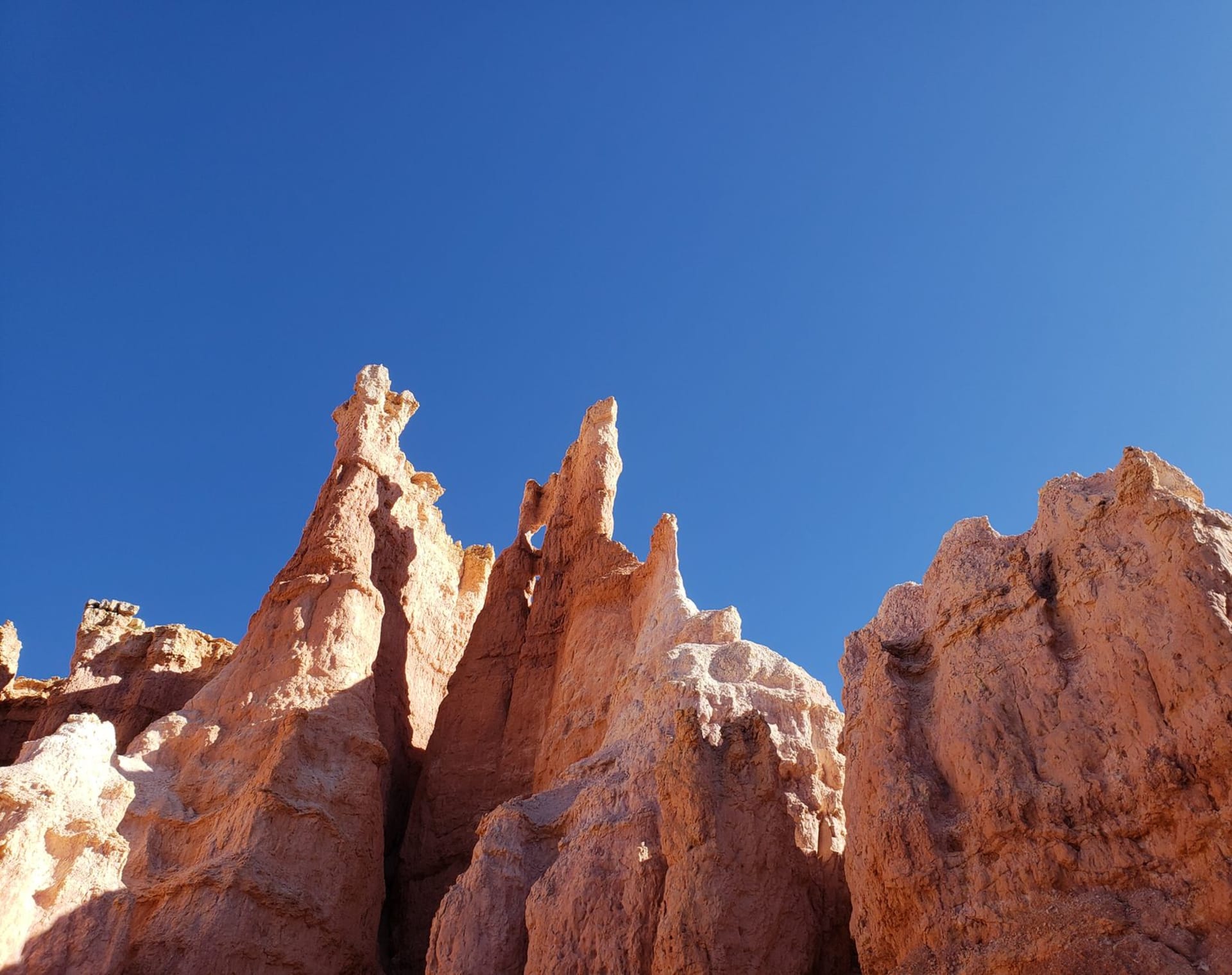
Utah is five national parks and roughly as many unreasonably good state parks, strung along a plateau that keeps breaking open into canyons and arches and hoodoos. Arches has the windows and fins and Delicate Arch, which you should do at sunrise before the crowds arrive and the magic gets diluted. Bryce Canyon isn’t actually a canyon — it’s an amphitheater of hoodoos, orange limestone spires that turn pink at golden hour and feel genuinely otherworldly in a light dusting of snow. Zion has The Narrows, a slot canyon you wade up the Virgin River to access, water at your thighs, walls a thousand feet tall closing in overhead, the sky a narrow blue ribbon above. Capitol Reef is the one everyone skips and shouldn’t — fruit orchards planted by Mormon settlers still produce in summer, you can pick peaches off the tree a hundred meters from the Waterpocket Fold. Canyonlands is just vast and brutal and honest about it. The meals in between are diner food in small towns, gas station burritos, and occasionally something surprising — a wine bar in Moab, green chile stew at a roadside stop near Torrey that I still think about.
The thing nobody tells you is how quiet it gets. In the backcountry between parks, in the slot canyons off the main trails, in the two-lane roads that connect nothing to nothing across the Colorado Plateau — quiet in a way that cities don’t produce and that takes a day or two to actually hear.
When to go: March to May and September to November. Summer temperatures in the canyon country regularly hit 40°C and the crowds in Arches and Zion require reservations weeks in advance. Spring brings wildflowers in the high country and manageable heat. Fall turns the cottonwoods along the rivers a startling gold.
What most guides get wrong: They send you to the five big parks and nowhere else. The real Utah is in the gaps — Bears Ears National Monument, Grand Staircase-Escalante, the San Rafael Swell, the Burr Trail road between Capitol Reef and Lake Powell. These places require more planning and a high-clearance vehicle and no real infrastructure, which is precisely the point. The parks are extraordinary. The land between them is where Utah becomes something harder to explain.