Salt Lake City
"Salt Lake City is a stranger city than it first appears — it just hides that strangeness behind very wide streets."
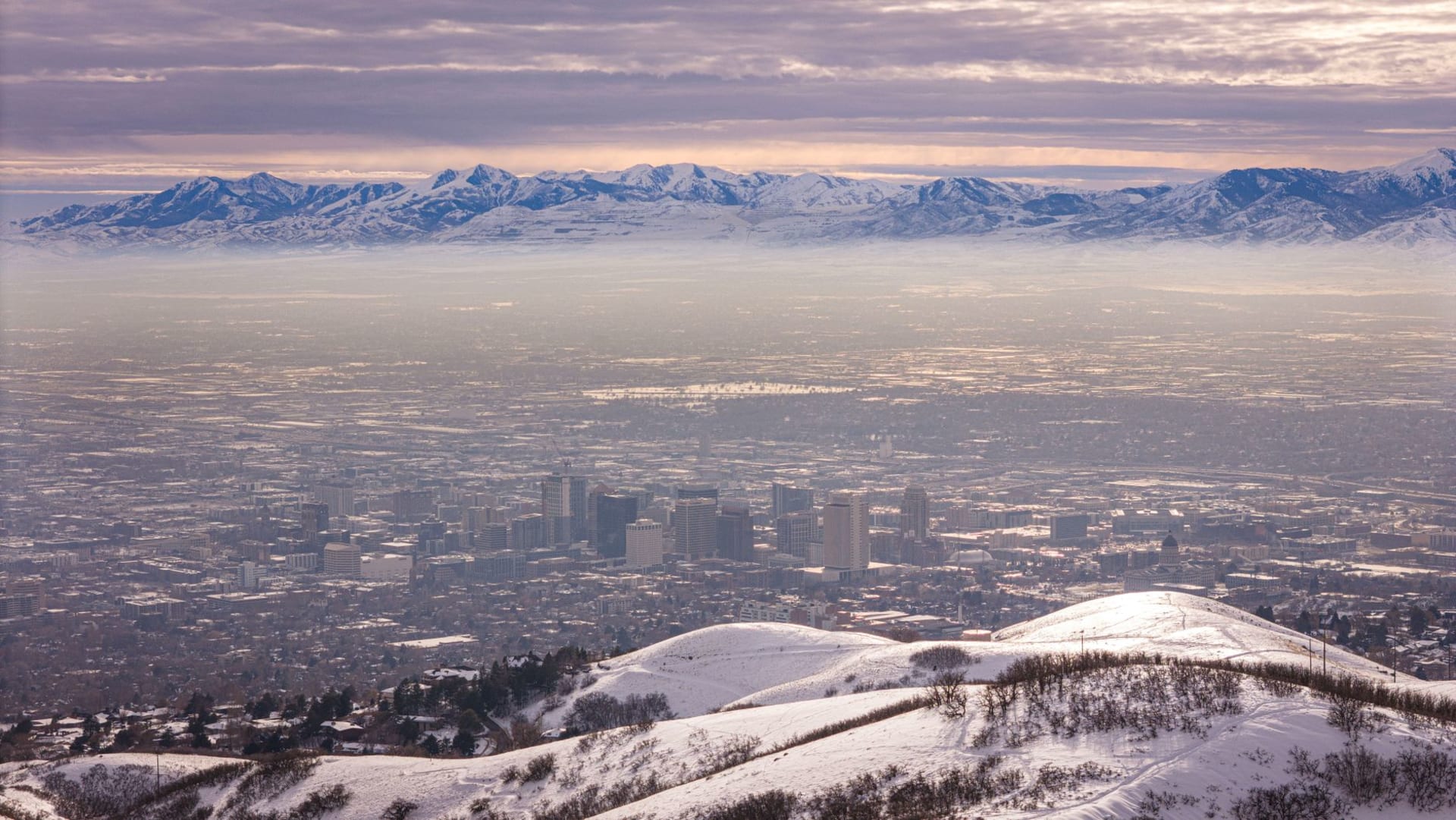
Salt Lake City is built on a grid so orderly it feels like a thought experiment. The streets radiate from Temple Square in cardinal directions, numbered at regular intervals — 100 South, 200 South, 300 South — with blocks wide enough to accommodate a covered wagon turning a U-turn, which was the actual stated reason Brigham Young designed them that way. The mountains visible to the east are the Wasatch Range, and they’re close enough that on a clear day you can see individual couloirs without binoculars. On inversion days in winter, a brown lid of smog sits over the valley and the mountains disappear entirely.
I came to Salt Lake City between legs of a canyon country trip with no particular plan for the city, which turned out to be the right plan. It rewards wandering more than itinerary.
Temple Square and the LDS Presence
You cannot really visit Salt Lake City without engaging with the fact that it is the administrative and spiritual capital of the Church of Jesus Christ of Latter-day Saints, which is the official name and the name members prefer. Temple Square occupies a ten-acre block in the city center and includes the Salt Lake Temple, the Tabernacle, and various other buildings — the whole complex recently underwent significant renovation. Entry to the square is free; the temple itself is open only to members.
I walked through Temple Square with genuine curiosity rather than either reverence or ironic detachment, which seems like the right gear. The architecture is extraordinary in its ambition — a granite building with six spires that took forty years to complete, begun before Utah was a state, with stone quarried from Little Cottonwood Canyon twenty miles away. The Tabernacle’s domed wooden roof, built before nails or modern fasteners, has the acoustics of a concert hall designed by accident.
The Great Salt Lake
The Great Salt Lake is roughly eight times saltier than the ocean and has been shrinking for decades due to water diversion. It smells, particularly in summer, of brine shrimp and decomposition — not unpleasant exactly, but unmistakable, and nothing I had prepared for. The lake turns colors based on the concentration of algae and bacteria: in the south arm, the water can appear blue or grey; in the north arm, separated by a rail causeway, it goes pink to red.
Antelope Island State Park sits in the lake and is connected to shore by a causeway. The island holds a bison herd, pronghorn, and the best views of the lake’s scale — from the island’s ridgeline, the water stretches to the horizon in three directions and the mountains float above the valley to the east like something pasted from another photograph.
Ninth South and the Granary District
The Ninth South corridor and the Granary District to the south of downtown are where the food and drink culture that people are actually looking for has landed. Utah’s liquor laws have loosened incrementally over the years — restaurant patrons no longer need to purchase a membership to buy alcohol, and the 3.2 beer limits have been relaxed in many venues — and the breweries and restaurants in these neighborhoods operate with the energy of places that have been waiting for permission.
I ate Korean-Mexican fusion at a food hall that had no business being that good in a landlocked city and had a locally brewed IPA that made me forget the state had once been notorious for weak beer.
Winter Sports Access
Salt Lake City’s primary practical advantage for visitors in winter is that seven world-class ski resorts sit within an hour of downtown, accessible via efficient resort transportation. The “Greatest Snow on Earth” slogan is marketing but not empty marketing — the Wasatch powder is genuinely exceptional, and the winter Olympics infrastructure from 2002 is still in active use.
When to go: Spring and fall for city exploration. Winter for skiing (December through March), with January and February typically offering the best snow. Summer is warm, dry, and surprisingly pleasant if you’re combining city time with canyon country travel; the mountains above the city offer hiking trails that stay cooler than the valley floor.