Cruz Bay
"Cruz Bay is small enough that everyone at the bar knows which trail you hiked."
The ferry from Red Hook on St. Thomas takes about twenty minutes and deposits you in Cruz Bay with a slight sense of arrival — not because it’s dramatic, but because the contrast is immediate. Cruz Bay is quiet. The harbor is small. The streets are narrow and not particularly organized. People walk in the middle of the road. Nobody is in the kind of hurry that cruise-ship tourism requires.
About two-thirds of St. John is national park land, which caps the development ceiling in a way that has preserved the island’s character better than most of the Caribbean. Cruz Bay exists because someone needs to be at the dock when the ferry arrives, and the town has grown just enough to support that function without losing itself in the process.
The Town Itself
Cruz Bay fits in about four walkable blocks. The main commercial strip runs from the dock uphill through a collection of open-air restaurants, small galleries, a few clothing shops, a grocery store, and the kind of bars that are serious about their rum selections and casual about everything else. Mongoose Junction, a shopping complex built into the hillside in warm stone, manages to be attractive in a way that shopping centers almost never manage — the architecture works with the terrain, there are trees growing through the courtyard, the shops inside are mostly small and locally owned.
The park visitor center is at the edge of town and worth stopping at before you do anything else. The rangers are knowledgeable and give good trail advice that accounts for your actual fitness level rather than the optimistic version you’re presenting.
The Trailhead Problem (In a Good Way)
Most of the best trails in the national park start from Cruz Bay or from points accessible by shared taxi from here. The Reef Bay Trail is the classic — a four-mile descent through secondary forest, past sugar mill ruins, to a beach where petroglyphs from pre-Columbian inhabitants are carved into the rocks beside a freshwater pool. The hike in is easy. The hike back up is not, which is why the park service runs a boat that brings hikers back to Cruz Bay on certain days, and why that boat always has happy passengers.
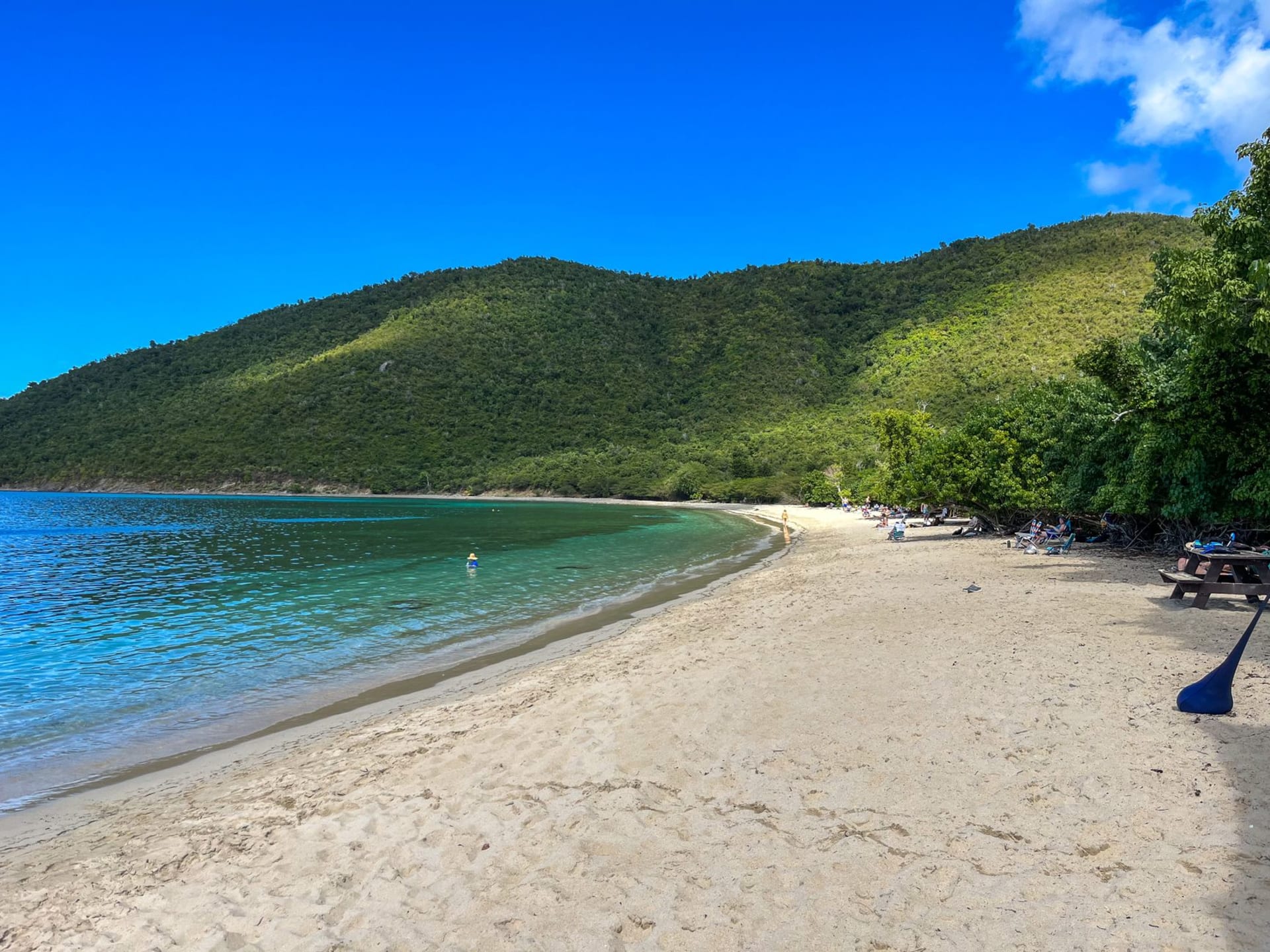
I also walked the Lind Point Trail from the edge of town to Salomon Beach in the early morning — an hour of forest walking that deposits you on a small reef-protected beach with no road access and, when I arrived at 7:30 a.m., no other people.
Eating and Drinking Without Effort
The bar and restaurant situation in Cruz Bay is better than the town’s size would suggest. The Fish Trap does fresh local fish prepared without fuss — I had yellowfin tuna that had been on a boat that morning in a preparation involving lime and scotch bonnet that was exactly what you want after a hot trail day. The woody outdoor seating and the ceiling fans doing their best in the evening heat contribute to the experience.
The bars that stay open late attract the island’s working population after their shifts end, which is when Cruz Bay reveals something about itself — it’s a real place with real people, not a resort enclave.
Getting Your Bearings
Cruz Bay is also the jumping-off point for water taxis to beach destinations around St. John and to the British Virgin Islands. The schedule is informal and you negotiate in person at the dock. This is fine. It’s part of the texture of the place.
When to go: Mid-December through April for dry season and comfortable temperatures. January and February are ideal — tourist numbers are manageable, the trails are dry, and the water is clearest. The Christmas-New Year week is busy with charterboat sailors and villa renters. Late April and May offer excellent conditions at lower prices.