Caribbean
US Virgin Islands
"American soil, but nothing here feels like America."
I arrived on St. John by ferry from St. Thomas, a twenty-minute crossing that felt like slipping between two different ideas of the Caribbean. Cruz Bay is small enough that you can walk from the ferry dock to your accommodation before you’ve finished deciding where to eat. The afternoon light on the hills behind town — dense green, almost absurdly lush — told me immediately that this island was going to behave differently than expected.
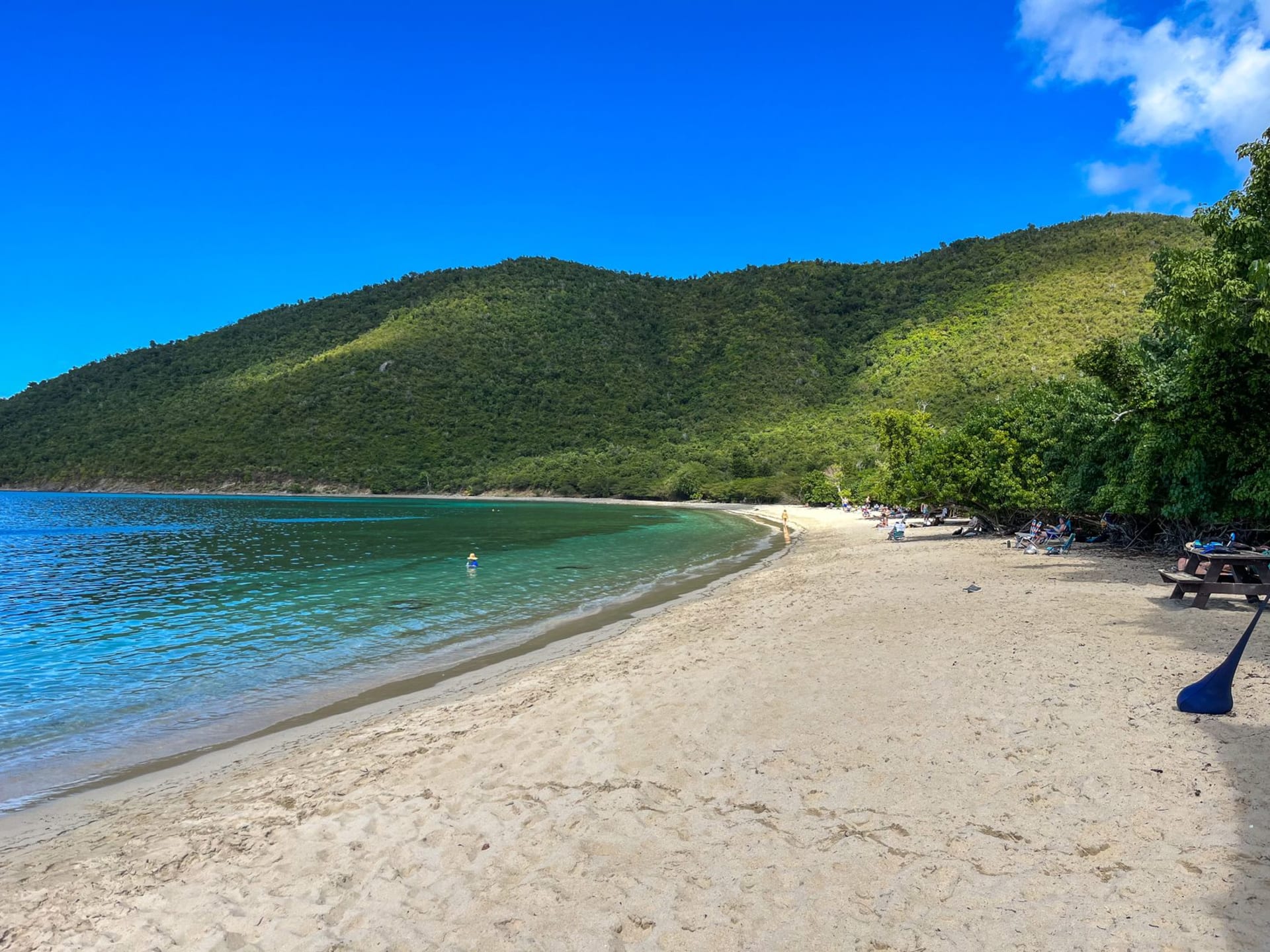
What makes the USVI strange and good is the friction between its American jurisdiction and its distinctly un-American character. You pay in dollars, your phone works without a plan change, the supermarkets stock familiar brands. But the pace, the light, the heat, the way people talk to each other across rum shop counters — none of that is American. St. John in particular feels suspended, partly because nearly two-thirds of it is protected as Virgin Islands National Park. There are no big resorts, no casino strips, no development beyond what existed before the national park designation locked things down. Trunk Bay is the famous beach — postcard turquoise, an underwater snorkel trail, the whole thing — but I found myself preferring Cinnamon Bay early in the morning before anyone arrived, and Salt Pond Bay on the southeast corner where the hiking trail to Ram Head drops you on a headland of volcanic rock above open ocean.
St. Thomas is louder, more commercial, and honest about it. Charlotte Amalie has a harbor that receives cruise ships by the dozen, and the duty-free jewelry shops and perfume stores serve that crowd with efficiency. But the food market at Vendors Plaza, the old warehouse district called Frenchtown, and the climb up the 99 Steps to the historic quarter offer a rougher, more interesting city underneath the tourism infrastructure. St. Croix, the largest island, remains genuinely undervisited — it has a functioning rum distillery at Cruzan, a small food scene in Christiansted that punches above its size, and beaches with almost no one on them. I ate conch fritters at a roadside shack there that I have thought about several times since.
When to go: Mid-December through April is peak season — dry, clear, and expensive. I prefer late April through early June: the trade winds are still blowing, prices drop sharply, and the water is warm and calm before hurricane season arrives. July through October carries real storm risk; I would not plan anything fixed in those months.
What most guides get wrong: They treat the USVI as a cruise stop or a luxury beach destination and miss the fact that St. John is one of the most intact pieces of wild Caribbean coastline under any flag. The national park is the point. Hike the Reef Bay Trail to the Petroglyphs, swim at Lameshur Bay with no one around you, camp at Cinnamon Bay if you want to wake up to that water without paying resort prices. The American-ness of the place is a convenience, not a character — the character comes from the land and the water and the people who have been here long before the territory changed hands.