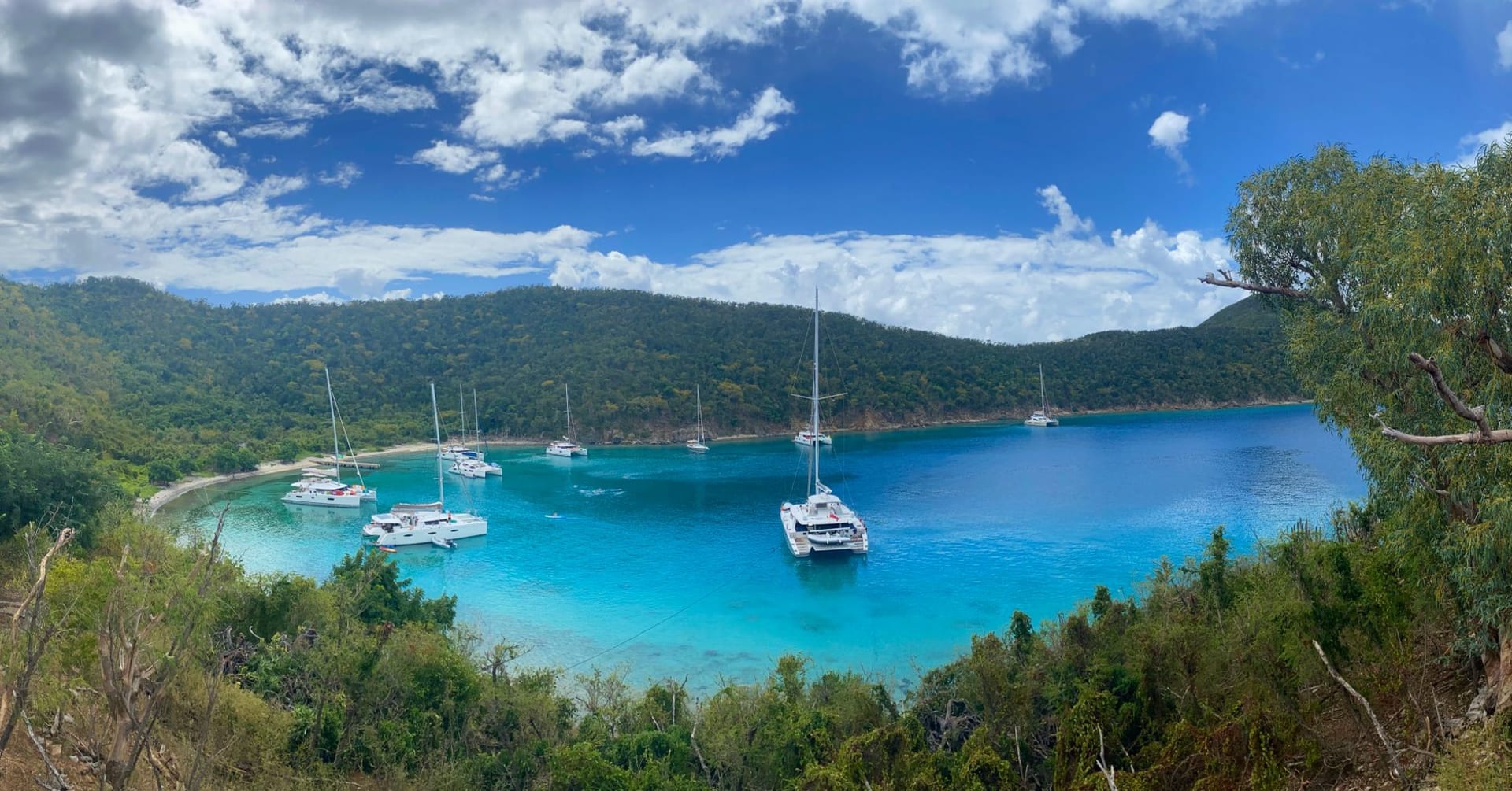
Buck Island
"The reef here made me understand what people mean when they say the ocean is dying — because this one isn't."
Buck Island is a small uninhabited island about two miles off the northeast coast of St. Croix, surrounded by a coral reef that John F. Kennedy designated a national monument in 1961. The designation held. The reef is now one of the healthiest elkhorn coral systems in the entire Caribbean, which tells you something about what the rest of the Caribbean has become.
I took a half-day catamaran trip out from Christiansted, which is the standard approach — private boats need permits and most people go with one of the handful of licensed operators who’ve been running these trips for decades. The captain knew every mooring ball by number and had opinions about snorkel technique that he delivered with the cheerful authority of someone who has said the same things five thousand times and still means them.
The Barrier Reef Trail
The underwater trail at Buck Island is different from the one at Trunk Bay — less curated, more alive. The elkhorn coral grows in formations that look like something between a forest and architecture, branches spreading four or five feet in every direction, schools of blue tang moving through them in coordinated pulses. I spent forty minutes on the trail and saw a spotted eagle ray pass underneath me so close I could count the spots, a hawksbill turtle working its way along the reef wall, and more species of fish than I could plausibly identify.
The water clarity is extraordinary — fifteen to twenty feet of visibility is normal, more on a calm day. You’re snorkeling over a bottom of white sand and coral rubble that reflects the light upward, which means the fish are lit from below as well as above. It creates a quality of visibility that’s different from snorkeling over dark-bottomed reef.
The Beach and the Interior
The island has a small beach on its western end where the catamaran anchors — white sand, shade trees, a rack of beach chairs. Some people spend the whole day here and do the reef trail once. Others do the trail twice. There’s a hiking trail that goes over the island’s highest point to the eastern lookout, where you get views of St. Croix to the southwest and, on a clear day, the other islands to the north. The interior is dry scrub forest with cactus and seagrape and the kind of birds that are very good at not being seen.
What the National Monument Status Actually Means
No fishing. No anchoring on the reef. No boats without permits. No development. The result, sixty years later, is a reef that has recovered from bleaching events that destroyed less-protected systems nearby. It’s a practical argument for marine protected areas made in coral and fish, visible to anyone who puts on a mask and sticks their head underwater. I’m not usually susceptible to environmental optimism but the Buck Island reef gave me a version of it — not about everything, but about this specific small patch of ocean and what leaving it alone has done.
Getting There
Book a trip through one of the licensed operators in Christiansted — Captain Heinz runs one of the better-regarded boats, and there are several others with similar reputations. The half-day morning trip is sufficient for most people. Full-day trips allow more time for the hike and a second reef session.
When to go: January through April for the calmest seas and best visibility. Summer can bring rougher conditions and afternoon thunderstorms. Avoid days after heavy rain, which reduces water clarity. Weekdays are significantly less crowded than weekends — on a Tuesday in February, I had the entire beach to myself for an hour after the trail.