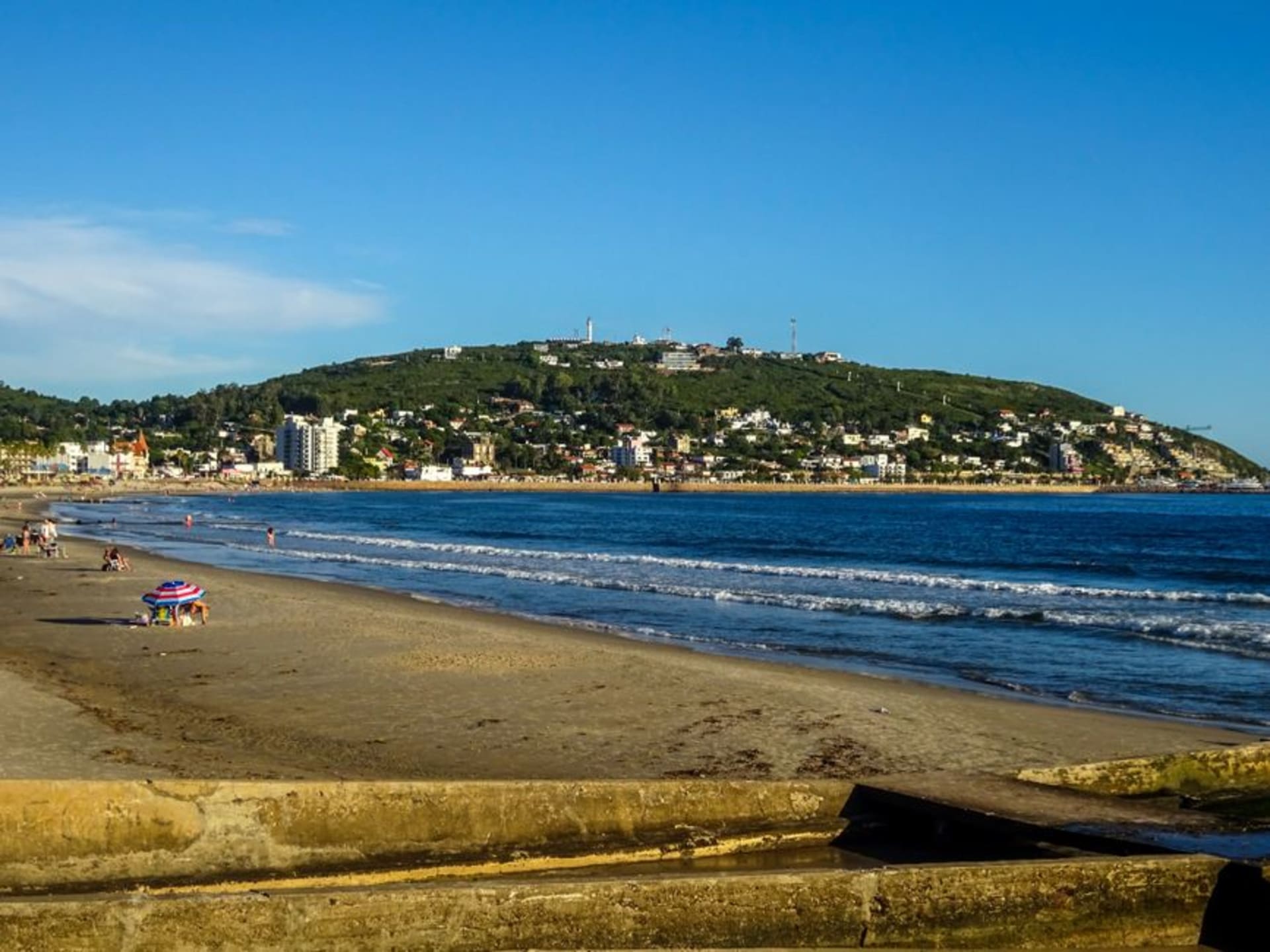
Piriapolis
"Piriapolis felt like a resort someone had dreamed up whole, then let the pines quietly take back."
A faded belle-époque resort town where a visionary industrialist's castle, thermal baths, and pine-covered hills still watch over a quiet Atlantic bay.
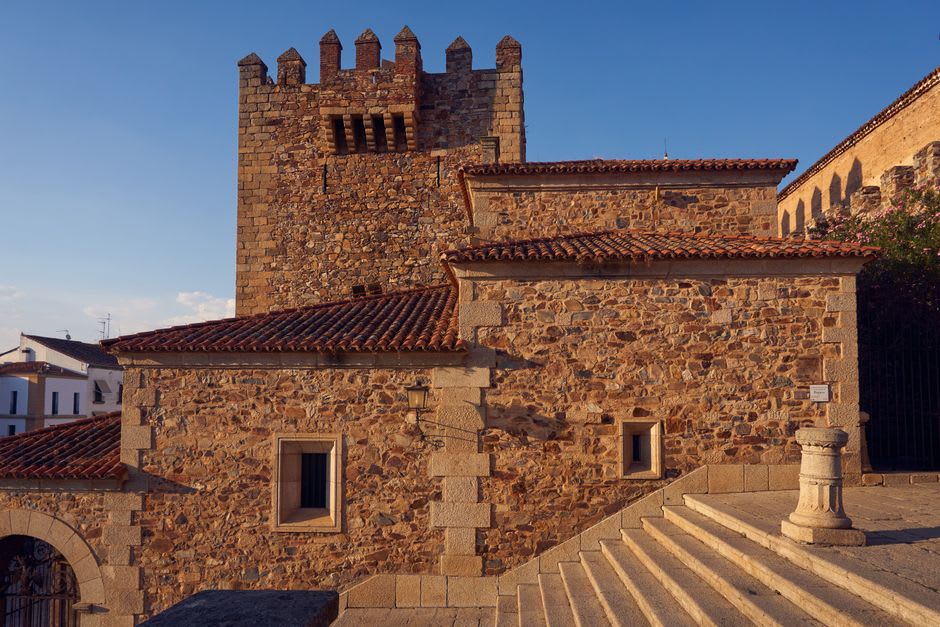
We almost skipped Piriapolis. Lia had read that it was “the old Punta del Este,” and I’ll admit that framing made me expect a diminished version of somewhere else, a footnote town. What we found instead was stranger and better: a seaside resort that one man basically willed into existence out of scrub hills and empty coastline. Francisco Piria bought up this stretch of Atlantic shoreline in the early 1900s, planted entire forests of pine and eucalyptus on the hills behind the bay, and built himself a personal castle overlooking it all. We stood at the base of the Castillo de Piria on our first evening, watching the light go orange over turrets that looked like they’d wandered out of a Loire Valley postcard and landed, slightly bewildered, on the Río de la Plata coast.
The next morning we walked the promenade toward the Argentino Hotel, and I kept doing the math in my head — this place opened in 1930, with thermal baths fed by its own well, and it’s still standing there like a wedding cake facing the sea, slightly weathered but completely unbothered. Lia wanted to go in just to look at the lobby, and I don’t regret indulging her; there’s something about a grand old hotel that’s outlived the fashions it was built for that makes you want to linger. We had coffee on a terrace nearby and talked about how odd it is that Piriapolis predates Punta del Este as a planned resort — Piria basically invented the idea of “going to the Uruguayan coast for the season” before anyone else thought to try it.
In the afternoon we rode the chairlift up Cerro San Antonio, which sounds like a small thing until you’re actually swinging over eucalyptus canopy with the whole curve of the bay opening up beneath your feet. I’m not usually one for chairlifts — something about the cables always makes me a little uneasy — but the view at the top, with Piriapolis laid out in a neat crescent against the water and Cerro del Toro rising green on the other side, was worth every creak of the machinery. We sat up there longer than we needed to, sharing a bag of alfajores Lia had bought at a kiosk near the base, watching sailboats cut small white lines across the bay.
What stayed with me about Piriapolis wasn’t any single sight but the sense of walking through someone’s entire vision, still mostly intact a century later — the forests he planted, the castle he lived in, the hotel he built to convince people this coast was worth visiting. It’s a quieter, stranger place than its more famous neighbor, and I mean that as a compliment.
When to go: The beach season runs December through March, when the bay is warm enough for swimming and the promenade fills up in the evenings, but if you’d rather have the hills to yourself, April brings milder air that’s ideal for hiking Cerro San Antonio and Cerro del Toro without breaking a sweat.